Do you need to provide product reconciliation or are you spending too much time gathering the product from your dust collector?
Posts about Dust Collectors (10):
Introducing the “EZBIBO” for Pharmaceutical Processes? A Beginner’s Guide to Easy Bag-In Bag-Out Hopper Waste Reclamation System!
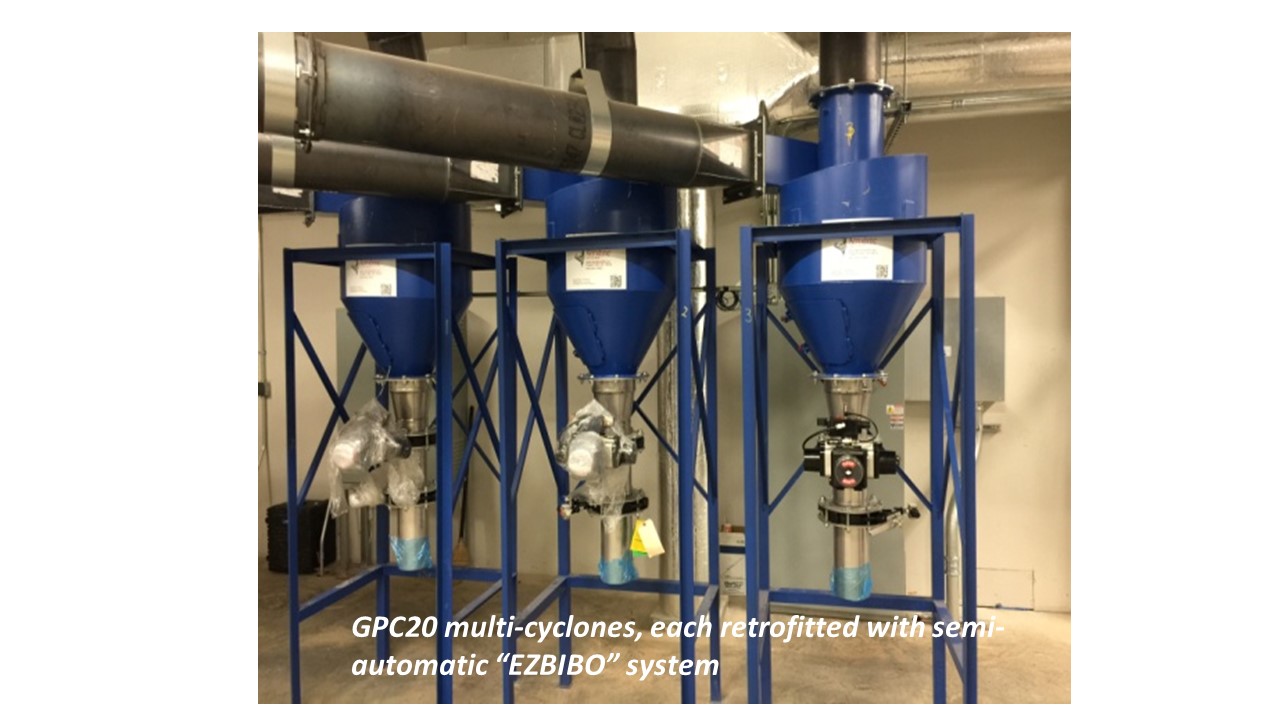 The “EZBIBO” system was originally designed for use with Aerodyne GPC Cyclones to allow for easier bag-in bag-out capture systems for low toxic level pharmaceutical dusts typically encountered with encapsulators, pill coating systems, and some mixing operations. The system allows for capture and bagging of waste material in the pharmaceutical process allowing for weighing and accounting of all materials used in a process, with minimal exposure to operation personnel.
Pharmaceutical Industry: What’s Aerodyne GPC Cyclone got to do with it?
T he pharmaceutical industry has unique requirements that normal industrial applications do not have. Whether it’s the strict FDA rules or the flexibility of batch production, normal industrial practices and equipment don’t always apply. Even with continuous production becoming more popular, pharmaceutical applications are different than standard industrial applications.
The GPC Dust Collector Can Save A Lot of Space
Space is an ever-present factor in the design of a ventilation system. Ductwork takes up space, dust collectors often must be placed outside under NFPA regulations, and said collectors often require a skid. Aerodyne’s GPC cyclone offers a viable alternative to space-hogging equipment in many applications.
Choosing a Collector: When to Use a Baghouse, Cartridge Collector, a Cyclone or a Wet Scrubber
Choosing the right dust collection solution requires careful evaluation of the specific application.
Silica Legislation: What You Need To Know
OSHA attributes a good amount of illnesses and deaths to exposure to silica dust, having been proven to carcinogenic and a cause of untreatable silicosis, which creates a distinct lesion in the lungs. OSHA also hasn’t updated its laws regarding silica exposure since 1971. As such, OSHA plans to do something about it.
Why Don’t Companies Replace Their Dust Collectors?
 A recent survey of dust collector users, performed by Aerodyne in 2015, found that the majority of all dust collectors in use are over seven years old, with 45% of all units being over 10 years old.. This finding begs the question: why use these purchases for so long? A few reasons spring to mind.
Steel Dust Collector Keeps Manufacturer in Compliance
A facility in Chicago that manufactures industrial hardware for building was looking for a solution to keep its process up to regulation standards. The aluminum scraps that were being produced during manufacturing were falling from the machines and on to the floor. Layers of dust and material scrap accumulation can lead to potential fire risks. With the new regulations from NFPA and OSHA, it was imperative that the company find a way to keep the excess materials from accumulating on the floor.
Using Dust Testing to Improve Your Process
The technology and sophistication of dust collectors is always evolving. Aerodyne’s Dust Collector Fact Book is an up to date guide on the different types of dust collectors out there, how they work, and what applications they are used for.
Click here to receive your copy.

Industrial Dust Testing
Click here to download Aerodyne’s new Dust Collection Facts Book. This fact book is the industry’s leading guide to industrial dust collectors and the applications that use them. Get your free copy now!