Dust collection systems consist of four major items. All of them are important and can cause a dust collection system to underperform. The major items are the exhaust fan, dust collector, ductwork, and hoods/pickup points. While the exhaust fan provides the motive power to collect the dusty air, its performance is affected by each of the components. This means that if one of the other components isn’t operating as designed, the whole system will be affected. Ductwork is usually by far the largest component and often the most overlooked. Depending on the size of your system, the ductwork can span hundreds of feet and have dozens of side streams. The ductwork is like railroad tracks, it moves the dusty air from one place to another.
Dust Collection Systems: Product Recovery and Cyclone Pre-filters
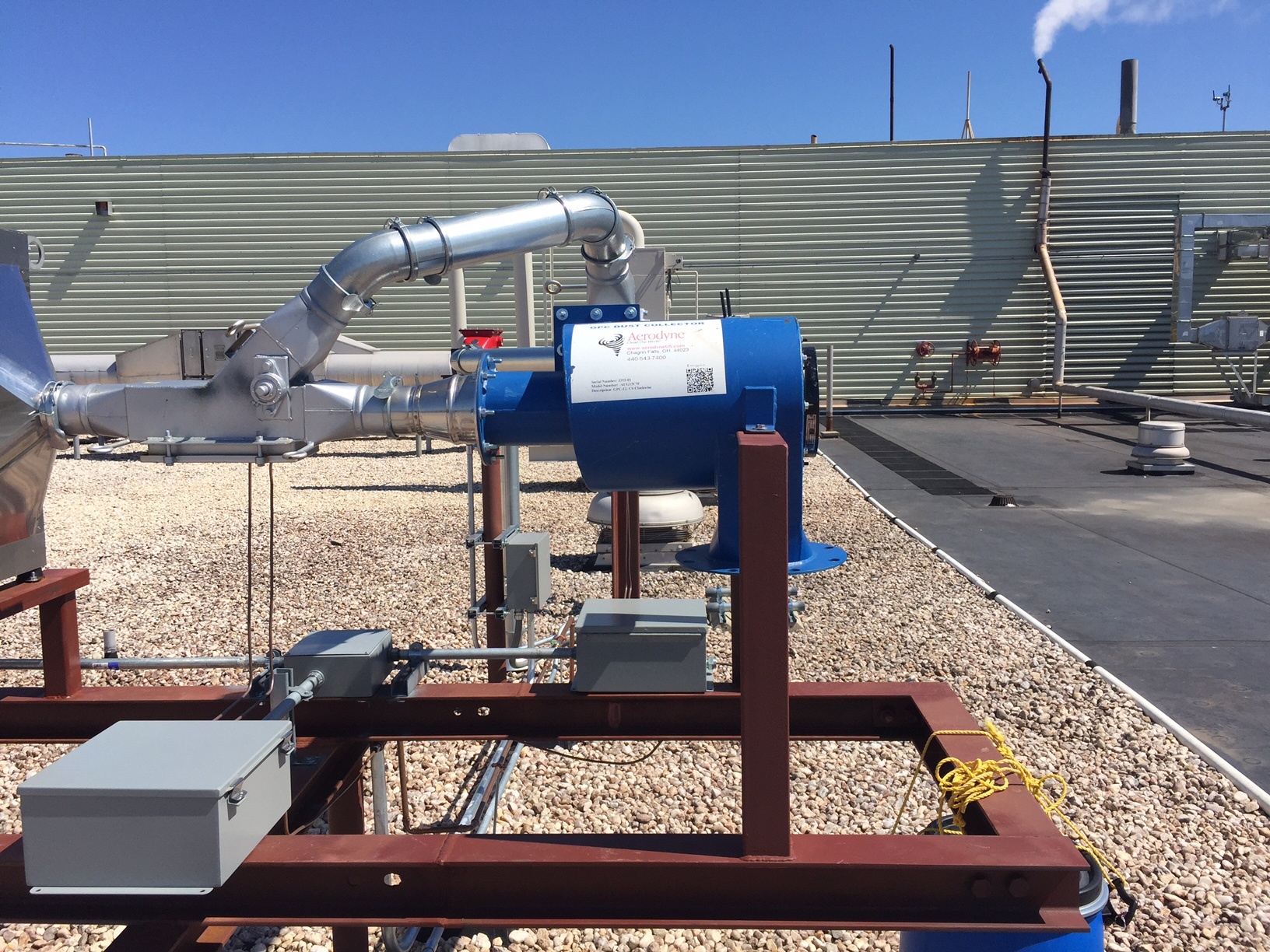 If you are working with a high value material or product, then you should investigate using a cyclone ahead of your baghouse or cartridge collector. The cyclone will allow you to recover the dust without contamination from the filters. The filters in a baghouse or cartridge collector use a dust layer built up on the filters to collect the dust from the airstream. During the process of filter cleaning, dust from this layer is dislodged and falls into the hopper. Any particulate from prior batches can cause contamination of the dust.
Aerodyne At Ceramics Expo 2017

Now in its third year, Ceramics Expo is the world’s largest annual free-to-attend expo for the advanced ceramic and glass community.
Dust Collection Systems: Dust Hazard Analysis (DHA) and NFPA 652
With the release of NFPA 652 and 654, manufacturers that create dust in their processes are required to conduct a Dust Hazard Analysis if the dust is explosive. NFPA 652 requires this to be done by 9/7/2018 but NFPA 654 has extended it 5 years. The Dust Hazard Analysis is retroactive, so all manufacturers are required, no one is grandfathered in.
Dust Collection Systems: 5 Best Solutions of Dust Collection Airlocks
When you are specifying your dust collector, don’t just settle on a rotary valve. There are other airlocks that might be better suited for your application. Other airlocks include the double dump (flap) valve, trickle valve, and knife gate. Not to mention just bypassing an airlock totally and connecting a hopper directly to the bottom of the dust collector.
Dust Collection Systems: Rotary Valves and NFPA-69
When you have a combustible dust, not only does your dust collector require to be protected against a deflagration, but the airlock must contain the event. NFPA-69 allows the use of a rotary valve as long as the following:
Dust Collection Systems: Instrumentation 101 – Differential Pressure Gages
A dust collection system is much more than just the dust collector (ex. Cyclone, baghouse, cartridge collector, wet scrubber, etc.). It constitutes the exhaust fan, hoods, instrumentation and interconnecting ductwork. If any of these components are improperly sized or operating, the whole system can fail in its primary objective, dust collection.
Dust Collection Systems: Fan Wheels 101
A dust collection system is much more than just the dust collector (ex. Cyclone, baghouse, cartridge collector, wet scrubber, etc.). It constitutes the exhaust fan, hoods, instrumentation and interconnecting ductwork. If any of these components are improperly sized or operating, the whole system can fail in its primary objective, dust collection.
Case Study: Compact Cyclone Key Component in Tablet Dust Reclamation? GPC Helps Keep Pharmaceutical Process in Check with FDA
Aerodyne Environmental, the industry’s leading manufacturer of industrial cyclonic dust collectors and dust collection valves, recently assisted in a pharmaceutical application. A prominent US pharmaceutical company was creating a dust collection system for the facility where a variety of drugs are manufactured. The company plans on using a cartridge collector as part of the tablet manufacturing process. Because this company is regulated by the FDA, every gram of product must be accounted for, even the dust. The active pharmaceutical ingredients (APIs) that are created are extremely fine and flow like water. The cartridge collector would be able to collect the particulate in the process, but much of it would get stuck in the filters and would be hard to account for. Read more about this case study.
Aerodyne Cyclones help with Pharmaceutical Product Reconciliation
Do you need to provide product reconciliation or are you spending too much time gathering the product from your dust collector?