The exhaust fan provides the motive force for the dust collection system. The exhaust fan has a performance curve that defines how much airflow it will pull at a certain static pressure. When you turn on a fan, it will ramp up and increase the airflow until reaching the maximum static pressure it can provide.
Posts about Exhaust Fan in Dust Collection System:
The Benefits of Using a VFD On a Dust Collection Exhaust Fan
Variable Frequency Drives allows for you to control the airflow through your system by changing the fan speed without breaking the bank. Without VFDs, one has to manually open or close dampers, creating high manual labor cost. Furthermore, if there are multiple dampers on the system, then tampering with the opening and closing of any one damper, can cause the airflow balance to be off and can increase the static pressure of the system. 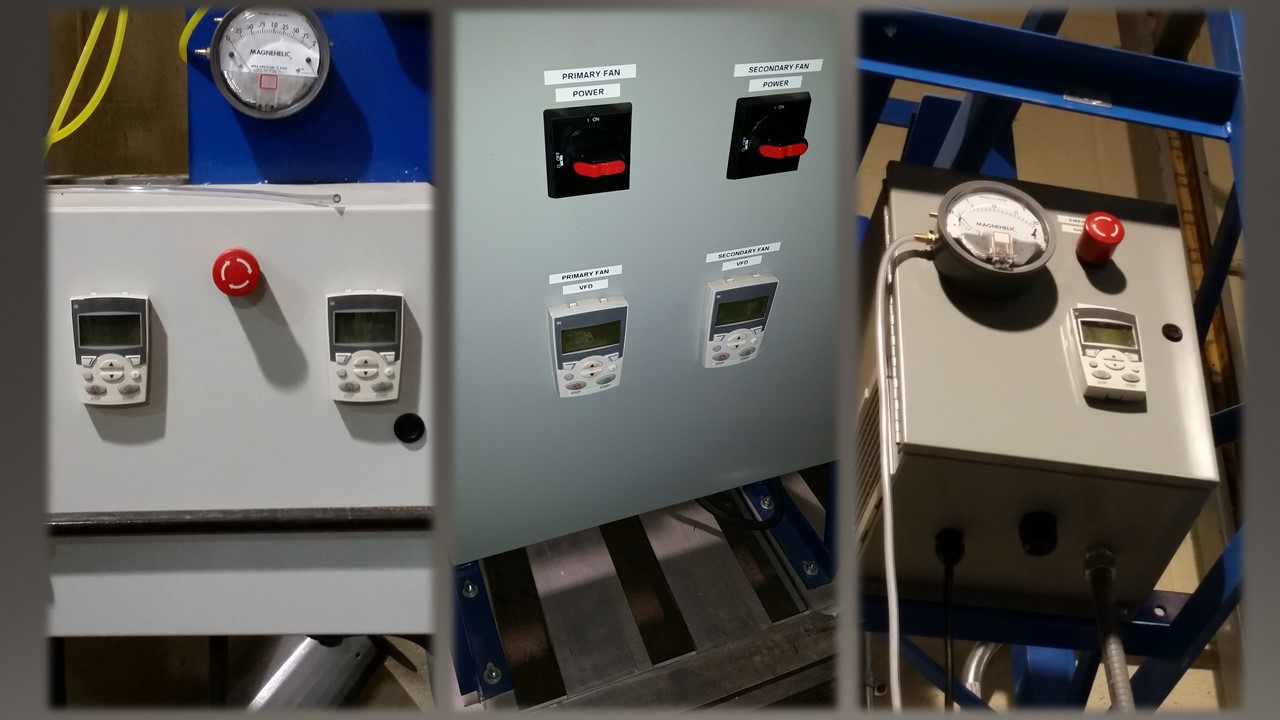
The VFD allows you to control the airflow of the fan, rather than allowing a constant high air output, as would be the case when dampers are being used. VFDs give the system the airflow that is required while lowering electrical costs. VFDs can further lower costs by replacing motor starter control panels. All in all, using a VFD is the smart way to control your airflow.
If you are having operational issues on your dust collection system contact Aerodyne at 440-543-7400 or dc@dustcollectorhq.com to help you problem solve your dust collection problems.
Which 4 major items can cause a dust collection system to underperform?
Dust collection systems consist of four major items. All of them are important and can cause a dust collection system to underperform. The major items are the exhaust fan, dust collector, ductwork, and hoods/pickup points. While the exhaust fan provides the motive power to collect the dusty air, its performance is affected by each of the components. This means that if one of the other components isn’t operating as designed, the whole system will be affected. Ductwork is usually by far the largest component and often the most overlooked. Depending on the size of your system, the ductwork can span hundreds of feet and have dozens of side streams. The ductwork is like railroad tracks, it moves the dusty air from one place to another.
Dust Collection Systems: Fan Wheels 101
A dust collection system is much more than just the dust collector (ex. Cyclone, baghouse, cartridge collector, wet scrubber, etc.). It constitutes the exhaust fan, hoods, instrumentation and interconnecting ductwork. If any of these components are improperly sized or operating, the whole system can fail in its primary objective, dust collection.
Airflow and Your industrial Dust Collection System