Many facilities invest heavily in baghouses and cartridge dust collectors expecting maximum filtration efficiency and long filter life.
Posts about Particulate in Dust Collection System:
Wet Scrubbers Allow for Easier Collection and Removal of Certain Materials | Aerodyne
Wet scrubbers are used in dust collection for a variety of reasons. One of the main reasons is allowing for easier collection and removal of certain materials.
Chemical and Fume Removal is Wet Scrubbing’s Cup of Tea | Aerodyne
The main reason to use wet scrubbing for particulate removal is that you need wet scrubbing for chemical or fume removal. Wet scrubbers such as a packed tower are great for removing chemicals (contaminant) in the air, such as acids, bases, etc.
Why Learn the Shape of Your Dust? | Aerodyne
When we think about dust particles being picked up by dust collectors we think of the particles as small spheres. And often for theoretical removal efficiency of a dust collector the dust is assumed to be a sphere. This is done to simplify the calculations as spheres act predictably compared to other shapes. However in real life dust isn’t normally spherical in shape. Dust is often created by material rubbing against each other and breaking off. This material often breaks along weak points in the material structure, which often isn’t spherical in shape. The material can have a wide range of shapes.
How does particle size distribution affect my process explosibility?
One of the issues when figuring out if your dust is explosive is the particle size of the dust and the location where you are assessing the dust. Material that consists of very large particles sizes (larger than 500 micron) tend not to be explosive. While larger particles can catch fire, they tend to prevent explosions. However, this might not be as straight forward as you think.
5 Key Questions to Ask Before Choosing a Cyclone Dust Collector
Designing a dust collection system can be quite a daunting task. With so many collector options and so many application variables to consider, it is difficult to know where to begin. Cyclones are among the oldest and still most reliable methods of dust collection available. Because they require very little maintenance, have low up-front cost, and offer unmatched versatility, cyclone collectors remain a viable solution to many air-handling challenges. Although heightened environmental regulations and collection efficiency needs have shifted industry toward the use of filter-media collectors, cyclonic dust collection still plays a vital role in many air-handling systems. These five questions will help determine if a cyclone dust collector is right for your application.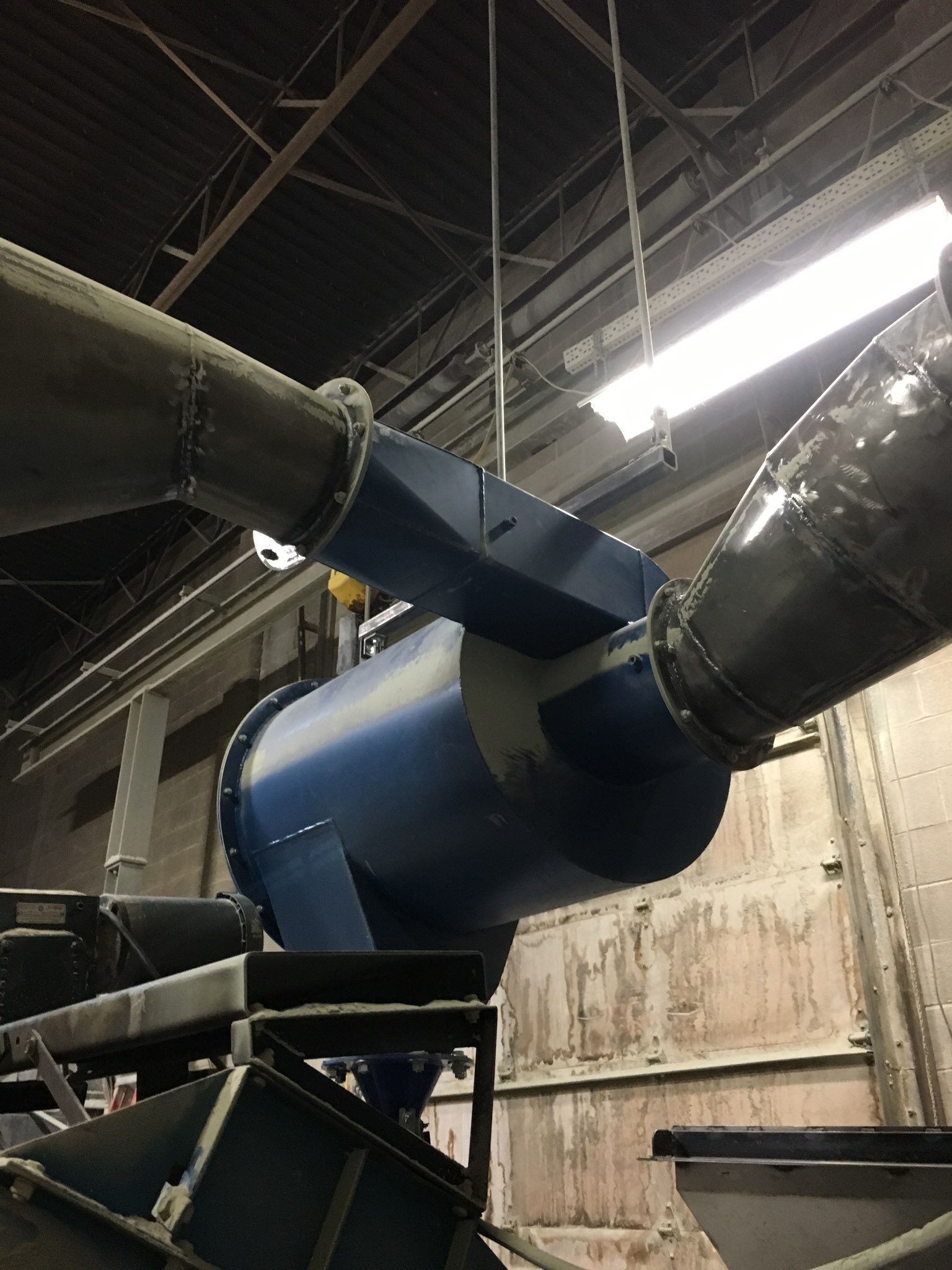
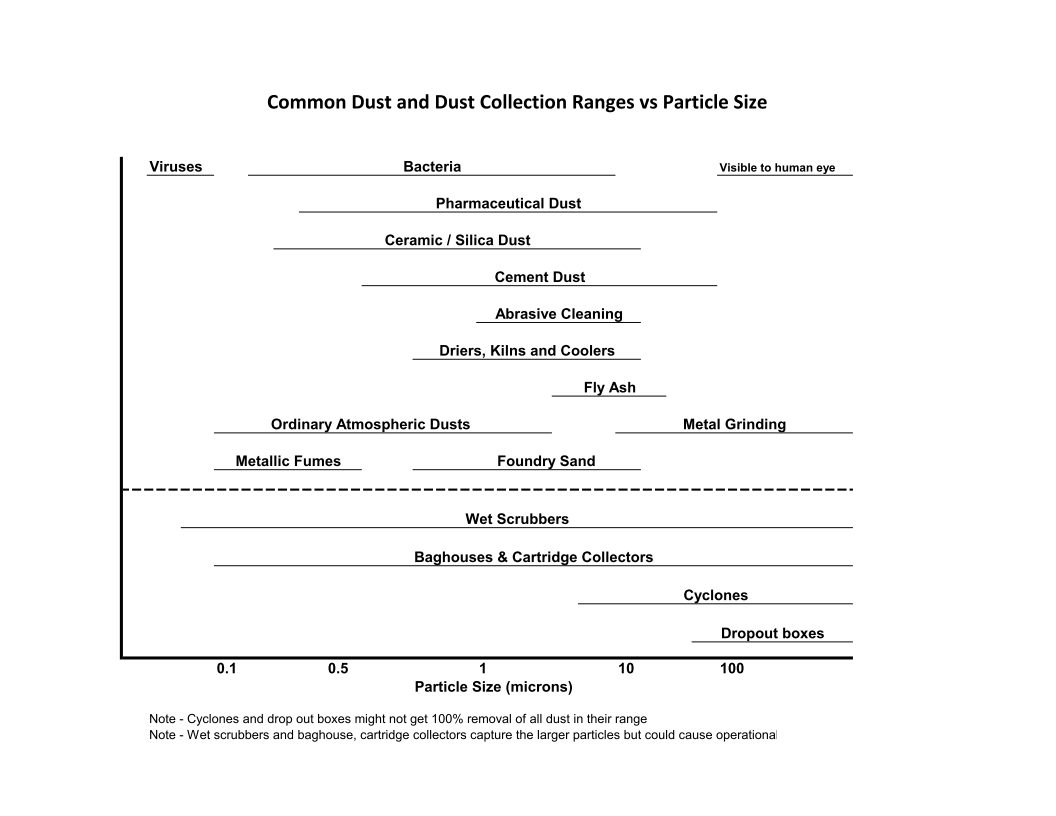
Common Dusts and Dust Collector Ranges vs Particle Size | Aerodyne
Particle Size Helps in Selecting Dust Collector | Aerodyne
In dust collection one of the most important dust characteristics to define is the particle size of the dust. The larger the dust the easier it is to capture. While the smaller the dust particle the harder it is to capture and remove from the airflow. This applies to both heavy and light particles. What this means is that in order to accurately predict your removal efficiency, you need to know the particle size distribution.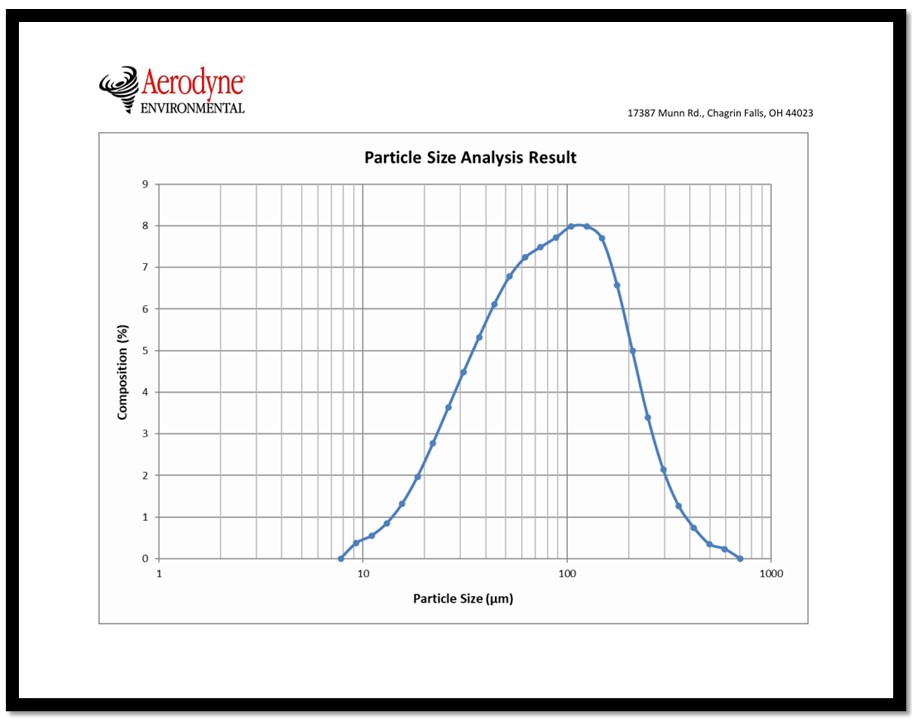
Air Velocities and Your Ductwork Design | Aerodyne
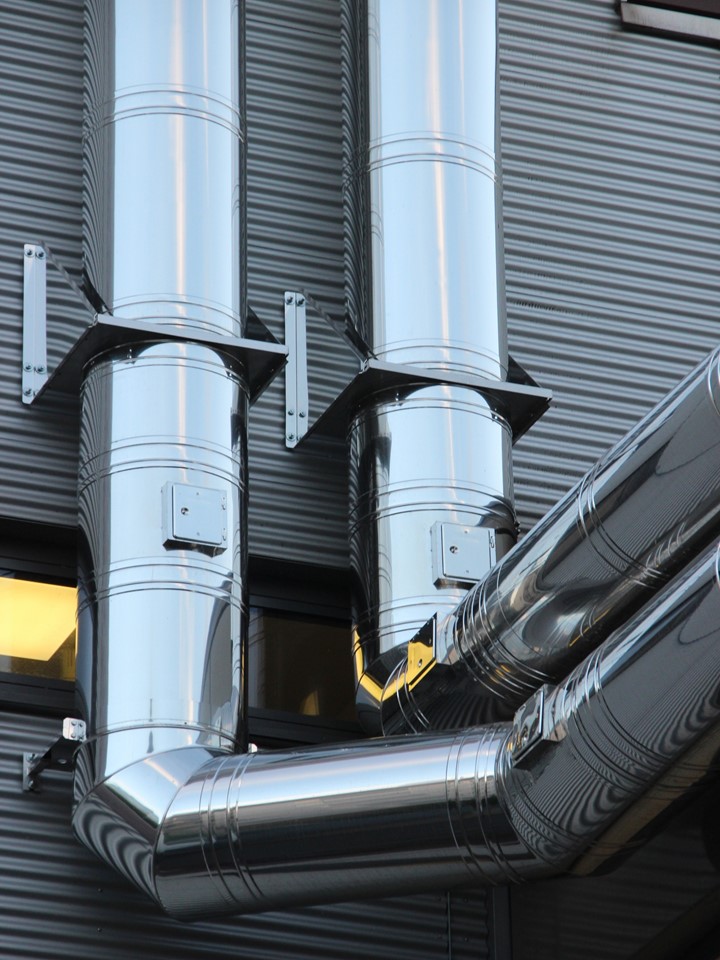 When designing a dust collection system, the ductwork is like the highways of the system. They allow the dust to move from the area of production to the dust collector. The dust should move fast enough so it doesn’t fall out while not moving too fast to cause undue wear and pressure drop. What this means is when you are designing your dust collector ductwork, pay attention to the ductwork diameters. When picking the ductwork diameters throughout the system, make sure the velocities correlate with the design velocities shown below.
Why Is Particle Size Distribution Important? | Aerodyne
There are multiple ways to collect dust from the air. The most common are: