A dust collection system is much more than just the dust collector (ex. Cyclone, baghouse, cartridge collector, wet scrubber, etc.). It constitutes the exhaust fan, hoods, instrumentation and interconnecting ductwork. If any of these components are improperly sized or operating, the whole system can fail in its primary objective, dust collection.
Posts about Dust Collection System (7):
Silica Legislation: What You Need To Know
OSHA attributes a good amount of illnesses and deaths to exposure to silica dust, having been proven to carcinogenic and a cause of untreatable silicosis, which creates a distinct lesion in the lungs. OSHA also hasn’t updated its laws regarding silica exposure since 1971. As such, OSHA plans to do something about it.
Using a Baghouse for Dust Grinding Applications
A facility that specializes in grinding down particulate to custom sizes was experiencing a lag in its process. The process uses 5,000 ACFM to pneumatically convey granular plastic powder from the production area to the packaging area. The system needs to move 5,000 lbs of dust per hour. To do this, the company utilizes a series of baghouse collectors.
Brr! Baghouse Goes Cold in Oil Drilling Application
A company in the oil drilling industry is looking to find a dust collector that will withstand artic conditions. The standard bag house is not able to withstand these conditions due to the fact that cold conditions compressed air and bag houses have limited tolerances, making the conventional bag houses an inefficient way of dust collecting for this company. In hopes of finding a solution to its problem the company turned to Aerodyne. 
Aerodyne suggest the company use the SplitStream dust collector to replace the baghouse. The SplitStream Dust Collector achieves high-efficiency by forcing dirty gases into a powerful centrifugal motion. There are no moving parts to bind up in the arctic temperatures and the centrifugal action throws dust particulate out of the gas stream. A secondary air stream carries the dust particulate to the hopper, keeping dust away from the collector walls and reducing sticking and abrasion. As a result, the SplitStream virtually eliminates maintenance problems common to other types of cyclones. The prevention of particulate contact with external walls is a major factor in the unit’s ability to achieve high efficiency ratings. Since the SpiltStream does not use bags or filter cartridges, the collected product is easily returned to the process for reuse or sent out for disposal.
Coffee Roaster’s Process Improved with GPC
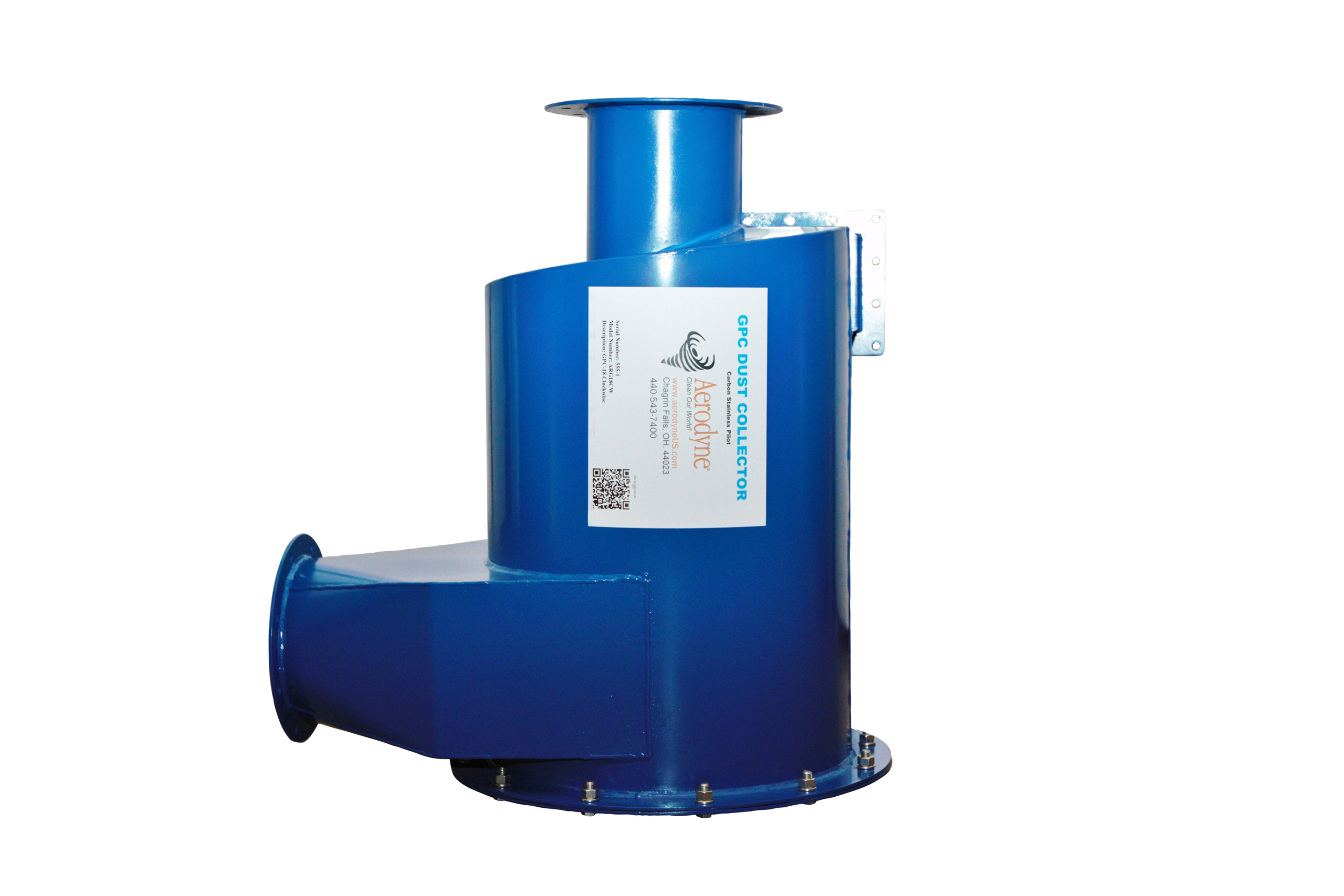
A prominent coffee bean roaster is planning on building a new roasting facility in New Jersey. The head engineer contacted Aerodyne about trying to find equipment that could separate the coffee beans as they are pneumatically conveyed from one portion of the facility to the other. The engineer specified that the problem the facility was facing was space.
Gaseous Dust Plugs Up Furnace
A company in New York State had a problem exhausting gaseous dust matter. The vent the company was using would frequently plug and had to be replaced. The company needed a way to increase the life of the piping while preventing the release of dust and gases. The company turned to Aerodyne for its dust control issues.
Using Dust Testing to Improve Your Process
The technology and sophistication of dust collectors is always evolving. Aerodyne’s Dust Collector Fact Book is an up to date guide on the different types of dust collectors out there, how they work, and what applications they are used for.
Click here to receive your copy.

Industrial Dust Testing
Click here to download Aerodyne’s new Dust Collection Facts Book. This fact book is the industry’s leading guide to industrial dust collectors and the applications that use them. Get your free copy now!
Improve Your Dust Collection Process with Dust Testing
Click here to download Aerodyne’s new Dust Collection Facts Book. This fact book is the industry’s leading guide to industrial dust collectors and the applications that use them. Get your free copy now!
Coffee Roaster’s Damaged Dust Collection Equipment Replaced with GPC
A coffee supplier in MN was looking to improve its dust collection equipment for its roasting process after some of its equipment was damaged in a fire. At this roaster’s facility, coffee is roasted in a rotary drum where hot air is passed over the beans. During the roasting process, the outer layer of organic material called chaff is burned off. Some of the chaff is then vented out of the roaster drum along with the hot air. Without having a pre-filter, the ESP (electrostatic precipitator) would clog up quite rapidly, requiring excessive cleaning and maintenance. Searching for a better solution, the roaster chose to install a 700 CFM GPC Dust Collector from Aerodyne.