Posts by dust-admin:
Dust Collection Systems: Dust Hazard Analysis (DHA) and NFPA 652
With the release of NFPA 652 and 654, manufacturers that create dust in their processes are required to conduct a Dust Hazard Analysis if the dust is explosive. NFPA 652 requires this to be done by 9/7/2018 but NFPA 654 has extended it 5 years. The Dust Hazard Analysis is retroactive, so all manufacturers are required, no one is grandfathered in.
Dust Collection Systems: 5 Best Solutions of Dust Collection Airlocks
When you are specifying your dust collector, don’t just settle on a rotary valve. There are other airlocks that might be better suited for your application. Other airlocks include the double dump (flap) valve, trickle valve, and knife gate. Not to mention just bypassing an airlock totally and connecting a hopper directly to the bottom of the dust collector.
Dust Collection Systems: Rotary Valves and NFPA-69
When you have a combustible dust, not only does your dust collector require to be protected against a deflagration, but the airlock must contain the event. NFPA-69 allows the use of a rotary valve as long as the following:
Dust Collection Systems: Instrumentation 101 – Differential Pressure Gages
A dust collection system is much more than just the dust collector (ex. Cyclone, baghouse, cartridge collector, wet scrubber, etc.). It constitutes the exhaust fan, hoods, instrumentation and interconnecting ductwork. If any of these components are improperly sized or operating, the whole system can fail in its primary objective, dust collection.
Dust Collection Systems: Fan Wheels 101
A dust collection system is much more than just the dust collector (ex. Cyclone, baghouse, cartridge collector, wet scrubber, etc.). It constitutes the exhaust fan, hoods, instrumentation and interconnecting ductwork. If any of these components are improperly sized or operating, the whole system can fail in its primary objective, dust collection.
Case Study: Compact Cyclone Key Component in Tablet Dust Reclamation? GPC Helps Keep Pharmaceutical Process in Check with FDA
Aerodyne Environmental, the industry’s leading manufacturer of industrial cyclonic dust collectors and dust collection valves, recently assisted in a pharmaceutical application. A prominent US pharmaceutical company was creating a dust collection system for the facility where a variety of drugs are manufactured. The company plans on using a cartridge collector as part of the tablet manufacturing process. Because this company is regulated by the FDA, every gram of product must be accounted for, even the dust. The active pharmaceutical ingredients (APIs) that are created are extremely fine and flow like water. The cartridge collector would be able to collect the particulate in the process, but much of it would get stuck in the filters and would be hard to account for. Read more about this case study.
Aerodyne Cyclones help with Pharmaceutical Product Reconciliation
Do you need to provide product reconciliation or are you spending too much time gathering the product from your dust collector?
Introducing the “EZBIBO” for Pharmaceutical Processes? A Beginner’s Guide to Easy Bag-In Bag-Out Hopper Waste Reclamation System!
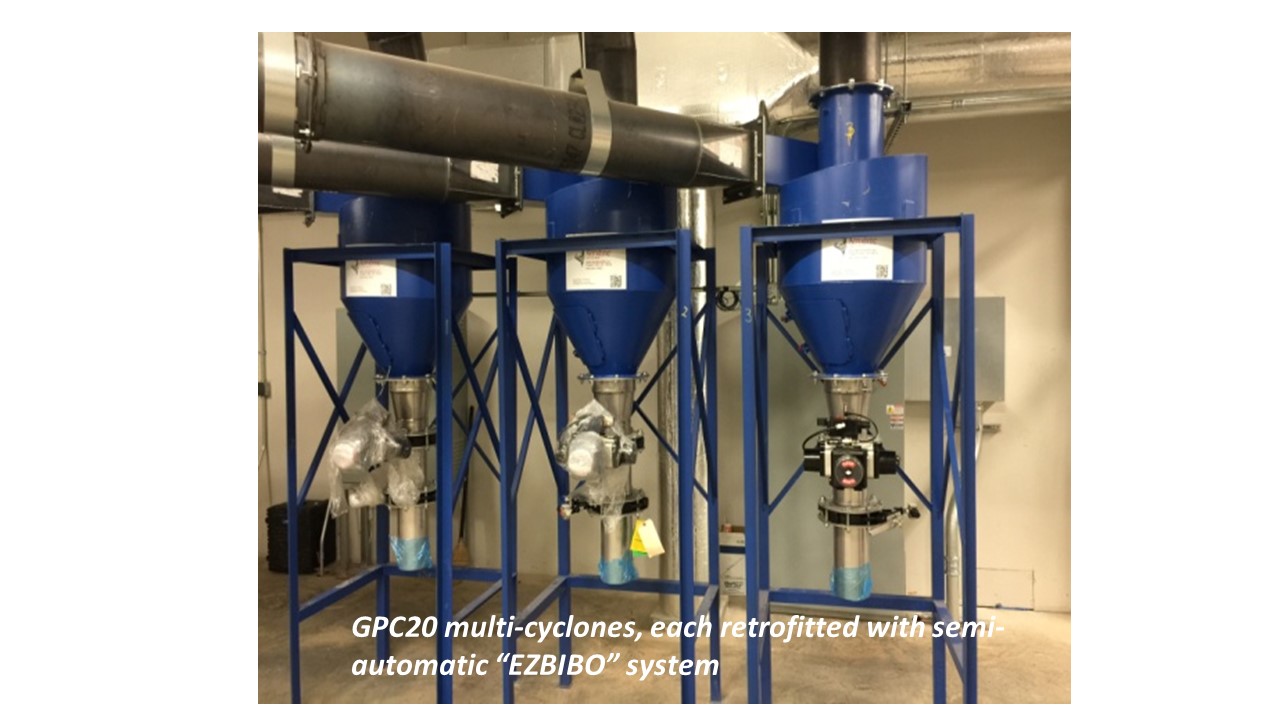 The “EZBIBO” system was originally designed for use with Aerodyne GPC Cyclones to allow for easier bag-in bag-out capture systems for low toxic level pharmaceutical dusts typically encountered with encapsulators, pill coating systems, and some mixing operations. The system allows for capture and bagging of waste material in the pharmaceutical process allowing for weighing and accounting of all materials used in a process, with minimal exposure to operation personnel.
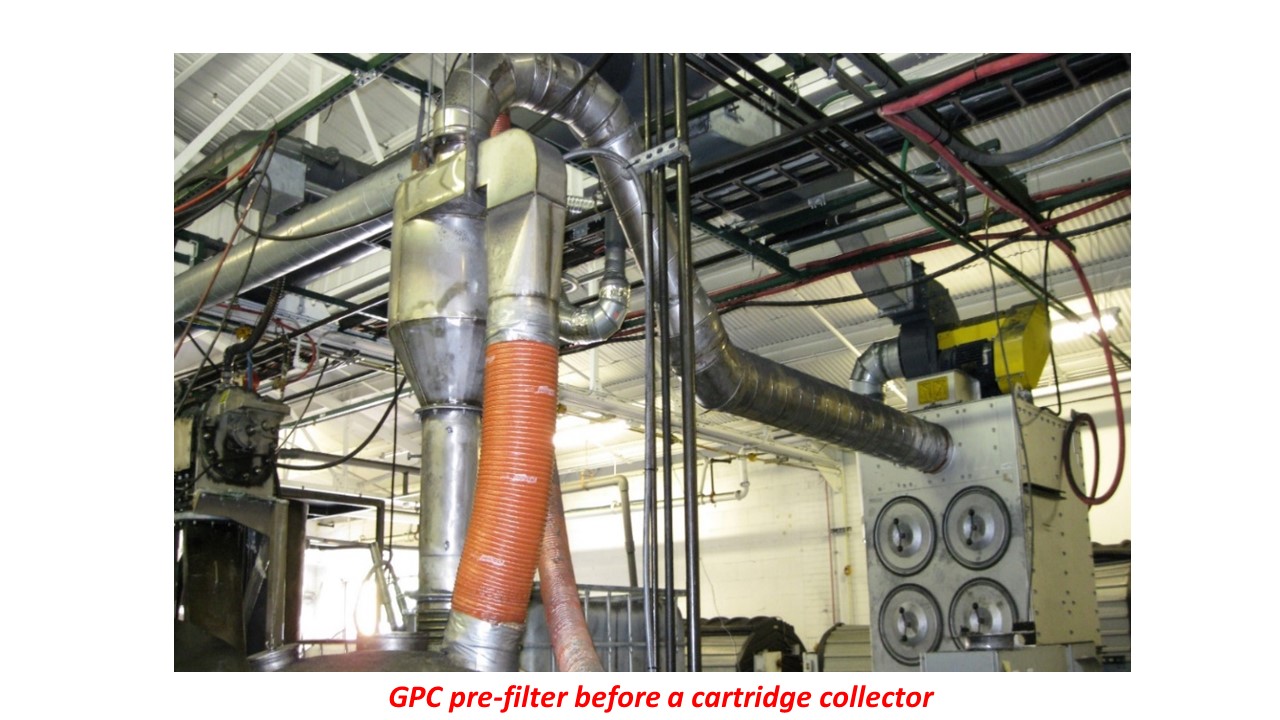
4 Potential Dangers to Collectors! How Cyclone Pre-Filters Can Help!
With government regulations tightening on solid emissions, baghouses and cartridge collectors have become status quo in the past 40 years. The fabric filters (bags or cartridges) remove dust below 1 micron in size. The high removal efficiency of the filters, have been considered best available removal technology. This means most processes requiring dust collectors will use a baghouse or cartridge collector. However, not all processes work well with baghouses and dust collectors.