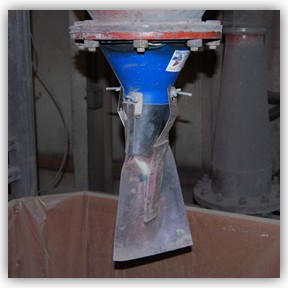
 Do the rotary valves under your dust collectors cause maintenance headaches? Are they clogging? Are you having to drop everything and assign extra labor to fix them?
Posts about Vacu-Valve (2):
Un-powered Valve Saves Initial Cost and Operating Costs over Rotary Airlock Valve
Look under almost any dust collector and you will see a rotary airlock valve spinning its rotor and emptying the collected contents from the hopper. These valves have long been used to maintain a seal in vacuum dust collection systems while simultaneously providing an escape route for the dust. The advantages of a rotary airlock for dust collectors include, automatic hopper emptying, minimal vacuum pressure loss, and the many options available to meet specific application needs. Rotary valves can be custom fit to handle high temperatures, harsh chemical environments, and abrasive materials. Rotary valves do however, have a few major drawbacks.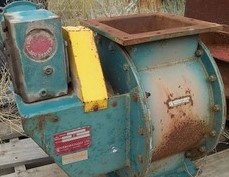
Ensure Dust Collection System Efficiency by Maintaining Air Valves
For dust collection systems to operate as they are designed, baghouse and cartridge collector filters need to be regularly cleaned. Many systems employ compressed air for this purpose, periodically sending blasts of air through the filters which effectively removes particulate matter from them. The frequency of these cleaning cycles can be controlled by various methods, such as a pressure drop monitor that allows for detection of a filter that is beginning to clog, or with a simple timer. Air flow is typically controlled with the use of a solenoid operated diaphragm valve.
Why Are Airlocks Needed Under Dust Collectors?
Airlocks are very important for proper dust collector operation. The airlock prevents air from entering or exiting the bottom of the dust collector. The opening at the bottom of the dust collector is meant for discharging the dust from the system. When air is entering or leaving from this area, it will cause issues.
Why Do I Need an Airlock Valve for My Dust Collector
In order for a dust collector to operate at its peak performance, the hopper has to be isolated from the outside. This means either the dust bin/receptacle is “hard connected”, meaning there are no air leaks or an airlock is used. An airlock isolates the dust collector hopper from the outside, while allowing the collected dust to exit the system. Common airlocks are rotary valves, trickle valves, double dump valves, and knife gates. Some airlocks are low leakage (double dump valve and trickle valves) while others have continuous leakage (rotary valves).
Aerodyne At Ceramics Expo 2017

Now in its third year, Ceramics Expo is the world’s largest annual free-to-attend expo for the advanced ceramic and glass community.
Dust Collection Systems: 5 Best Solutions of Dust Collection Airlocks
When you are specifying your dust collector, don’t just settle on a rotary valve. There are other airlocks that might be better suited for your application. Other airlocks include the double dump (flap) valve, trickle valve, and knife gate. Not to mention just bypassing an airlock totally and connecting a hopper directly to the bottom of the dust collector.
Vacu-Valve on a 30-day trial? Are you kidding? Try it NOW…
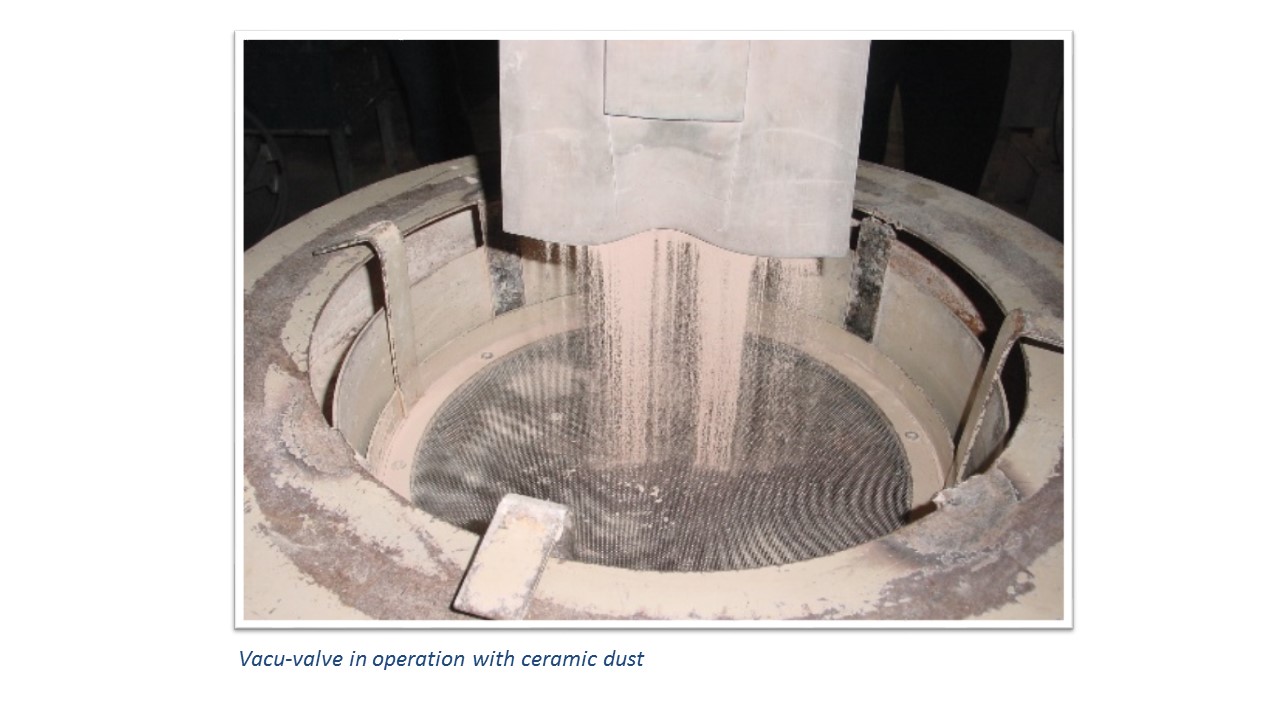
The Vacu-Valve is a low cost alternative to a rotary valve. There are no motors, pneumatics, or moving parts as it operates by using the system vacuum above to seal the sleeve. This is typically from a cyclone, baghouse, or cartridge collector. Since the sleeve is split, gravity will slowly pull the solids down through the sleeve until they exit the sleeve and fall into the collection hopper. As you can see from the description, not all solids will easily pass through this. The ideal particulate would be sand. It’s small, spherical shape and the density allows it to easily pass through the valve. It doesn’t bridge easily.
Buying the Right Material Handling Valve for Your Dust
Material handling valves come in all shapes, sizes, varieties, and there are hundreds of available options for each style. From rotary valves and knife gate valves to double dump valves and trickle valves the choices are nearly endless. With such a vast selection available, choosing the right material handling valve for a given application can be a difficult task and choosing the wrong valve can be costly. While there may be more than one possible solution to a material handling need, there is often a best solution to be found if the proper considerations are given. Here are the top 5 questions any plant manager or plant engineer should ask when choosing a material handling valve.
Rock Dust is No Match for GPC
Click here for our free informational guide about the benefits of using a cyclone before a baghouse/cartridge collector.