All dust collectors include a hopper that collects the captured dust. These hoppers are not designed for storage of the dust, however. They are there for the dust to collect until it passes out of the dust collector through an airlock, such as a rotary valve, double-dump valve, trickle valve, etc. Adequate discharge intervals are important. If enough dust builds up in the hopper, then the dust will get re-entrained into the air. This could cause a few issues.
Posts about Airlock Valves (3):
Five Major Air Leakage Issues That Cause Problems to Your Dust Collection System
When selecting the airlock for your dust collector, it is important to think about air leakage. A little air leakage through the airlock isn’t a usually a big deal with many baghouse applications, but air leakage can cause major issues with some applications. So it is important that you identify if your system will have issues with air leakage and then select the proper airlock valve.
Why Are Airlocks Needed Under Dust Collectors?
Airlocks are very important for proper dust collector operation. The airlock prevents air from entering or exiting the bottom of the dust collector. The opening at the bottom of the dust collector is meant for discharging the dust from the system. When air is entering or leaving from this area, it will cause issues.
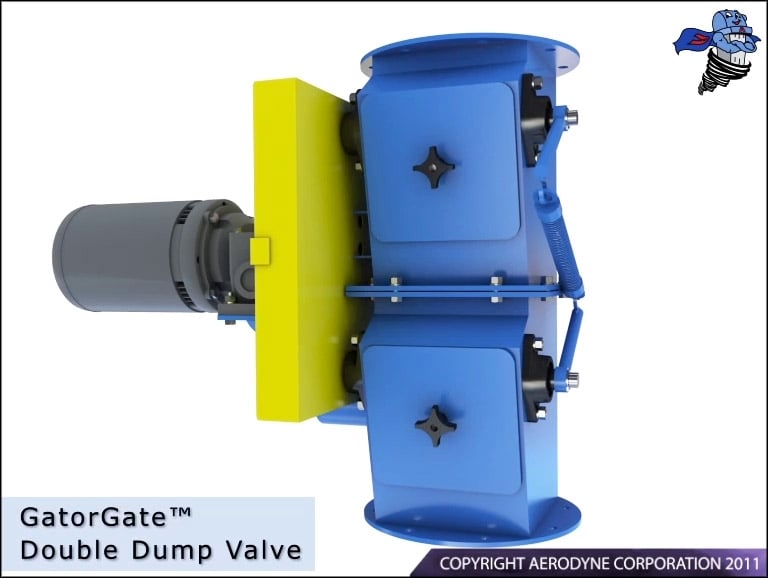
Reduce Air Leakage with the Aerodyne Double Dump Valve
When your dust collectors are having issues, one of the first places to look is the airlock valve. Often times, dust is hygroscopic and when outside air leaks into the system, humidity follows. This can cause the dust to absorb the humidity and become sticky or harden like cement. This can lead to plugged filters, hoppers and damage to rotary valves. While rotary valves are the industry standard airlock, they constantly allow air leakage. A low leakage valve is required. Double dump valves however are very low leakage, since there is no direct connection to the outside atmosphere. The valve always isolates the conditions above it from the conditions below it. This minimizes air leakage, thereby minimizing humidity from affecting the dust.
Why Do I Need an Airlock Valve for My Dust Collector
In order for a dust collector to operate at its peak performance, the hopper has to be isolated from the outside. This means either the dust bin/receptacle is “hard connected”, meaning there are no air leaks or an airlock is used. An airlock isolates the dust collector hopper from the outside, while allowing the collected dust to exit the system. Common airlocks are rotary valves, trickle valves, double dump valves, and knife gates. Some airlocks are low leakage (double dump valve and trickle valves) while others have continuous leakage (rotary valves).
Case Study: Compact Cyclone Key Component in Tablet Dust Reclamation? GPC Helps Keep Pharmaceutical Process in Check with FDA
Aerodyne Environmental, the industry’s leading manufacturer of industrial cyclonic dust collectors and dust collection valves, recently assisted in a pharmaceutical application. A prominent US pharmaceutical company was creating a dust collection system for the facility where a variety of drugs are manufactured. The company plans on using a cartridge collector as part of the tablet manufacturing process. Because this company is regulated by the FDA, every gram of product must be accounted for, even the dust. The active pharmaceutical ingredients (APIs) that are created are extremely fine and flow like water. The cartridge collector would be able to collect the particulate in the process, but much of it would get stuck in the filters and would be hard to account for. Read more about this case study.
Aerodyne Cyclones help with Pharmaceutical Product Reconciliation
Do you need to provide product reconciliation or are you spending too much time gathering the product from your dust collector?
Introducing the “EZBIBO” for Pharmaceutical Processes? A Beginner’s Guide to Easy Bag-In Bag-Out Hopper Waste Reclamation System!
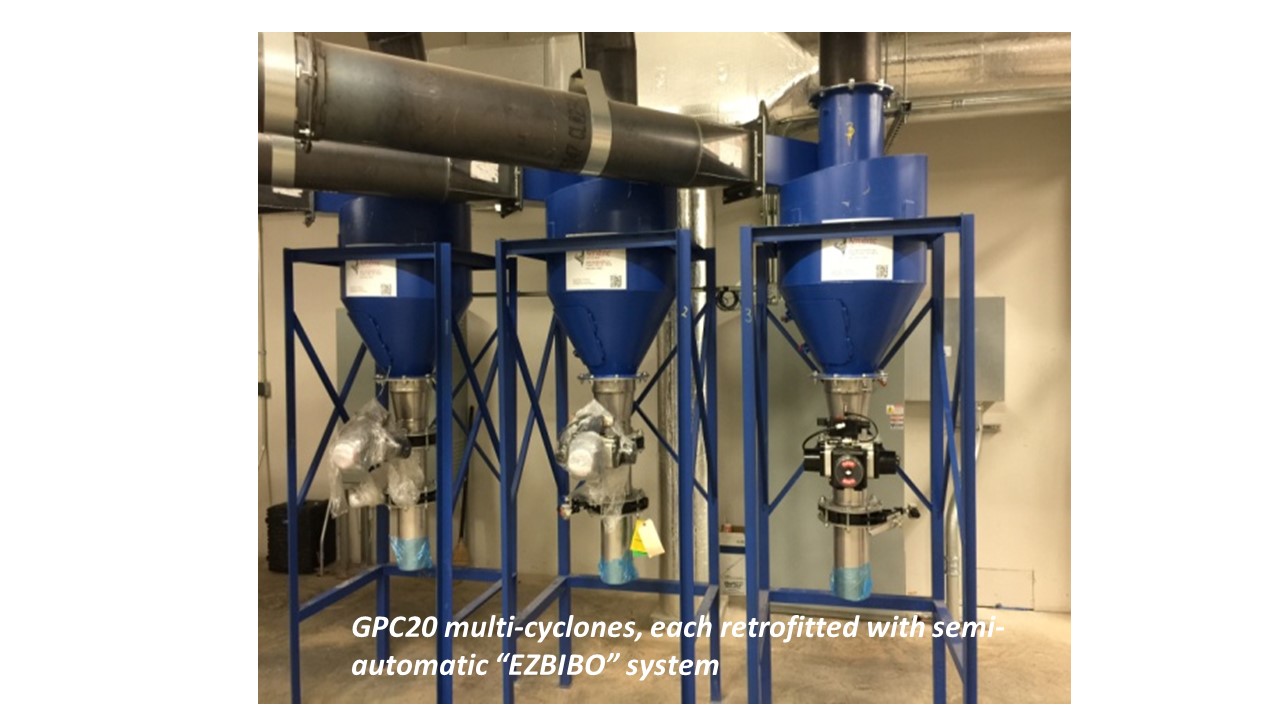 The “EZBIBO” system was originally designed for use with Aerodyne GPC Cyclones to allow for easier bag-in bag-out capture systems for low toxic level pharmaceutical dusts typically encountered with encapsulators, pill coating systems, and some mixing operations. The system allows for capture and bagging of waste material in the pharmaceutical process allowing for weighing and accounting of all materials used in a process, with minimal exposure to operation personnel.
Pharmaceutical Industry: What’s Aerodyne GPC Cyclone got to do with it?
T he pharmaceutical industry has unique requirements that normal industrial applications do not have. Whether it’s the strict FDA rules or the flexibility of batch production, normal industrial practices and equipment don’t always apply. Even with continuous production becoming more popular, pharmaceutical applications are different than standard industrial applications.
Washdown Pneumatic Knife Gate Saves Food Company Dough