Look under almost any dust collector and you will see a rotary airlock valve spinning its rotor and emptying the collected contents from the hopper. These valves have long been used to maintain a seal in vacuum dust collection systems while simultaneously providing an escape route for the dust. The advantages of a rotary airlock for dust collectors include, automatic hopper emptying, minimal vacuum pressure loss, and the many options available to meet specific application needs. Rotary valves can be custom fit to handle high temperatures, harsh chemical environments, and abrasive materials. Rotary valves do however, have a few major drawbacks.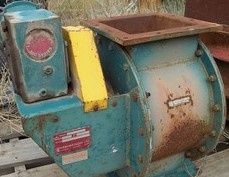
Posts about Trickle Valves (2):
Five Major Air Leakage Issues That Cause Problems to Your Dust Collection System
When selecting the airlock for your dust collector, it is important to think about air leakage. A little air leakage through the airlock isn’t a usually a big deal with many baghouse applications, but air leakage can cause major issues with some applications. So it is important that you identify if your system will have issues with air leakage and then select the proper airlock valve.
Why Do I Need an Airlock Valve for My Dust Collector
In order for a dust collector to operate at its peak performance, the hopper has to be isolated from the outside. This means either the dust bin/receptacle is “hard connected”, meaning there are no air leaks or an airlock is used. An airlock isolates the dust collector hopper from the outside, while allowing the collected dust to exit the system. Common airlocks are rotary valves, trickle valves, double dump valves, and knife gates. Some airlocks are low leakage (double dump valve and trickle valves) while others have continuous leakage (rotary valves).
Dust Collection Systems: 5 Best Solutions of Dust Collection Airlocks
When you are specifying your dust collector, don’t just settle on a rotary valve. There are other airlocks that might be better suited for your application. Other airlocks include the double dump (flap) valve, trickle valve, and knife gate. Not to mention just bypassing an airlock totally and connecting a hopper directly to the bottom of the dust collector.
Vacu-Valve on a 30-day trial? Are you kidding? Try it NOW…
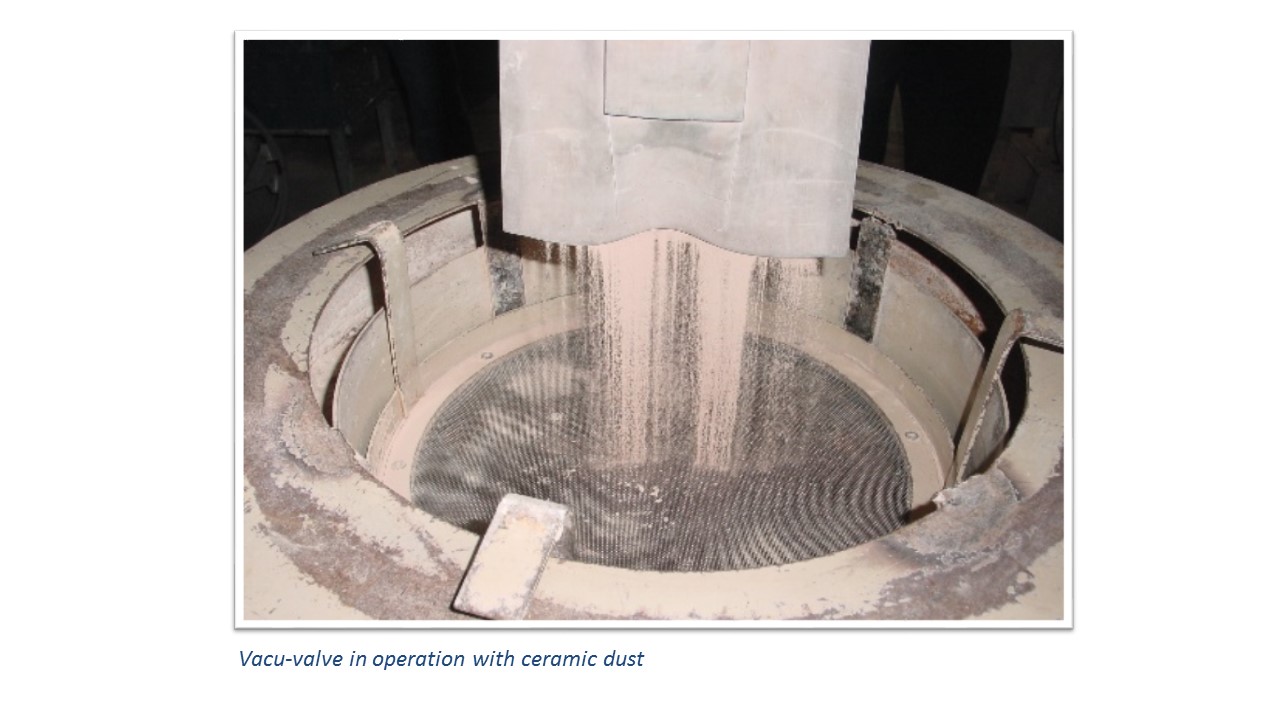
The Vacu-Valve is a low cost alternative to a rotary valve. There are no motors, pneumatics, or moving parts as it operates by using the system vacuum above to seal the sleeve. This is typically from a cyclone, baghouse, or cartridge collector. Since the sleeve is split, gravity will slowly pull the solids down through the sleeve until they exit the sleeve and fall into the collection hopper. As you can see from the description, not all solids will easily pass through this. The ideal particulate would be sand. It’s small, spherical shape and the density allows it to easily pass through the valve. It doesn’t bridge easily.
Trickle Valve Completes Dust Collection System
What questions should you ask when considering an industrial airlock valve for your application?
Click here and receive our free white paper regarding the Top 5 Questions to Consider When Purchasing an Industrial Material Handling Valve.

Trickle Valve System Proves to be the Right Choice
What questions should you ask when considering an industrial airlock valve for your application?
Click here and receive our free white paper regarding the Top 5 Questions to Consider When Purchasing an Industrial Material Handling Valve.
Trickle Valve Saves Company Big Money
What questions should you ask when considering an industrial airlock valve for your application?
Click here and receive our free white paper regarding the Top 5 Questions to Consider When Purchasing an Industrial Material Handling Valve.
Rotary Valves Prove to be Problematic for Roofing Manufacturer
What questions should you ask when considering an industrial airlock valve for your application?
Click here and receive our free white paper regarding the Top 5 Questions to Consider When Purchasing an Industrial Material Handling Valve.
Trickle Valve System Assists Baghouse Collector with Grain Dust