ebsc

Posts by:

ebs

Primary Clarifier Operation

Primary clarification is the physical treatment process of removing solids before biological treatment. It is the most cost effective way to remove these solids after basic screening. Process water enters the clarifier tank and floatable solids (scum) are removed from the surface by skimmers while settleable solids (sludge) are collected on the bottom by a rake and removed via a sludge removal system. Effluent destined for biological treatment leaves the clarifier over a weir. The expected range for percent removal in a primary clarifier is 90%-95% settleable solids, 40%-60% suspended solids, and 25%-50% total BOD5.

Clarifier efficiency is based on hydraulic detention time, temperature of the water, the design of the tank and the condition of the equipment. Poor clarifier performance can be due to a variety of factors such as (1) hydraulic overload which decreases hydraulic detention time; (2) hydraulic under-load which doesn’t allow the equipment to work efficiently; (3) sludge buildup which causes decreased tank volume; and (4) highly concentrated waste streams. Bypassing a clarifier, which means routing plant effluent directly to secondary treatment in an aeration basin, should be done only in emergencies when clarifier equipment must be repaired or the sludge removal system is not able to process the sludge volume it receives. This scenario introduces high solids and elevated BOD levels into the biological treatment system and is not advised.

Read More

Is your lab data right?

 Improving the operation of environmental laboratories in industrial facilities benefit not only the environmental staff but other departments, as well. Accurate and timely analyses from the lab helps support decisions throughout the facility. This ensures compliance and can save thousands of dollars in lost production, unnecessary investigation or troubleshooting effort and expenses.


What are the benefits of a lab audit?

  1. Verify the lab is producing quality data efficiently.
  2. Provides the peace of mind in being compliant by meeting the rigorous standards of NPDES permits.

What’s the lab audit process?

  1. Discussion of concerns with processes, data or analytical testing.
  2. Evaluation of each technician’s laboratory technique and competency with all tests.
  3. Hands-on training. Generating quality data begins with having a well-trained staff to ensure everyone working in the lab is performing the tests the same way, and the correct way. The show, practice, do methodology.
  4. Ensures all permitted testing is performed in accordance with the requirements of Standard Methods and EPA test methods utilizing Best Laboratory Practices.
  5. Review SOPs generated through environmental testing and the associated quality control data. This is typically done with all environmental staff to demonstrate how to best utilize data from process control and permitting standpoints.

How long does a lab audit take?

A typical lab audit will take approximately 2-3 days on-site. The amount of time a lab audit requires is based on the size of the laboratory, the number of technicians, and the complexity of the operations. It is important to ensure that each concern and question is reviewed and addressed.

Contact us the next time you suspect your lab data might be off—or if results just aren’t lining up with what you’re seeing in the field.

We can help you develop a comprehensive audit for your laboratory to ensure it is operating effectively, efficiently and in full compliance with current regulations and procedures.


Read More

Types of Organic Compounds In Industrial Wastewater

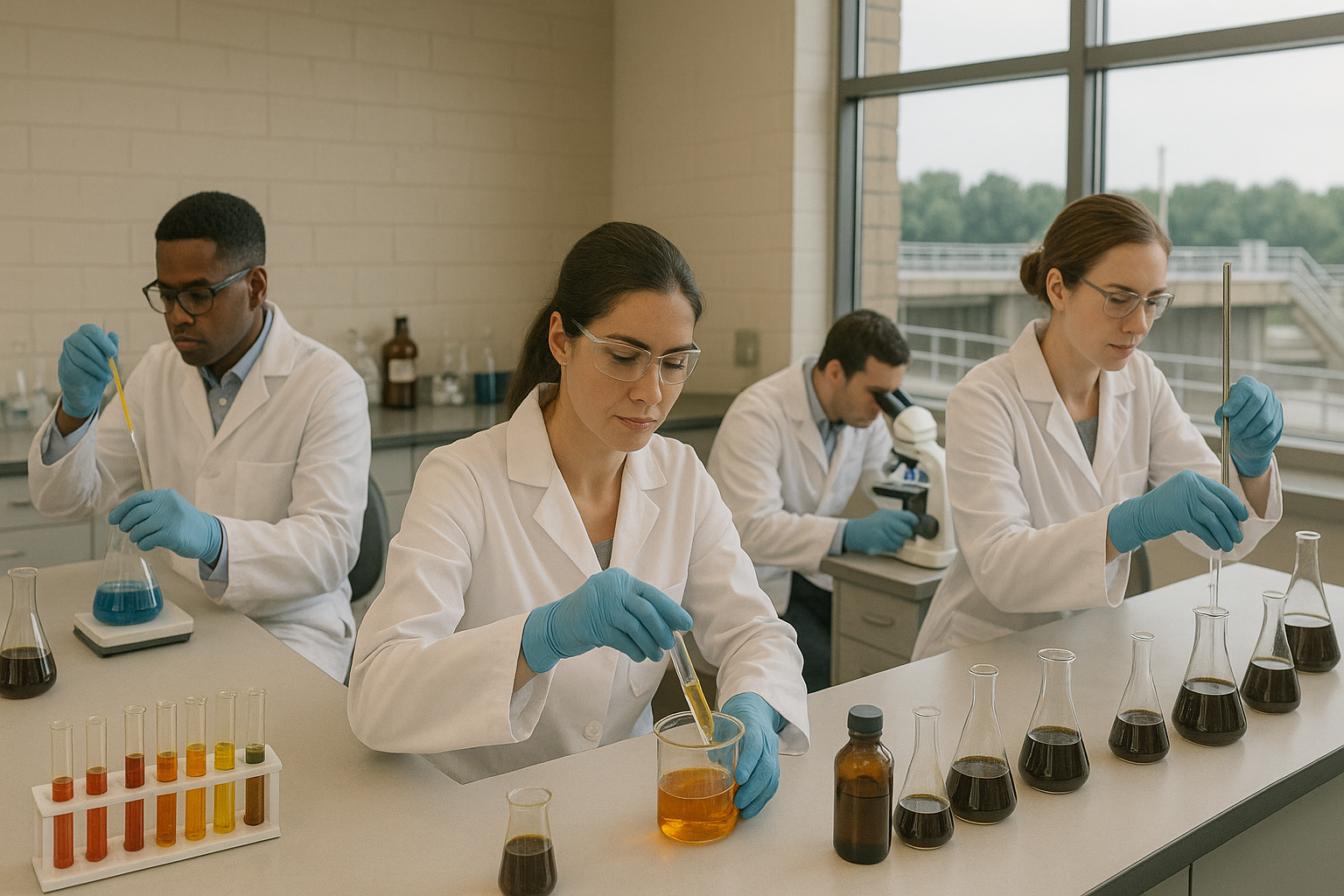
Testing for different categories of compounds in wastewater—such as readily biodegradable, slowly biodegradable, recalcitrant, and toxic compounds is crucial for several reasons related to environmental protection, wastewater treatment efficiency, and public health. Knowing the composition of your wastewater is key to selecting the most effective treatment program for your facility. At EBS, our lab is equipped to test for the presence and concentrations of many of these compounds, which are well-known to wreak havoc on the efficiency of biological treatment processes.

Following this analysis, EBS can provide further treatability testing to help you and your team develop the most effective action plan!

Read More

Free vs Bound Chemical Analysis

The return of healthy biological solids is essential to the performance of activated sludge systems. Along with concentrated biomass, inhibitory and toxic chemicals that can cause WET testing failures or treatment deficiencies may be returned to the system by being bound to the solids.  

Determining if inhibitory chemicals exist free in the bulk water or bound to the suspended solids within the aeration basin is beneficial to the plant operator. If these chemicals are adhered to solids through bioaccumulation, it is advisable to remove more suspended solids through the sludge wasting process from secondary treatment, rather than recirculating them back to the aeration basin. This process of sludge wasting is effective because these chemicals have already been neutralized, allowing for their safe removal. Alternatively, too much bioaccumulation on bacterial cells can inhibit the effectiveness and efficiency of removing BOD and cause settling issues. If there is a loss of suspended solids containing inhibitory chemicals or if these chemicals are free in the bulk water, WET testing toxicity or permit failure could occur. 

Free bound chem analysis fig1

Figure 1

As shown in Figure 1, the relationship between bound and free chemicals can change throughout the treatment system. Typically, influent streams contain inhibitory chemicals that are primarily free in the bulk water. In the biological basins, the bacteria can bind these chemicals. During secondary treatment, the solids can be wasted to reduce the recycling of the harmful chemicals back into the treatment system.   

In the laboratory, a monthly or quarterly representative sample set can be used to determine these relationships to get a more precise idea of how chemicals are bioaccumulating in a system operating under normal conditions. In upset events, abnormalities can help plant operators take appropriate corrective action.   

Read More

Aerobic vs. Anaerobic Treatment in Wastewater Systems: Part 1

A Focus on Aerobic Treatment in Aerated Stabilization Basins (ASBs)

There are 2 major types of systems used for wastewater treatment: aerobic and anaerobic systems....

Read More

Aerobic vs. Anaerobic Treatment in Wastewater Systems: Part 2

A Focus on Anaerobic Treatment

There are 2 major types of systems used for wastewater treatment: aerobic and anaerobic systems. Each has different uses along with pros and cons. This particular article focuses on anaerobic treatment. Aerobic treatment is the focus of a companion article written by EBS.

Anaerobic Treatment

Anaerobic treatment is a process where wastewater or material is broken down by microorganisms without the aid of dissolved oxygen. However, anaerobic bacteria can and will use oxygen that is found in the oxides introduced into the system or they can obtain it from organic material within the wastewater. Anaerobic systems are used in many industrial systems including food production and municipal sewage treatment systems.

Anaerobic digestion is commonly used to treat sludges in the first areas of a wastewater treatment plant. This process is popular because it is able to stabilize the water with little biomass production. Anaerobic treatment occurs in many different stages. The key microorganisms are methane formers and acid formers. The acid formers are microorganisms that create various acids from the sludge. Methane formers convert the acids into methane.

The two main anaerobic systems are batch systems and continuous systems. In a batch system, the biomass is added into a reactor that is sealed for the rest of the digestion process. This is the simplest form of anaerobic treatment but can have odor issues associated with it. As the most simple, it is also one of the least expensive ways to achieve treatment.

A continuous system has organic matter constantly added to the treatment system. Since it is continuously being fed, there is a need for the byproduct to continuously be removed. The byproduct can result in a constant source of biogas, which can be used as an alternative source for energy. This system is usually more expensive to operate because of the need for constant monitoring and manpower.

Biogas is produced as the bacteria feed off the biodegradable material in the anaerobic process. The majority of the biogas produced is methane and carbon dioxide. These gases can be stored and used for energy production. The methane in the biogas can be burned to produce heat and electricity. The heat and electricity can be used to aid the process of the anaerobic system by providing power and heat for digestion to occur.

Biogas can also be used as an alternative source for fuel. This has received a lot of attention due to the ever-rising cost of burning fossil fuels. To produce fuel, the biogas must be treated to reduce or eliminate hydrogen sulfide. The treatment may become expensive but is necessary because the EPA has strict limits on the amount of hydrogen sulfide released into the atmosphere.

Whether it is aerobic or anaerobic treatment, each treatment system has its place in the world today. They are very different in the process but both are used to achieve maximum degradation while meeting the strict regulations set by the environmental agencies that regulate what is released into the air, ground, or water.

This article is multi-part

Read More