rio - kn

test

A circular economy is imperative to global climate action

A circular economy is imperative to global climate action

After the commotion and commitments at COP26, there has been much discussion on what’s next for global climate action and how to align action with the goals of the Paris Agreement.

At Rio, we believe transitioning to a circular economy is an imperative part of tackling the climate crisis. However, the importance of a circular economy can often be overlooked in business and organisational strategies.

It's true that net zero is fundamental, and we hope you’re on your net zero journey or about to embark on it (if you need a hand, we have a ten step to net zero guide), but here we’ll explore why circularity shouldn’t be left behind.


It's not just big business: SMEs and climate action after COP26

It's not just big business: SMEs and climate action after COP26

We need to scale up climate action, and we need to do it fast. Climate commitments from governments leave the world on track for a temperature rise of at least 2.7ºC, according to the latest Emissions Gap Report. But we still have a window of opportunity, with the coming decade a crucial time for action.

Action to achieve the climate goals outlined in the Paris Agreement can’t be left to governments, or any single sector. Limiting increases in temperature to as far below two degrees Celsius by the end of century will need ambitious involvement and commitment from the private sector - and not just from the largest companies out there.

This is where the role of small and medium-sized enterprises (SMEs) becomes apparent. Collectively, SMEs account for about 90% of all businesses and 50% of employment worldwide. While individually each have a seemingly minor impact, together they are critical for responding to the climate crisis. What’s more, given the scale of emissions reductions needed, it requires a collective effort for all companies to act on their carbon footprint - both in their direct operations and in their supply chains.

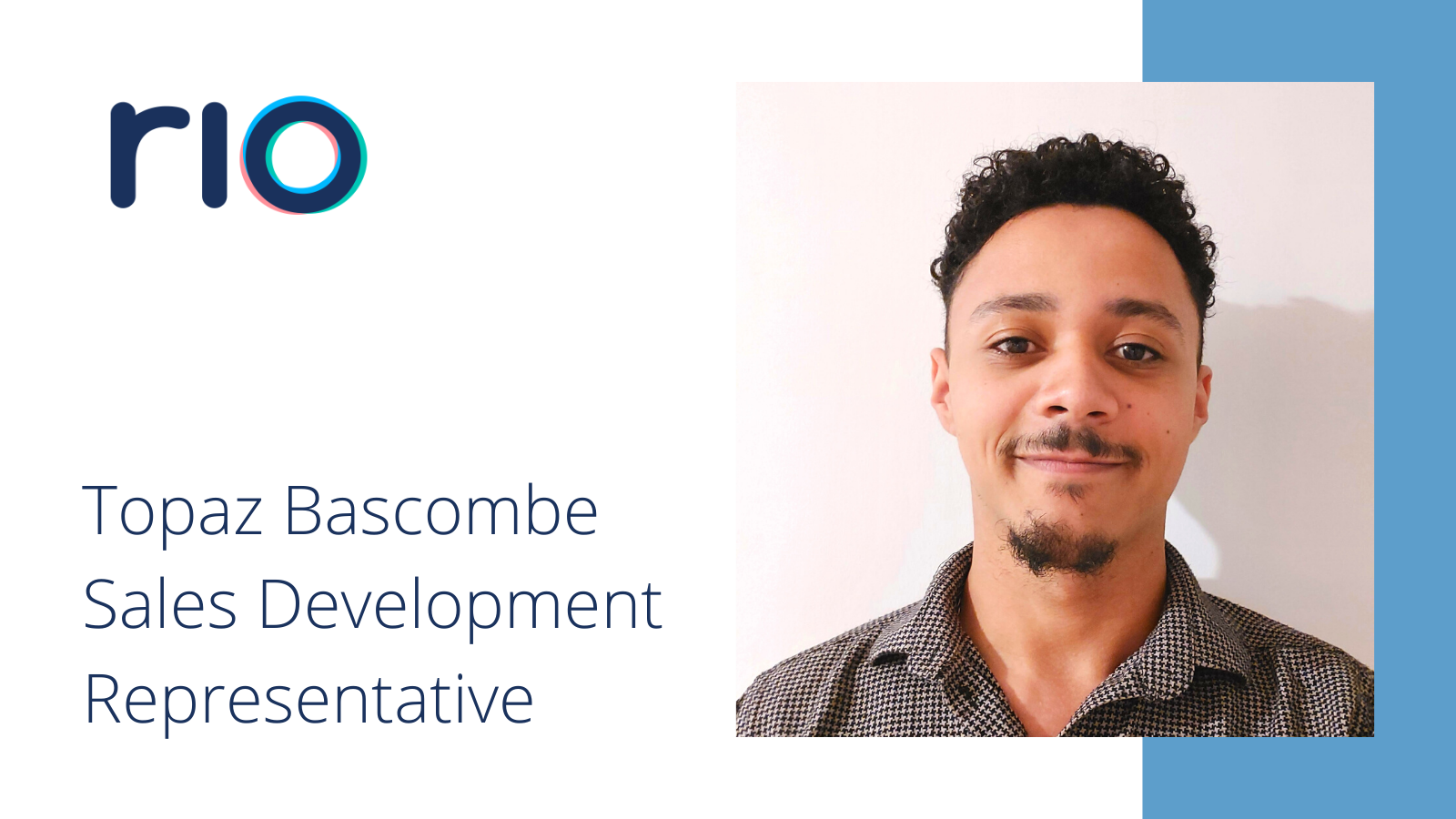
Meet our team: Topaz Bascombe, Sales Development Representative

Meet our team: Topaz Bascombe, Sales Development Representative

What are you working on at Rio?

Currently I’m working closely with our Sales team to better develop my  skills and also boost my knowledge base in the ESG field, whilst learning to understand the large scope of what our Rio platform is capable of.

Alongside that I’ve undergone a lot of our own Rio engage training which has been very insightful and helpful whilst breaking into the sustainability field!

What does the transition to clean energy look like?

What does the transition to clean energy look like?

Will the COP26 Summit in Glasgow go down as a moment of intense discussion or as a pivotal turning point in the movement towards true clean energy change? U.S. President Joe Biden has pledged to join world leaders in accelerating climate-connected goals, and there’s been strong sentiment towards phasing out coal entirely. Yet outside the conference, the numbers tell a different and more complex story. Since 2000, coal production in the Asia Pacific region has jumped more than 60 percent.

Meet our team: Ellen Osborne, Senior Sustainability Consultant

Meet our team: Ellen Osborne, Senior Sustainability Consultant

What are you working on at Rio?

I’m pleased to be working in a consultancy capacity with a number of public and private organisations. I’ll mostly be keeping up with the latest ESG reporting and disclosure requirements, becoming a trusted advisor to our clients leveraging my background in forestry and water management. I look forward to building that knowledge into the Rio Platform.

EU Sustainable Finance Disclosure Regulation Reporting Requirements: A Closer Look

EU Sustainable Finance Disclosure Regulation Reporting Requirements: A Closer Look

What began in the 1960s as a minuscule vote of financial conscience and remained that way until around a decade ago, has now emerged as a mighty force: ESG investing. In growing numbers, investors now act on ESG, even as they keep close watch on their returns. Indeed, the potential for financial choices to positively impact the planet matter more than ever and today’s worldwide markets are waking up to this reality.

In America, 2021 investment giant BlackRock has launched its U.S. Carbon Transition Readiness ETF. And globally, ESG funds are projected to approach £1 trillion by 2030. That would surpass £4.1 billion invested for all of 2018 by close to 200 times. 

Now the question is: How can the EU encourage its financial market participants and financial advisors to invest in sustainable options? This is where Sustainable Finance Disclosure Regulation (SFDR) enters. SFDR is a solution put forward by EU’s High-Level Expert Group (HLEG) on sustainable finance.

Mobilising Finance: COP26 and the role of Climate Finance

Mobilising Finance: COP26 and the role of Climate Finance

COP26 backstory

The COP26, officially the 26th Conference of the Parties, will take place in Glasgow from the 31st of October to the 12th of November 2021. The 197 parties to the UNFCCC (United Nation’s Framework Convention on Climate Change) will meet to accelerate the progress on the goals of the 2015 Paris Agreement. COP26 will focus on four main goals:

  • Secure global Net Zero by mid-century and keep 1.5 degrees within reach
  • Adapt to protect communities and natural habitats
  • Mobilise finance
  • Cooperate to deliver such improvements.

Climate Finance: what is it, and why is it central to COP26?