alsym press releases - kn

test

From Alchemy to Certainty

From Alchemy to Certainty

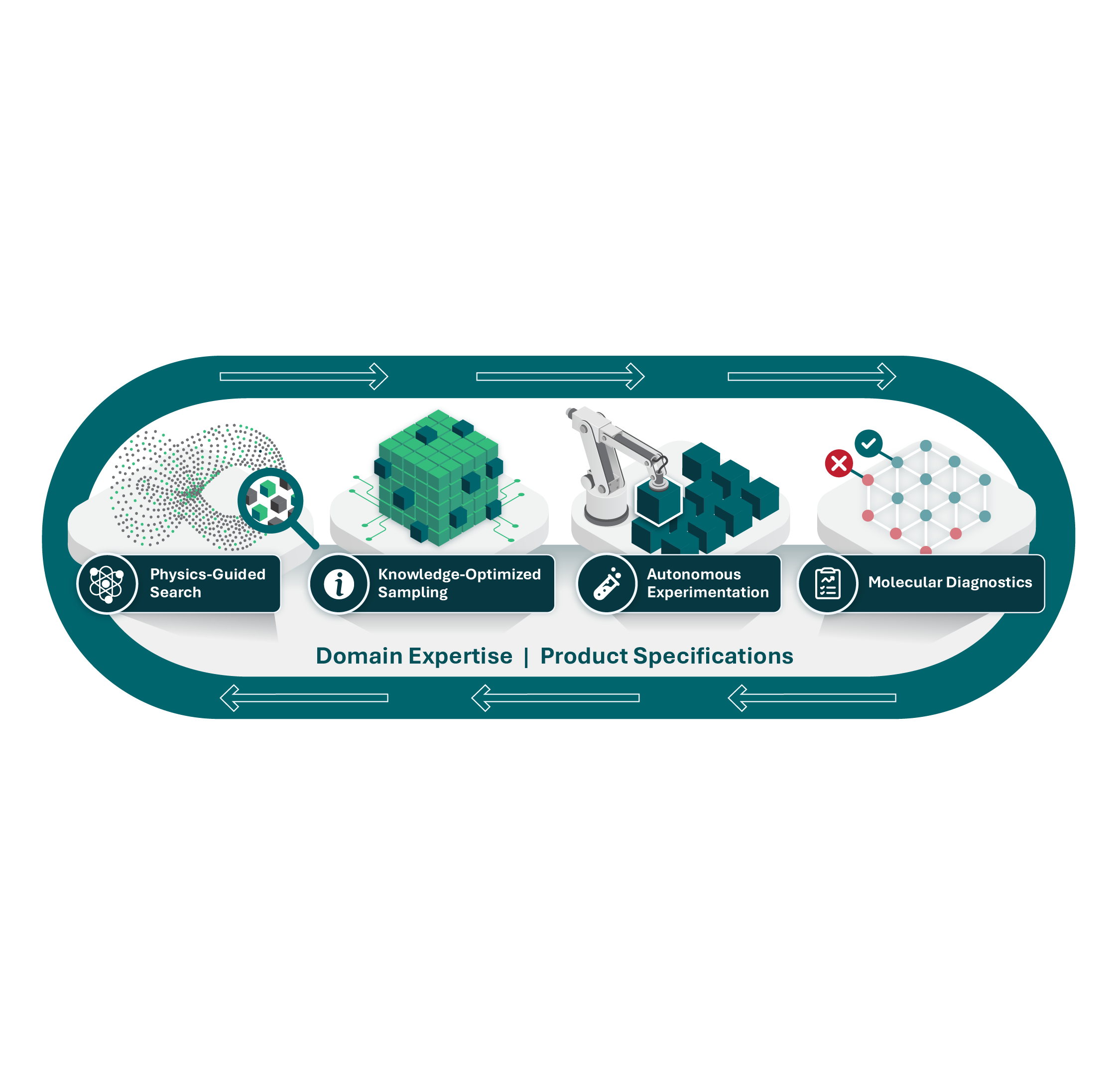
Alsym’s Physics-Informed AI Platform for Battery Development 

At Alsym, our mission is to provide safe, affordable energy for all — a billion-people purpose, and not merely a billion-dollar goal. Batteries are the path forward; however, today’s dominant chemistry – lithium-ion – poses inherent safety risks that make it unsuitable to serve as the solution at the scale the world needs. Therefore, we have set out to develop an innovative alternative. 

Prussian Blue Helped Put Sodium-Ion on the Map. NFPP+ Will Take It Mainstream.

Prussian Blue Helped Put Sodium-Ion on the Map. NFPP+ Will Take It Mainstream.

The news that Natron Energy ceased operations in September 2025, halting its plans for a massive $1.4 billion, 24-gigawatt-hour gigafactory in North Carolina, has prompted interesting discussions about the trajectory of sodium-ion technology. Over a 13-year run, Natron successfully brought Prussian Blue cathode chemistry out of the laboratory and into commercial deployment. They proved to a skeptical market that a lithium-free battery could function reliably. While their exit marks a difficult moment for the early sodium-ion community, it is crucial to understand what this development does and does not mean for sodium-ion chemistries. 

Peak Shaving on a Budget: How Sodium-Ion Batteries Slash CRE Energy Bills

Peak Shaving on a Budget: How Sodium-Ion Batteries Slash CRE Energy Bills

Commercial real estate (CRE) operators are facing a sustained financial squeeze. As utility rates climb across the United States—driven by record-breaking utility rate increase requests totaling billions of dollars—managing operational building expenses has become increasingly difficult. A significant portion of electricity costs often stem not from total energy consumed, but from peak demand charges—fees levied by utilities based on the highest point of energy usage during a billing cycle. 

A Second Chance at Energy Independence

A Second Chance at Energy Independence

A decade ago, a U.S. startup A123 successfully commercialized lithium iron phosphate (LFP) chemistry—a technology born in domestic national labs—but failed to build the manufacturing infrastructure required to scale it. As a result, the commercialization race was lost, and the U.S. now relies heavily on imported lithium-ion cells to power its own critical infrastructure. As of December 2025, 99% of LFP cathode components, 92% of anode components, 100% of LFP battery cells, and 77% of BESS system supply is controlled by China. 

Beyond Backup: How AI is Transforming Data Center Energy Storage

Beyond Backup: How AI is Transforming Data Center Energy Storage

For decades, the battery functioned as a static asset within the data center ecosystem, utilized exclusively for passive backup. Legacy Valve-Regulated Lead-Acid (VRLA) batteries were deployed to do one thing: idle at full charge and wait for power failures. Their versatility beyond this was limited mainly by low performance; VRLA batteries possess low cycle lives (typically 200–500 cycles) and degrade rapidly under frequent discharge, making them unsuitable for a more active role.

Rethinking the Root Cause of BESS Fires

Rethinking the Root Cause of BESS Fires

Utilities and developers across the globe are deploying gigawatts of battery energy storage systems (BESS) to buffer an increasingly unstable grid from rising electricity demand and adoption of intermittent renewable energy.

NFPP: The Right Chemistry for the Grid's New Normal

NFPP: The Right Chemistry for the Grid's New Normal

The challenges we foresaw for the future power grid have arrived sooner than expected. Cities are electrifying at record pace. Data center infrastructure is in the megawatt-scale and projected to reach gigawatt-scale by 2028. Electric heat pumps are replacing oil and gas systems. EV sales are growing 5x faster than gas cars. At the same time, record heat waves, winter storms, and other climate extremes are undermining grid reliability. According to a report from Climate Central released last year, there have been 60 percent more heat-related power outages between 2014-2023 than in the 10 years prior. Energy infrastructure is being pulled in two directions: toward greater demand, and into tougher conditions. The combination is a major problem.

Introducing Flexible-Duration Storage: One System Many Roles

Introducing Flexible-Duration Storage: One System Many Roles

As the energy landscape grows more dynamic and decentralized, the expectations for energy storage systems have evolved. Utilities, grid operators, and facilities managers are no longer just looking for solutions that check a box — they’re looking for systems that are strategic assets, capable of adapting to multiple roles as needs change.