alsym press releases - kn

test

Posts by Tara Sukumar:

Beyond Cell-Level Energy Density: Why Wh/Acre Drives Energy Storage Project Value

Beyond Cell-Level Energy Density: Why Wh/Acre Drives Energy Storage Project Value

Land acquisition and permitting are critical bottlenecks for grid-scale energy storage development. When evaluating battery technologies, industry stakeholders often default to cell-level energy density like watt-hours per kilogram (Wh/kg) or liter (Wh/L), as a proxy for footprint efficiency. However, this microscopic view rarely translates directly to the macroscopic realities of site planning.  
Strategies for Community Opposition Only Go So Far - Non-Flammable Batteries Bring You Home

Strategies for Community Opposition Only Go So Far - Non-Flammable Batteries Bring You Home

Prussian Blue Helped Put Sodium-Ion on the Map. NFPP+ Will Take It Mainstream.

Prussian Blue Helped Put Sodium-Ion on the Map. NFPP+ Will Take It Mainstream.

The news that Natron Energy ceased operations in September 2025, halting its plans for a massive $1.4 billion, 24-gigawatt-hour gigafactory in North Carolina, has prompted interesting discussions about the trajectory of sodium-ion technology. Over a 13-year run, Natron successfully brought Prussian Blue cathode chemistry out of the laboratory and into commercial deployment. They proved to a skeptical market that a lithium-free battery could function reliably. While their exit marks a difficult moment for the early sodium-ion community, it is crucial to understand what this development does and does not mean for sodium-ion chemistries. 

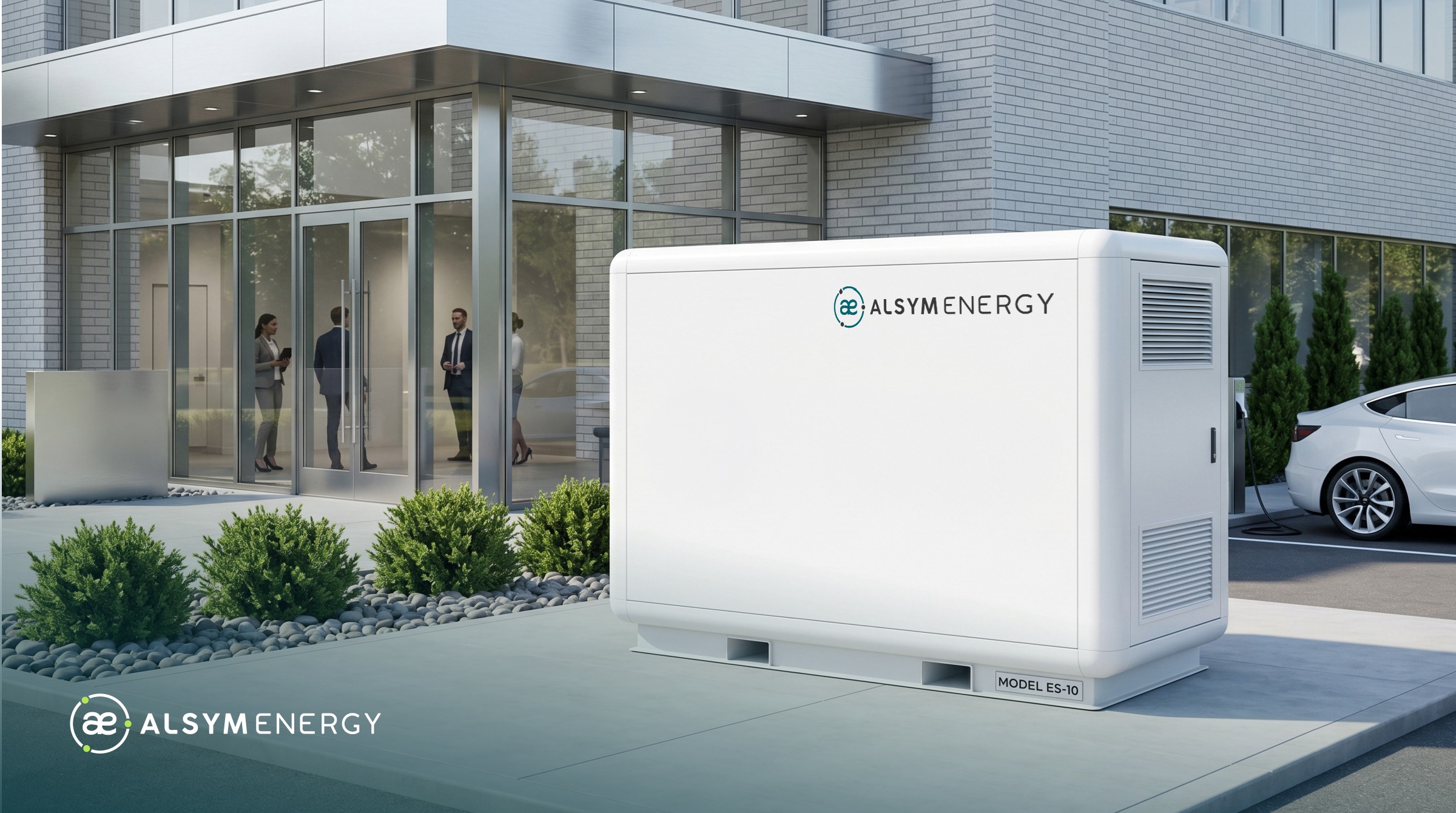
Peak Shaving on a Budget: How Sodium-Ion Batteries Slash CRE Energy Bills

Peak Shaving on a Budget: How Sodium-Ion Batteries Slash CRE Energy Bills

Commercial real estate (CRE) operators are facing a sustained financial squeeze. As utility rates climb across the United States—driven by record-breaking utility rate increase requests totaling billions of dollars—managing operational building expenses has become increasingly difficult. A significant portion of electricity costs often stem not from total energy consumed, but from peak demand charges—fees levied by utilities based on the highest point of energy usage during a billing cycle. 

A Second Chance at Energy Independence

A Second Chance at Energy Independence

A decade ago, a U.S. startup A123 successfully commercialized lithium iron phosphate (LFP) chemistry—a technology born in domestic national labs—but failed to build the manufacturing infrastructure required to scale it. As a result, the commercialization race was lost, and the U.S. now relies heavily on imported lithium-ion cells to power its own critical infrastructure. As of December 2025, 99% of LFP cathode components, 92% of anode components, 100% of LFP battery cells, and 77% of BESS system supply is controlled by China.