Jupyter AI Magics Are Not ✨Magic✨
It doesn’t take ✨magic✨ to integrate ChatGPT into your Jupyter workflow.
Integrating ChatGPT into your Jupyter workflow doesn’t have to be magic.

Integrating ChatGPT into your Jupyter workflow doesn’t have to be magic.

The American Chemical Society (ACS) is a premier scientific organization with members all over the world from both academia and industry. Some of my team and I recently returned from their primary annual convening, the ACS 2023 Fall Meeting, held in San Francisco.

Tycho Brahe built a quadrant that allowed him to observe the path and distance of a comet as it crossed the solar system, helping to prove the heliocentric model of the way the stars and planets move. Galileo Galilei built his own telescope to study the night sky. Antoni van Leeuwenhoek built microscopes to study microbes. Marie Curie built ionization chambers to discover radioactivity. Rosalind Franklin built X-ray cameras to study DNA, viruses, and carbon. Nikola Tesla developed his eponymous coil to study X-rays, lighting, wireless power transmission, and phosphorescence.


If you have some programming experience, large language models (LLMs) can raise the ceiling of your performance and productivity. Using LLMs to write code turns a challenging recall task (What’s this function call? How does this API work?) into a much easier recognition task (Yup, that looks good” or That looks fishy.) This post will discuss 7 ways LLMs can help you write, understand, and document code.


Jun 11, 2023|Life Sciences, Materials Science, Technology, Transformation
We can bend them to our will, but sometimes they’re not the right tools for the job.
Enter Xarray and Awkward Array.
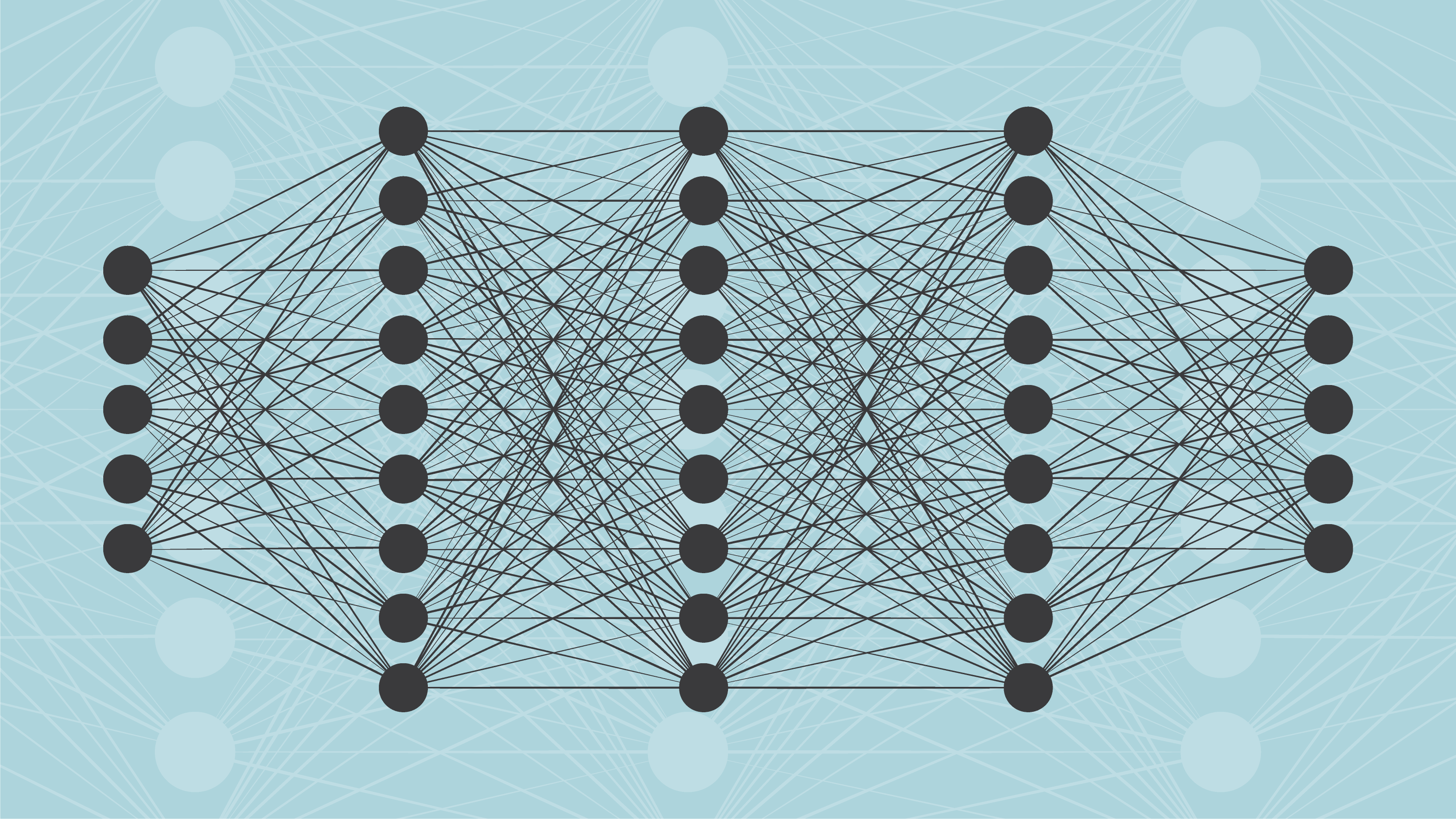
If you have used TensorFlow before, you know how easy it is to create a simple neural network model using the Keras API. Just create an instance of the Sequential model class, add the number of desired layers and accompanying layer nodes, define the activation functions to be used by each layer, and compile your model by providing an optimizer and loss function. Right? While this process is simple enough to grasp conceptually, it can quickly become an ambiguous task for those just getting started in deep learning.

Like most people, I mostly interact with Python using the default REPL or with IPython. Yet, I often reach for one of the Python tools that come with the standard library. All these tools are implemented as “mains” in the various scripts and modules. Here are 7 I use on a semi-regular basis.