Silk - kn

test

7 Common Challenges in Cloud Adoption

7 Common Challenges in Cloud Adoption

As we discussed in our previous post, statistics show that enterprises are quickly moving to adopt cloud technologies. But as you may remember, the applications they’re moving to the cloud—typically auxiliary applications that aren’t on the business’s critical path—proves that, behind the numbers, enterprises are a bit leery of going all in. In this post, we’ll take a closer look at the serious challenges in cloud adoption faced by enterprises, exploring some of the main reasons why businesses are being so cautious in moving their mission-critical apps to the cloud. Here are the top 7 challenges businesses face when working on cloud adoption:


Surprising Cloud Constraints You Don't Have On-Prem

Surprising Cloud Constraints You Don't Have On-Prem

Moving to the cloud from the datacenter opens your organization up to a world of new possibilities. You’re able to offload the day-to-day management, necessary maintenance, and exorbitant costs of an on-premises datacenter. Your team can focus on more high-value projects that have a direct impact on the business. And if your organization is taking steps to modernize, you’re better positioned to do just that: whether it’s through the integration of new technologies or by offering new business models like a SaaS offering of your product.

Strategies for Reducing Cloud Costs

Strategies for Reducing Cloud Costs

Best Practices for Reducing Cloud Spend

Are you considering migrating your applications to the cloud to simplify your data management? While the public cloud is substantial for minimizing how much time you spend day-to-day managing your data, its costs can quickly spiral out of control if you aren’t careful. There are a few ways to ensure your next bill doesn’t leave you with sticker shock.  

The Retail Customer Experience Revolution Will Escalate in 2023

The Retail Customer Experience Revolution Will Escalate in 2023

Driven by unprecedented circumstances pushed on the global retail community via the pandemic, the retail industry has been thrown into a full scale customer experience revolution. It has shifted everything from technology, consumer habits and expectations, to strategic planning approaches by leaders within the space. And while eCommerce site performance was already a requirement, not a differentiator, its importance only increased as we all logged on to the one place we could carry on some semblance of our normal lives: The Internet. From 2019 – 2021 eCommerce sales in the United States grew a whopping 40% according to the Annual Retail Trade Survey (ARTS) published by the United States Census Bureau. With this explosion in online purchasing, where the options are endless and distractions abound, it has become clear the war for market share will largely be won or lost on the back of customer experience. And if your eCommerce site can’t perform… You. Will. Lose.

3 Industry Trends Driving Adoption of Managed Service Providers (MSPs)

3 Industry Trends Driving Adoption of Managed Service Providers (MSPs)

Data. From website analytics to Internet-enabled refrigerators that alert us when we’re out of milk, the number of data points consumers create every moment of every day is simply astounding. And smart businesses are always looking for ways to leverage that data to boost sales, deliver better experiences, and control costs.

What is Overprovisioning and How Does It Happen?

What is Overprovisioning and How Does It Happen?

Determining the number of cloud resources that your organization needs is a balancing act. On the one hand, if you don’t budget for enough, you’ll find yourself going over budget in order to get the amount that you need. On the other hand, if you overprovision and invest in more resources, you’ll end up wasting money.

3 Ways to Optimize Your Cloud Post-Cloud Migration

3 Ways to Optimize Your Cloud Post-Cloud Migration

If you’ve been on the cloud for a while, it’s time to look at your cloud strategy and determine if it is allowing you to get the best experience and continuing to meet your needs. Are you getting the fastest speeds possible – or even the speeds that your workloads demand? Are you getting the best bang for your buck? In this post, we’ll look at some areas in your cloud strategy that can be optimized to continue driving the best experience possible on the cloud.

Migrating Oracle Databases From On-Prem to Silk + Azure Using SharePlex

Migrating Oracle Databases From On-Prem to Silk + Azure Using SharePlex

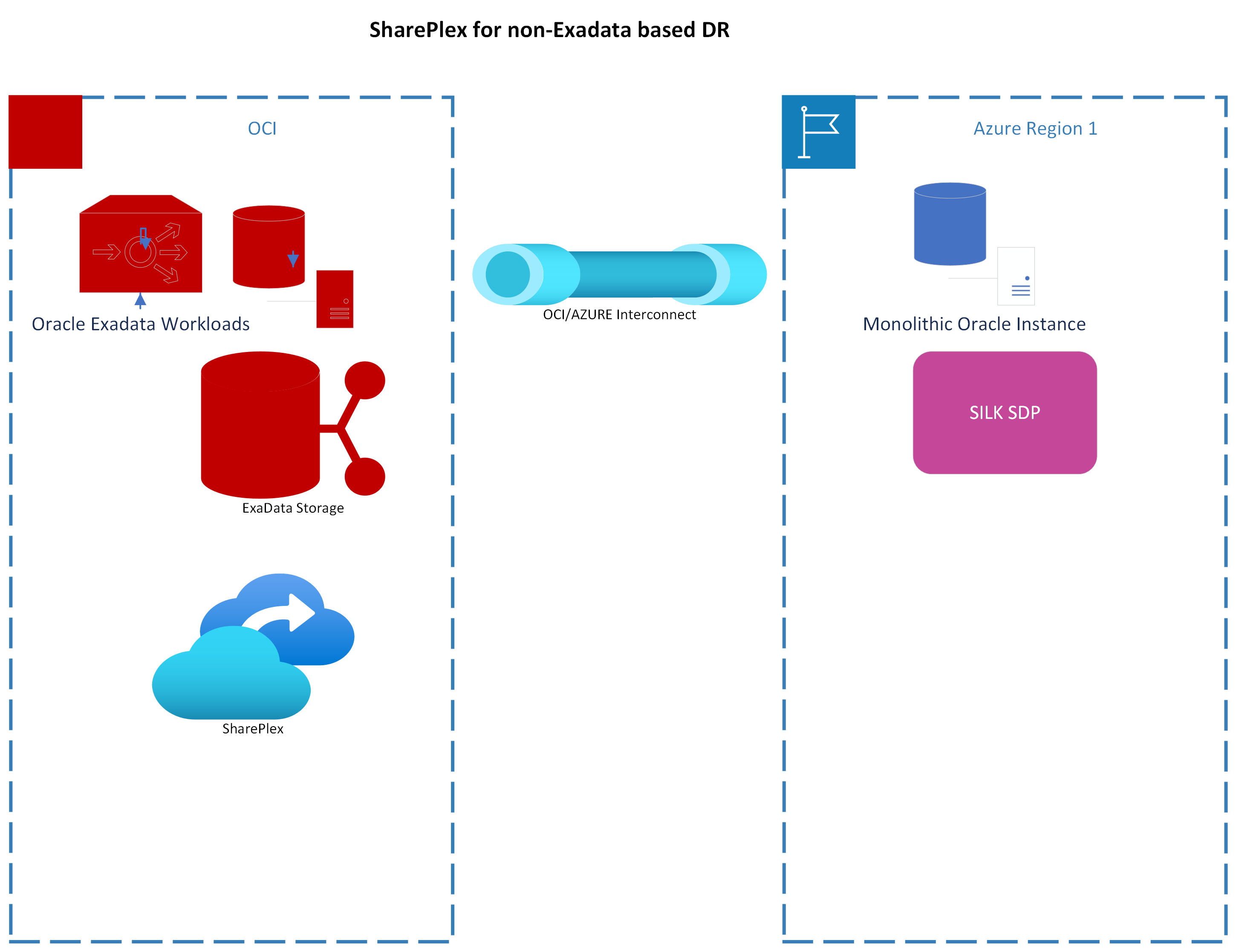
A variety of Oracle databases remain on premises even though many organizations have mandates to move their mission-critical Oracle workloads to the cloud for financial and techno-strategic opportunities. In my last blog, I reviewed the value proposition of using SharePlex to migrate Oracle databases from on-premises to Azure with Silk. This blog will attempt to show the techniques involved to move an Oracle database from on prem to an Azure + Silk cloud solution using a replication technology software known as SharePlex.  The use case scenario is to replicate the Hammer DB benchmark TPCC schema from one Oracle Linux server to another using a Silk Data Pod (SDP) as the underlying storage for the target database. This will show the basics of migration to Azure + Silk as well as highlight the interoperability and suitability for SharePlex as a primary migration tool to do this.

The Value Proposition of Silk + SharePlex on Azure

The Value Proposition of Silk + SharePlex on Azure

One of the challenges of an Oracle Exadata migration to non-Oracle Exadata (but still Oracle) platforms is Hybrid Columnar compression and an IOPS and storage size “explosion”. Exadata’s much touted I/O capabilities are, in fact, impossible to accomplish on native cloud I/O including Microsoft Azure Ultra Disk. The capabilities of the Silk Cloud DB Virtualization Platform I/O easily match Exadata configurations and offer additional features such as snapshots, asynchronous replication capabilities, and high data compression ratios. Silk’s operational simplicity and automation are integral.