
B Corp’s new framework is here - and it’s not messing around.
B Corp’s new framework is here - and it’s not messing around.

As sustainability becomes a core focus across industries, the terms "carbon credits" and "carbon offsets" often come up in conversations about reducing greenhouse gas emissions. For sustainability managers, understanding the differences and strategic uses of these mechanisms is critical to achieving environmental goals while meeting regulatory and stakeholder expectations. Here's what you need to know.

In the complex world of corporate sustainability, companies face a delicate balancing act. How can they effectively communicate their environmental efforts without falling into the traps of greenwashing (overstating efforts) or greenhushing (underreporting efforts)?
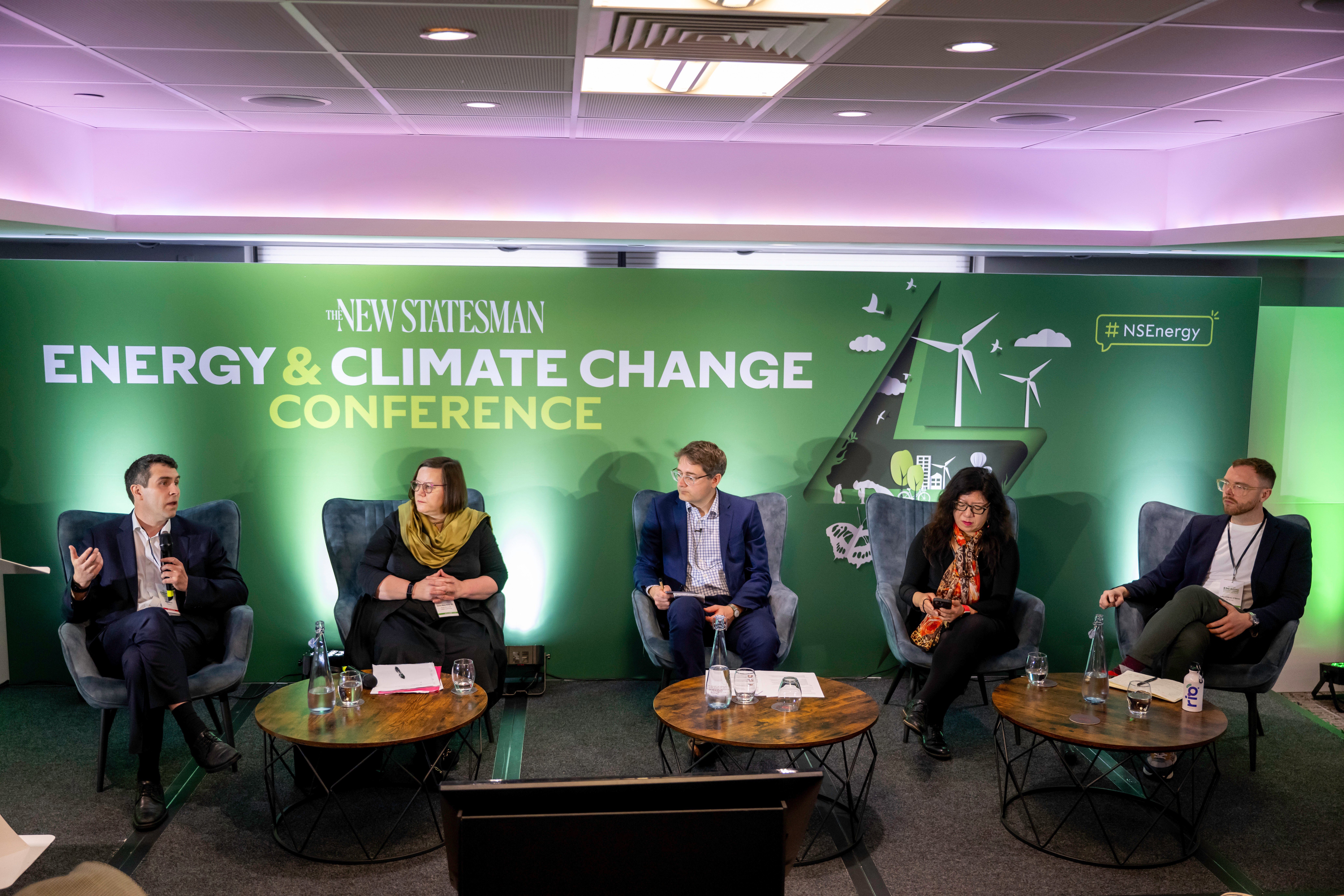
Themes across the room today were consistent. Energy, transportation, real estate/homes, financing the net zero transition, hearing views from across UK government ministries and government departments was exciting. There is clearly more acceleration taking place from around 8-10 years ago, when this one topic might have appeared as one agenda item for 45 minutes. Now we see such catalysing momentum behind solving these problems.
The New Statesmen Energy and Climate conference was a great opportunity to connect with different policy experts on the real current state of sustainability in the UK. The key points were promising, because we see more non partisan behaviour, which is not divisive. The pace of change requires significant improvement. I think that consensus was broadly shared. The UK Committee on Climate Change had not long ago issued a clear analysis that progression has been lacking.
1.5 degrees is a scientific necessity, not a political target. This was the Stockholm Institutes latest update attempting to focus on priorities. The role of technology in the sustainable transition, is to act as a scientific, mechanical, industry and government led, supported by finance, orchestrally. Governments independently cannot be the conductor alone. We must have G20 collaboration on minimum standards for what Net Zero translates into, as an economic, financial and social theory. The UK Government has done well in implementing a world leading Climate Change Act, and then a legally binding Net Zero target. I wonder what the legal consequences will be for the ministers of the day that fail on that agenda.
Despite clear rumbling in the audience that we’re not going quick enough – particularly that the energy sector is not transitioning at pace and scale – indications are the sector continues to leap further than they themselves had sceptically forecast. Needless to say, renewable energy is possibly the clearest success story. As battery technology and electric mobility follow suit, it’s clear housing (20% of the UK’s country emissions, source), cooperation across the private, public and financial sectors must rapidly get behind what will be looked back at as a new industrialisation.
Today it felt remiss the UK did not focus on agriculture, which presents and equally similar quick win. Undoubtedly the journey to 2030 will bring to life more discourse on emissions related calculations. The Greenhouse Gas Protocol, Lifecycle Analysis, ISO standards, and of course the various interpretations of these frameworks and standards is a minefield of ambiguity to new groups. Ownership of territorial emissions from imports, and facilitated through exports can be resolved through strong advice based change.

On 27 June 2023, under the IFRS Foundation (International Financial Reporting Standards), the ISSB (International Sustainability Standards Board) released the S1 and S2 reporting standards.
 We recently did a poll on whether we need to see more positive news to create optimism and momentum to drive solutions and change or if we need to be confronted with the stark reality of climate change, with a clear split in the results.

Following the two-week climate summit in Egypt, representatives and negotiators from across the globe reached a series of conclusions; the most prominent of which being support for climate victims in the form of a loss and damage facility – with a commitment to set up a financial support structure for the most vulnerable by the next COP in 2023.

In July, the United Nations General Assembly declared that everyone has the right to live in a healthy, sustainable environment. In so doing, it recognised that the well-being of our society is inextricably bound to the functions of the natural world.

89% - the share of countries that signed up to the Paris Agreement that are failing to incorporate commitments to curb food waste into their NDCs, according to an analysis by NGO Wrap.
The weekend saw the fourth thematic day of COP27 focused on Adaptation & Agriculture, whereby developments and discussions centred around food systems, soil health, land use and more. The day of discussions has been viewed as critical against the backdrop of a global food crisis. With extreme weather wreaking havoc on crops, raging food inflation and the war in Ukraine, countries across the world are feeling the effects on our global food resources.

Finance Day was momentous at COP26 in Glasgow last year, with high-profile investor coalitions launched and bold commitments from the likes of the UK to transform finance sectors into green drivers of the net-zero transition.