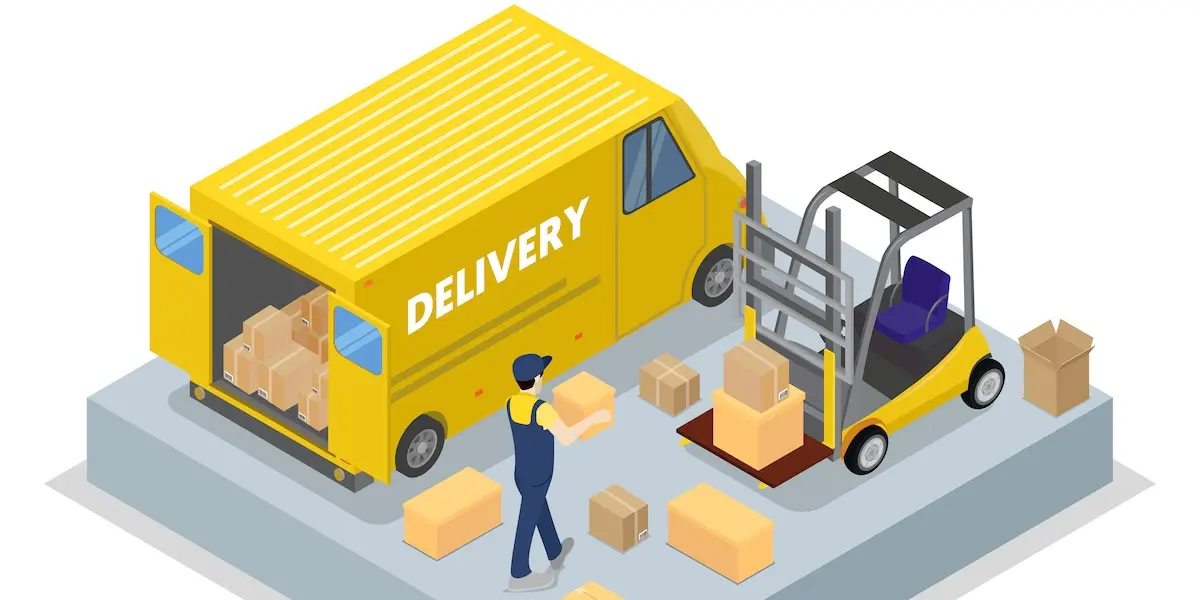
Amazon’s continuous success in omnichannel fulfillment and delivery is changing customers’ expectations. There is more pressure on shippers and retailers to offer quicker, cheaper, and more convenient order fulfillment and delivery options.
Amazon’s continuous success in omnichannel fulfillment and delivery is changing customers’ expectations. There is more pressure on shippers and retailers to offer quicker, cheaper, and more convenient order fulfillment and delivery options.
When sales are accelerating but deliveries are piling up on the dock, it’s time to think about engaging — or better managing — a 3PL delivery partner. For shippers, having a 3PL partner can take the lid off growth, allowing geographic expansion, supporting higher delivery volumes and inspiring confidence in their ability to deliver more products and a better customer experience.
For 3PL providers and their shipper clients, advances in 3PL management software offer new capabilities that support business growth and expansion while increasing efficiency, decreasing costs and boosting customer satisfaction. The inclusion of AI in core processes and the ability to integrate with applications throughout the technology stack via bi-directional APIs has rapidly expanded the utility — and the ROI — of the software.

The tidal shift of consumers to online buying has pushed the reach of businesses—even ones that think of themselves as local or regional—far beyond a single city, state or location. Stretching your footprint to get your wares into more distant geographies is an issue not just for small manufacturers or retailers, but for businesses of every size. Managing those logistics has evolved from a backroom function to a critical competitive differentiator. To survive—and thrive—in this new environment, companies need to embrace advanced delivery fleet management technologies.
It’s easy to fall into the trap of assuming that technological solutions will act as cure-alls—e.g. that rolling out fleet routing software will instantly ensure that every drop-off is using the most optimal routes. Sure, a route planning tool might be highly valuable and work wonders for fleet operators—but success can’t always be taken for granted.
The game has changed more than once for furniture and appliance delivery in the past few years. Customer expectations are as stringent as ever, but at the same time the larger supply chain presents new challenges each day. Getting the right goods to the right people at the right time is always challenging, but now it’s even more challenging to do so efficiently.
Last week, DispatchTrack released its annual Last Mile Holiday Perspective, exploring how logistics leaders prepared for the 2023 holiday season and what their expectations are for 2024. At a high level, the report uncovered a considerable amount of uncertainty: 39% of respondents expected business to be down, 29% expected business to be better than it was last year, and 17% were unsure of which way it would go.
There’s no magic bullet when it comes to growing a business. It takes a mix of hard work and luck, and it involves a special set of risks and challenges—especially when it comes to something like food distribution. Margins are always narrow even in the best of times, which means you need to make sure that you can take on new business in a way that ensures profitability. With all the moving parts that come with effective distribution, this is much easier said than done.
The 2023 Last Mile Holiday Perspective signals a mixed business outlook among supply chain leaders; Threats of extreme weather spark heavy concern; Investments in new tech remain steady
