How MIT and the Institute for Artificial Intelligence and Fundamental Interactions (IAIFI) use Crusoe Cloud for High Energy Physics Machine Learning
By: Sang Eon Park
Posts about:

By: Sang Eon Park
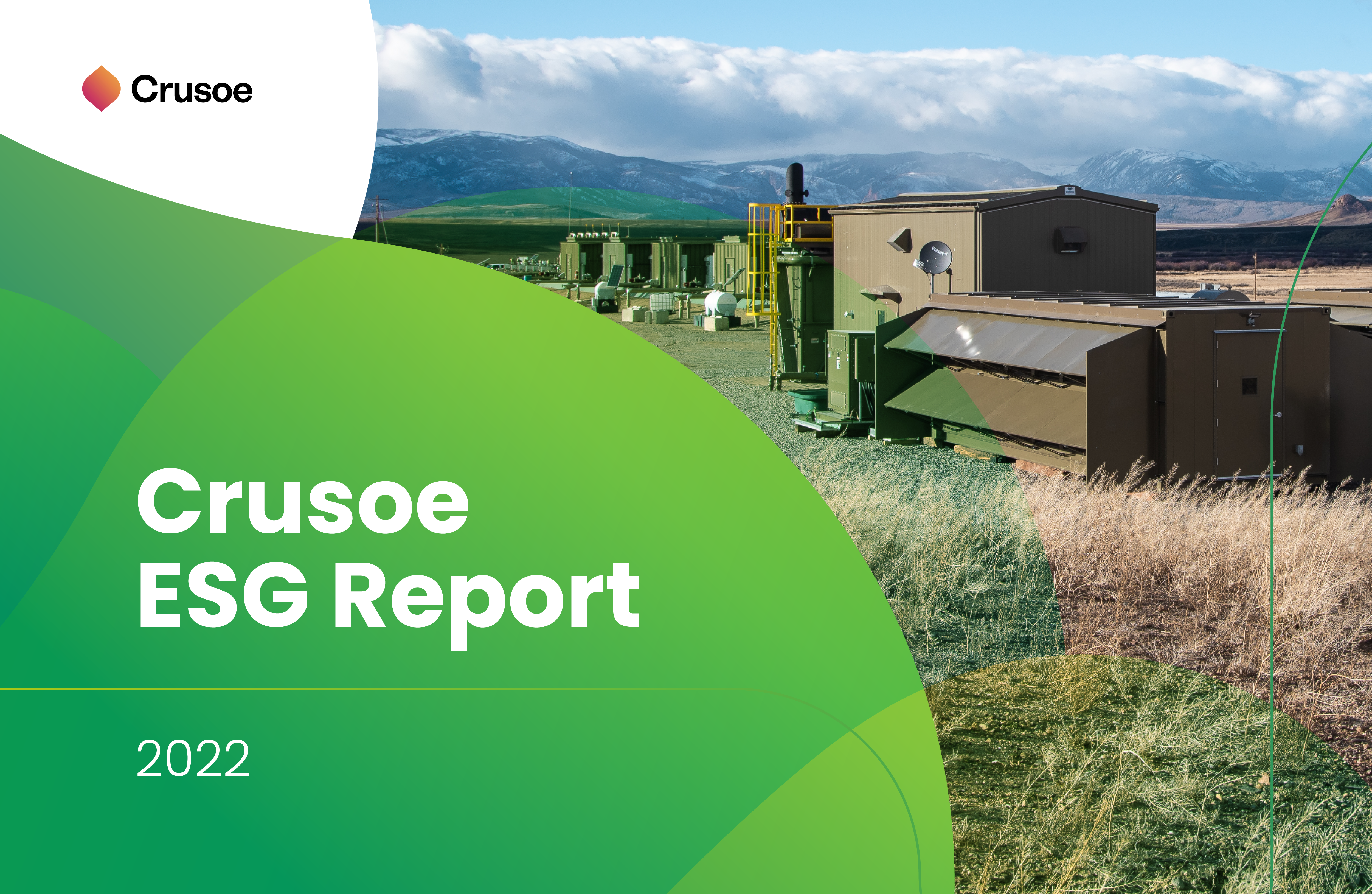
Today, Crusoe released our inaugural Environmental, Social and Governance (ESG) report. This is an important milestone for Crusoe, and an opportunity to showcase our mission, values and goals as a company.
Today, Crusoe released our inaugural Environmental, Social and Governance (ESG) report. This is an important milestone for Crusoe, and an opportunity to showcase our mission, values and goals as a company.
From: Crusoe + Together
From: Crusoe + Together
As we’ve seen over the last several months, AI creates unprecedented opportunities for businesses, but also brings with it incredible responsibility. Its potential to change and impact people’s lives has raised considerable questions around AI ethics, data governance, trust, and legality. As companies scale up the use of generative AI to drive innovation and benefit from the tool, we also need to be mindful of the various implications of this new technology — and that is Responsible AI.

A couple weeks ago, I had the opportunity to attend and speak at CES — one of the most influential tech events in the world and the proving ground for breakthrough technologies and global innovators. While wandering the exhibition floor, taking in a number of exciting presentations, and speaking with fellow attendees, I was blown away by the incredible technological innovations on display. The experience offered a glimpse into what our future could look like — particularly the advances being made in the development of machine learning and artificial intelligence.
A Global Commitment to Methane Reduction

Crusoe’s GHG Footprint and the Case for Scope 4 Avoided Emissions

Last year, in its Sixth Assessment Report, the United Nations Intergovernmental Panel on Climate Change (UN IPCC) concluded that deep reductions of greenhouse gas emissions, particularly reduction of methane emissions, would be needed to mitigate global warming. In response, at the UN Climate Change Conference COP26, more than 100 countries (representing more than 70% of global GDP) signed the Global Methane Pledge, promising collective action to reduce global methane emissions by at least 30 percent by 2030.