ions - kn

Posts by:

Kari Millar

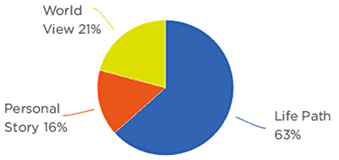
We Are IONS: A Preliminary Analysis

Though the core activities at IONS focus on research, education and running a transformative learning center, we are well aware that the heart of this organization resides within our members and supporters. Our staff is touched daily by our interactions with people who resonate with our efforts to create a shift in consciousness that will impact this world in a positive way.

Read More

Hacking Consciousness: The Rise of Transformative Technology

We may not think of drumming, chanting, dancing, meditation, and ceremony as types of technology, but they are actually the most ancient of technologies geared toward altering states of mind. While they’ve been available to us for thousands of years, a new set of high-tech tools is rising in the form of electronic devices and software applications that are being used to explore, guide, and even enhance human potential.  These tools are being framed by a fairly new movement called Consciousness Hacking, and recently several of us from IONS attended the world’s first Transformative Technology Conference in Palo Alto to participate in defining this emerging area of development.

Read More

Working with Diverse Religious and Spiritual Values

Although the majority of Americans in some form of God, only a quarter of graduate training programs in psychology offer even one course in religion or spirituality (Schafer et al. 2011). While a vast majority of mental health practitioners believe that these topics should be addressed in the therapeutic context (Vieten et al. 2015), few are properly equipped to do so, particularly when faced with clients whose religious or spiritual values differ from theirs.

Read More

How Spirituality and Religion Are Linked to Psychological Functioning

Interventions that have roots in spiritual traditions are being increas­ingly employed for treatment of depression and anxiety, as well as for enhancing psychological well-being. Mindfulness-based therapies have demon­strated effectiveness for improving anxiety and mood symptoms (Hofmann, Sawyer, Witt, & Oh, 2010; Toneatto & Nguyen, 2007). Dialectical behavior therapy (DBT; Linehan, 1993) and adaptations of it have shown promise and efficacy for treating borderline disorder, substance abuse, eating disorders, and depression (Robins & Chapman, 2004). Acceptance and commitment therapy (ACT; Hayes, Strosahl, & Wilson, 1999) has demonstrated robust effect sizes compared to control groups across a number of difficulties (Powers, Zum Vörde Sive Vörding, & Emmelkamp, 2009; Ruiz, 2010). Various forms of spiritually informed cognitive behavioral therapy have demonstrated success, in particular with clients to whom religion is important (Waller, Trepka, Collerton, & Hawkins, 2010).
Read More

Six Mindful Practices to Help Your Children Thrive

August — the hot, carefree summer lingers but for a hint of autumn’s longer nights and increasing responsibilities. The kids are restless and fidgety, excited at the prospect of reuniting with friends, and nervously anticipating the challenges of the coming school year.

Read More

Show Me the Evidence

Critics are fond of saying that there is no scientific evidence for psi. They wave their fist in the air and shout, “Show me the evidence!” Then they turn red and have a coughing fit. In less dramatic cases a student might be genuinely curious and open-minded, but unsure where to begin to find reliable evidence about psi. Google knows all and sees all, but it doesn’t know how to interpret or evaluate what it knows (at least not yet).

Read More

Two Video Talks on Noetic Sciences

I’m delighted to let you know that two TEDx talks I gave last year have both just been released on video. It was an honor to have these opportunities to represent IONS and to share information about Noetic Sciences.

Read More