In a world increasingly shaped by cyber threats, business leaders need more than vague estimates or crayon-based rankings to make informed decisions: they need clarity, relevance, and actionable insight. That’s where Axio’s Cyber Risk Quantification (CRQ) methodology comes in. It’s a pragmatic, value-centric, and scenario-based approach to understanding cyber risk in real business terms, empowering organizations to take control of their cyber exposure. Here’s how it works.

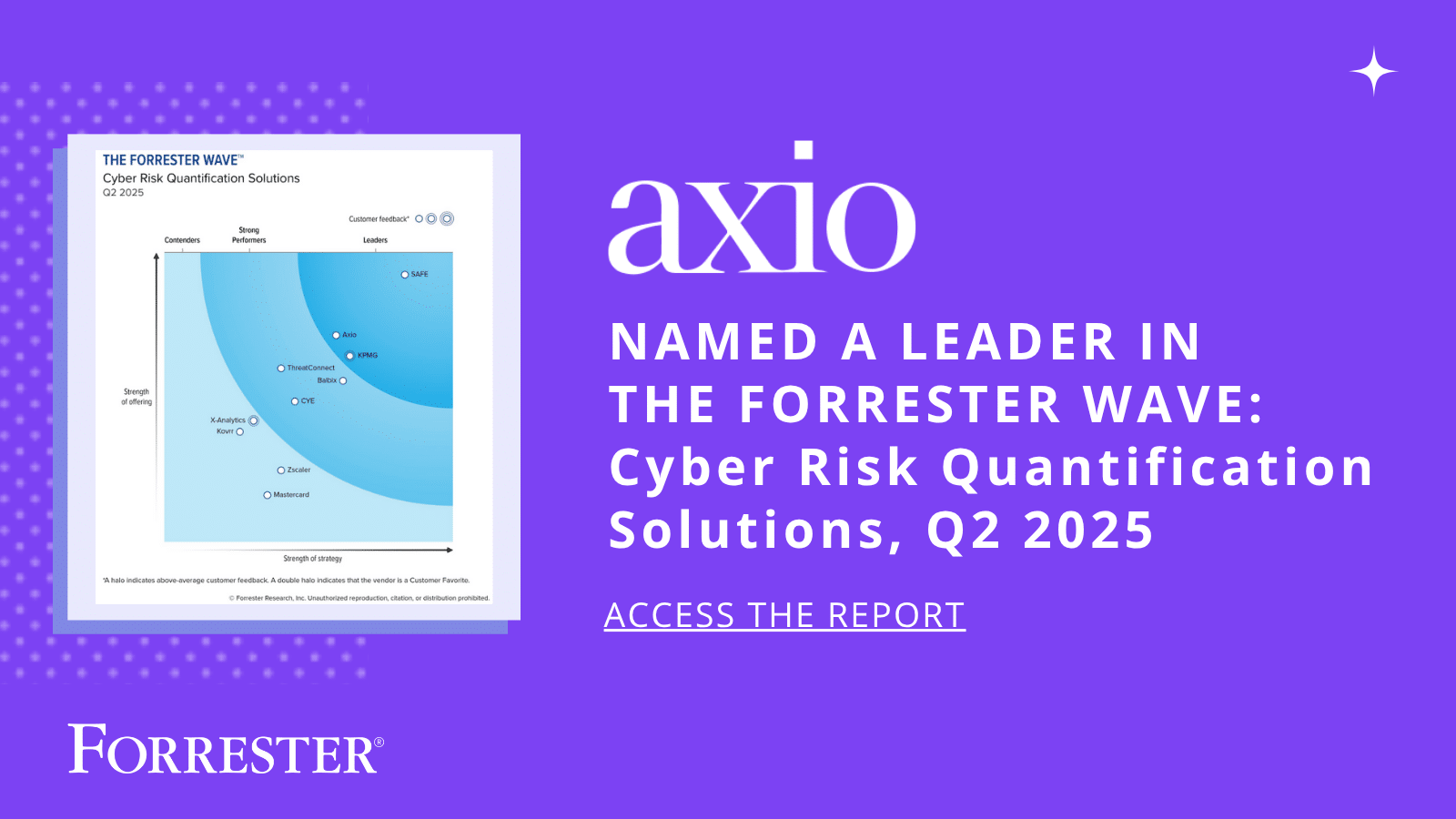
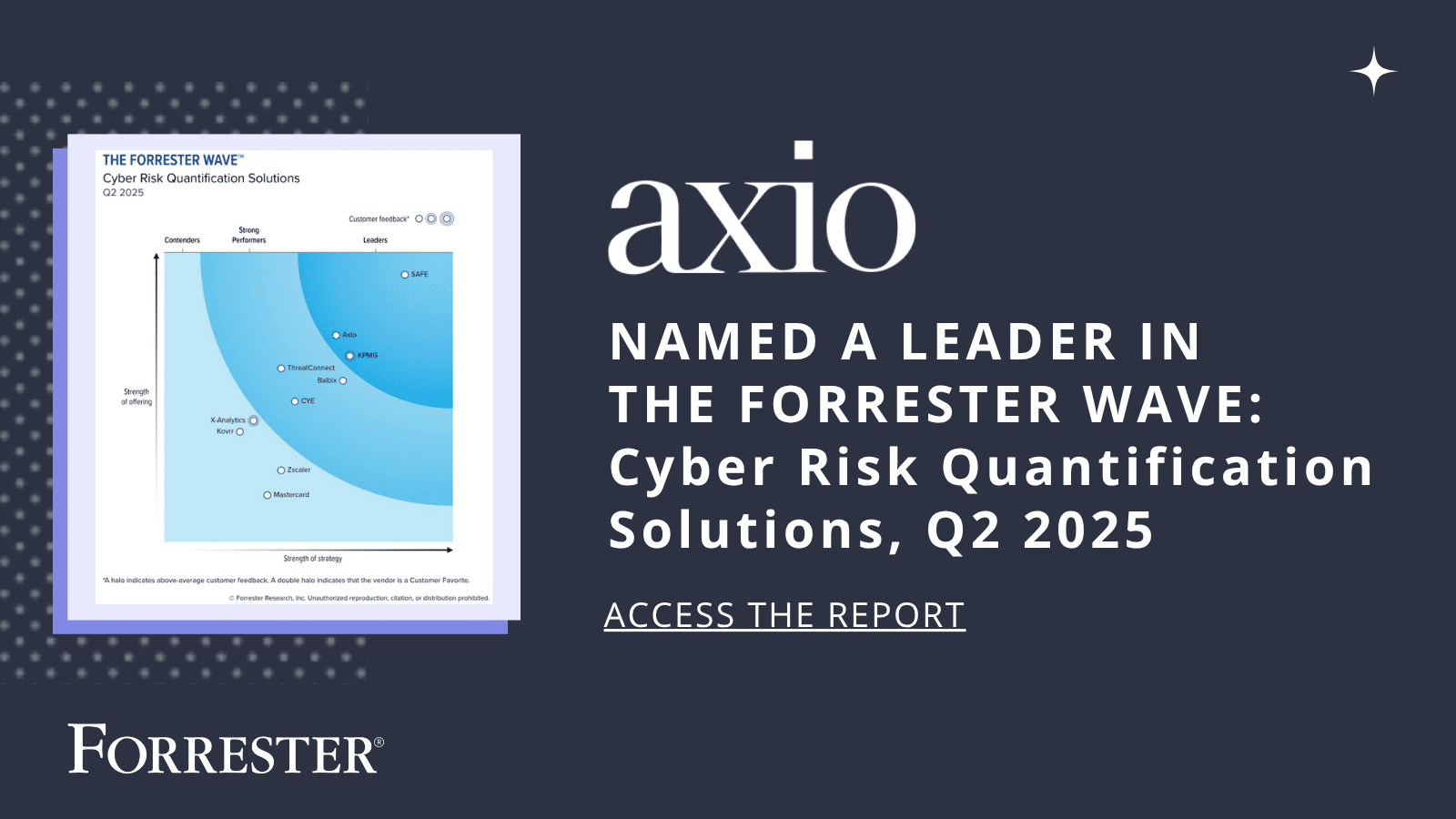
Axio has once again been recognized as a Leader in Cyber Risk Quantification (CRQ) in the Forrester Wave™, Q2 2025—marking our second consecutive year of receiving this honor. This recognition isn’t just a label—it reflects our mission: to deliver the most usable, transparent, and high-fidelity CRQ platform on the market.

At a recent presentation at Carnegie Mellon University, CISA Director Jen Easterly called for a transformative shift to require the technology industry to infuse security into their product design. In her speech, Easterly defended her position, explaining how technology manufacturers have normalized products to be released with “cyber defects” and how we cannot blame technology customers targeted by adversaries. She emphasized the risk of poorly securitized products is more significant than the alleged espionage from the Chinese spy balloon incident. Shifting security responsibility on software developers is a commendable but lofty goal. We believe the solution is a bit more nuanced and requires collaboration. Reform is needed by both software developers and consumers in tandem. Software developers need to embrace standards such as market differentiators, and consumers need to practice basic cyber hygiene to strengthen their cybersecurity posture and not be considered negligent users.

Axio’s VP of Insurance, Peter Hawley, shares the latest trends and insights on cyber insurance. With 20 years in the market and a focus on cyber insurance for the better part of the past decade, Hawley has seen the industry and threat landscape change dramatically. Here, he covers some cyber insurance basics for anyone who is exploring purchasing a policy for their organization.
A few years before the pandemic, Harvard Business Review published an article stating that CFOs don’t care enough about cybersecurity. Today, the article serves as a milestone dividing the old mentality with our new reality these past two years. Since Covid, a new global threat landscape has materialized, and the notion of “it won’t happen to me” has been thrown out the window. Adversaries want to spy, steal, and sabotage data and critical assets. Everyone is a target. And these days, CFOs must understand cyber exposure with the same level of detail as the board of directors’ audit committee. CFOs need to whizz past the technical complexity of understanding cybersecurity defense and dive deep into risk mitigation in financial terms. Taking the culture of bits and bytes and translating it into financial language often begins by asking these critical questions to the CISO, such as:
On a recent earnings call, Meta CEO Mark Zuckerberg told investors how well the company would operate with a reduced headcount. “We’re going to be more proactive about cutting projects that aren’t performing or may no longer be crucial,” Zuckerberg said. He explained, “my focus is on increasing efficiency of how we execute our top priorities.” In the past quarter, Meta has reduced its headcount by over 10K employees as part of this strategic shift to stay operationally lean.


We’re excited to welcome Ben Lorentzen as the newest member of the Axio team. Ben joins us as Director of Cyber Risk Engineering. Read on to learn more about Ben’s background, career path, and why he decided to join us at Axio.