
When leading retailers and distributors learn how quickly the delivery orchestration software market is growing, they tend to have one of two reactions.
Building supplies distributors don’t have the luxury of sending their specialized assets to Costco for cheap fuel. That means that when uncontrollable price increases start to impact operational costs, it starts to seem like there’s fewer and fewer options on the table.
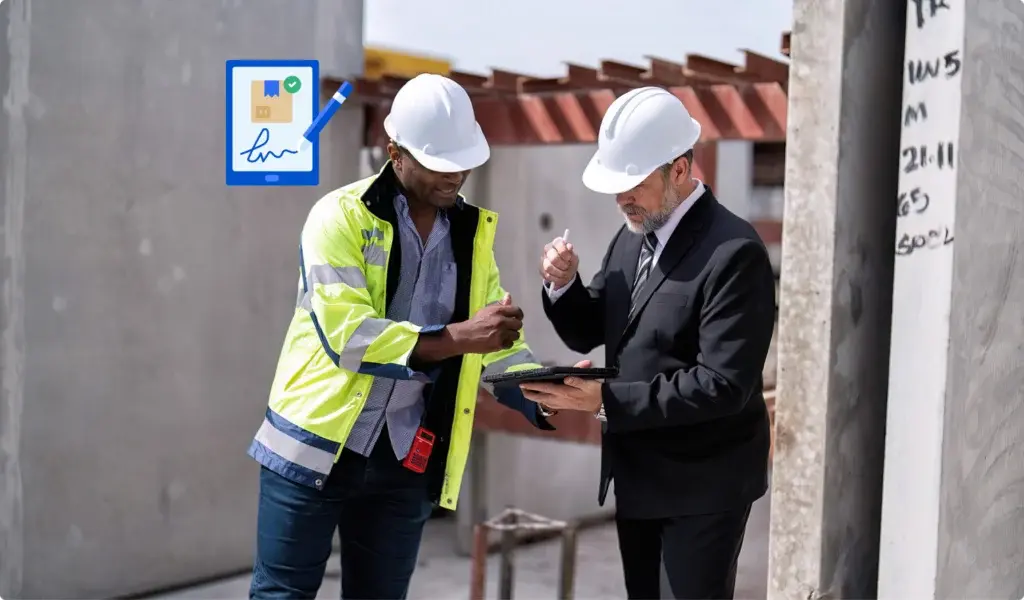
But what if we told you that the biggest threat to margins in building supplies distribution isn’t actually spiking fuel costs, or even tariffs for that matter? Sure, those are facts of life and they’re going to be painful, but the real margin killer is the thing that’s making it difficult or impossible to control delivery costs in the first place: operational fragmentation.
By operational fragmentation, we mean something like a lack of visibility and synchronization across yards, distribution centers, job sites, and assets. It’s in that lack of synchronization that costs become unpredictable: you don’t know how long a crane is going to sit idle at a job site that’s not ready for it, you don’t know how many deliveries are going to get pushed off the route at the end of the day, and you don’t know which deliveries are going to be disputed because of unclear documentation.
Luckily, there is a solution to the kind of fragmentation we’re talking about. In this post, we’ll lay out the ways that building supplies distributors are adopting a delivery orchestration approach to take control of their delivery costs.
Obviously, we’re not here to downplay the impact of fuel costs. It’s the biggest line item on most delivery organizations’ budgets, and the kind of sharp increase that we’ve seen in the past few months has wide-ranging impacts on anyone who runs trucks of any kind.
But we do need to emphasize an important fact about margin leakage and cost uncertainty: if your entire P&L is thrown into disarray by fuel costs rising, there are almost certainly underlying inefficiencies that are seriously exacerbating the issue.
Usually, this is a symptom of fragmented processes, poor visibility, and a lack of proper technology to address the complexities of modern building supplies distribution. Each delivery run is a balancing act between competing customer needs, complex requirements around specialized assets and equipment, and cost management across the board—you can’t juggle all of these complexities when the left hand doesn’t know what the right hand is doing.
When specialized assets, drivers, dispatchers, contractors, and job sites aren’t synchronized in real time, cost-to-serve quietly inflates. The result is that enterprises wind up with:
This isn’t a separate issue to rising fuel and material costs. Again, these areas of disconnect only serve to amplify the impact of rising fuel costs by introducing more unnecessary miles into every delivery and service run.
To dampen the impact of volatile costs, you need to cut through the complexity to resolve these areas of disconnect.
In the past, the most obvious area of investment for the operational fragmentation we’re talking about might have been routing and scheduling. And there’s no doubt that many—if not most—building supplies distribution fleets could get more out of their existing assets by increasing route density.
At the same time, the real solution goes beyond just routing and scheduling.
The real solution? Investing in delivery orchestration.
Here are some of the key differences:
This difference in approach has the power to change the game for building supplies distributors. You can respond to customer needs more quickly and effectively, get more out of your assets and network, and gain significantly greater control and consistency of the delivery experience that you offer—regardless of owned fleets versus third parties.
There are a few keys to making delivery orchestration a reality:
Why is this shift in mindset towards orchestration so important? Because it’s the best way to control costs in the face of price shocks and market volatility. It can’t stop fuel cost increases, but it can help you run your delivery network in such a way that the price shocks become more manageable.
At DispatchTrack, we specialize in delivery orchestration. Our platform is built to empower building supplies distributors to reduce margin bleed, get more out of their fleets, and ensure consistent customer experience across your delivery network.
Here’s how we make that happen:
What’s crucial here is that we provide the same level of visibility and control whether you’re running primarily your own fleet or leveraging 3PL and contractors. If two clients order pallets from you out of different branches—one handled by a 3PL and one handled by your owned fleet—those customers get identical, white-glove caliber service.
This added control enables you to provide a predictable experience that will make repeat buying up to 3x more likely. When margins are thin, DispatchTrack’s delivery orchestration platform acts as a driver of repeat business.
The results that building supplies distributors have seen from working with us have been huge—from 85% on-time delivery rates within a 30-minute window to standardization of processes across hundreds of branches and 3PLs.
If you’re ready to learn more about what delivery orchestration looks like in practice—get in touch with DispatchTrack’s team today.
We’d love to give you a quick walkthrough of how our platform is helping building supplies distributors take control of their P&L and put a stop to margin bleed.
When leading retailers and distributors learn how quickly the delivery orchestration software market is growing, they tend to have one of two reactions.

Have you ever had something delivered the same day you requested? Whether it be food, beauty care products, a gift for a birthday, or anything else; the desire for...