ions - kn

Posts about:

Blog (83)

Double-Slit Experiment Published in Physics Essays

For the last few years we have been exploring the possible role of consciousness in the physical world through an effect known as the quantum measurement problem (QMP). This refers to a curious phenomenon whereby quantum objects behave differently when they are observed than when they are not observed. It’s as though the microscopic world has a “sense of being stared at,” reminiscent of the prickly feeling that some people feel when someone is staring at them a little too intensely.

Read More

Breaking News from IONS Research

Welcome to the first edition of IONS Breaking News, a periodic brief update coming to you directly from the research team and laboratory here at the Institute of Noetic Sciences. We’re expecting new Breaking News posts to be published once or twice a month… keeping you abreast of the latest hot-off-the-presses scientific developments at IONS such as new projects, funding, publications, speaking engagements, and interesting findings.

Read More

When Skeptics Face the Evidence

This last weekend found me in Washington, DC, at the Society for Experimental and Social Psychology Annual Conference (SESP). SESP is an elite academic association dedicated to the advancement of social psychology whose members are nominated by colleagues for having made a substantial contribution to the field. My colleagues in this field are doing truly amazing work on things like morality, exclusion, and ostracization; how implicit factors influence courtroom decisions; whether and how women change their voice and appearance when ovulating; and lots of stuff on how what’s happening outside our conscious awareness influences almost every interaction we have and every decision we make.

Read More

Meditation Research: A Bridge between Worldviews

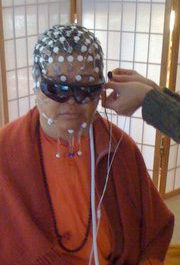
I was brought up as a product of The Enlightenment… in an academic, scientific, generally agnostic worldview that took the separation of church and state and of science and religion as an absolute given—even a moral necessity. My postdoctoral science training reinforced this: I trained in a medical center neurology department studying biological bases of a behavioral disorder which made employment of a psychologist to interact with research subjects necessary. And if my colleagues found the “soft” science of psychology a bit distasteful, they were downright allergic to any talk of spirituality. When the Fetzer Institute joined with the National Institutes of Health to offer a grant to study spirituality and alcoholism, my department chair authored a petition protesting this use of federal funding despite the fact that Alcoholics Anonymous, an essentially spiritual intervention, had continued to far and away surpass any biological treatment for alcoholism in clinical effectiveness.

Read More

Of Mice, Men, and… Miracles?

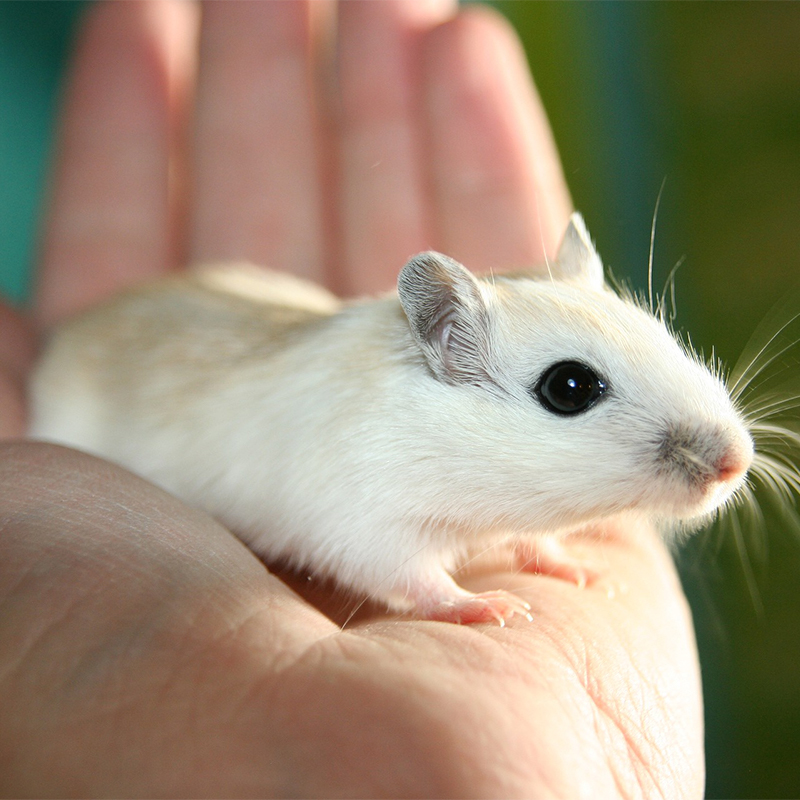
Does hands-on “energy healing” really work or are outcomes attributed to such healing merely a matter of self-healing, as in the placebo effect? This is what sociologist (by day) and energy researcher (by night?) William Bengston set out to test, motivated by his own remarkable experience with an energy healer who cured his intractable back pain. To avoid the placebo effect, he used laboratory mice instead of human subjects. The mice were injected with a form of cancer that would normally cause fatal tumors within a few weeks. This mouse-model of cancer development is a standard, well-understood method of conducting cancer research, used in dozens of laboratories around the world. No mice ever spontaneously cured themselves of this cancer, and the best cancer drugs in the world only slow its progression. Bengston hoped that if an energy healer could slow the cancer growth in these mice even a little, as measured by a few more days of survival than expected, it would provide dramatic evidence that something big was going on. Bengston got his evidence…and then some. Here’s a short excerpt from his new book:

Read More

The Psi Taboo in Action

I have lectured and written about the scientific taboo that prohibits scientists from openly studying psi. One way this prejudice manifests is by being invited to give a lecture at a scientific conference, and then finding yourself disinvited after someone on the conference committee discovers that the invitee has an interest in parapsychology. The idea of psi is so troubling to this person that he or she (mostly he) insists that the committee cancel the invitation. One can imagine the hysterics that must accompany this request.

Read More