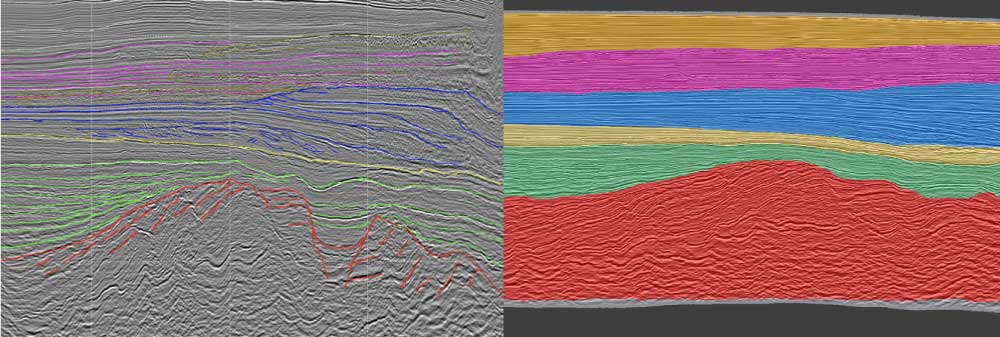
You see, but you do not observe.
“You see, but you do not observe” is a quote by Sherlock Holmes in A Scandal in Bohemia (1891, written by Sir Arthur Conan Doyle). Holmes referred to himself as a ‘consulting detective’. Sketch by Mason Dykstra.

“You see, but you do not observe” is a quote by Sherlock Holmes in A Scandal in Bohemia (1891, written by Sir Arthur Conan Doyle). Holmes referred to himself as a ‘consulting detective’. Sketch by Mason Dykstra.
Author: Didrik Pinte, M.S., CTO

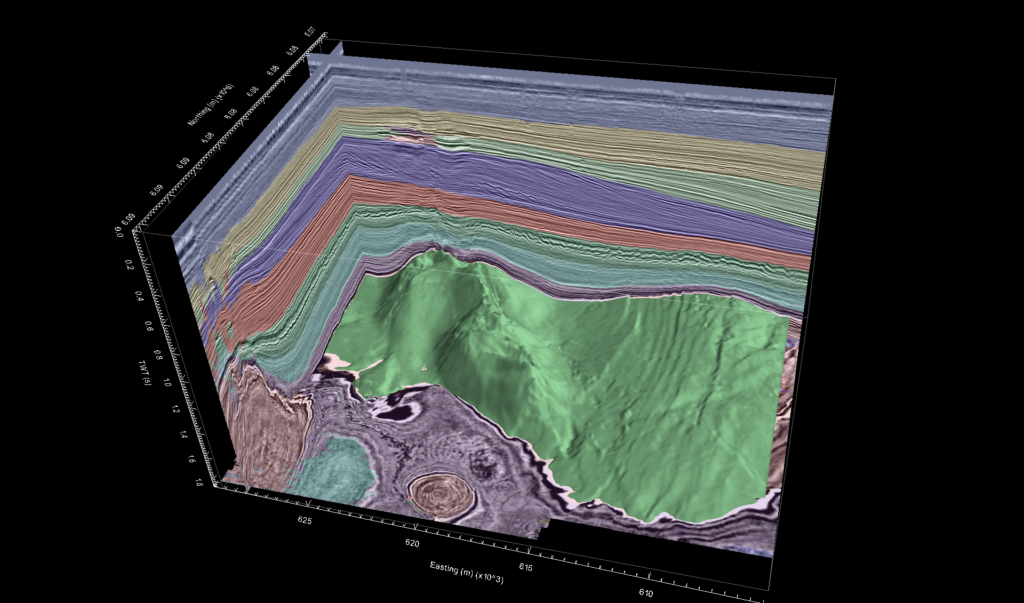
Artificial Intelligence and Machine Learning are a defining feature of the 21st century and are quickly becoming a key factor in gaining and maintaining competitive advantage in each industry which incorporates them. Why is machine learning so beneficial? Because it provides a fast and flexible way to build models that can surface signal, find patterns, and predict future behavior. These powerful models are used for:
Engineers and scientists all over the world are using Python and LabVIEW to solve hard problems in manufacturing and test automation, by taking advantage of the vast ecosystem of Python software. But going from an engineer’s proof-of-concept to a stable, production-ready version of Python, smoothly integrated with LabVIEW, has long been elusive.
Python is an uniquely flexible language – it can be used for everything from software engineering (writing applications) to web app development, system administration to “scientific computing” — which includes scientific analysis, engineering, modeling, data analysis, data science, and the like.

Built on 15 years of experience of Python packaging and deployment for Fortune 500 companies, the NEW Enthought Deployment Server provides enterprise-grade tools groups and organizations using Python need, including:
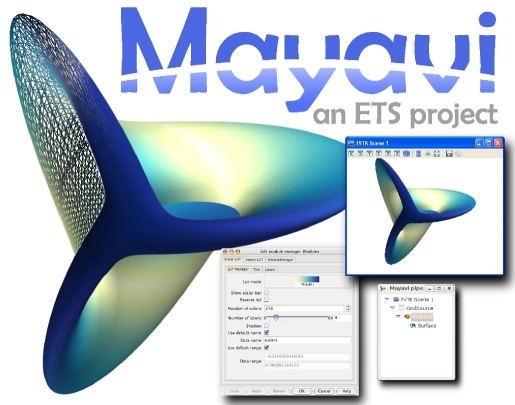
by Prabhu Ramachandran, core developer of Mayavi and director, Enthought India
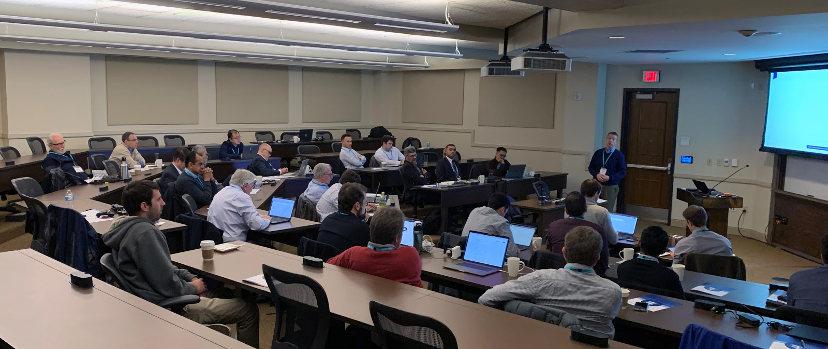
The 1000x Lab Initiative First Congress in Austin brought together leaders in industry, academia, and government to explore new ways to accelerate materials R&D. Modeled after the SciPy community, a primary goal of the initiative is to establish an analogous community developing and sharing open source tools for fast, inexpensive, and scalable materials measurements. Above, Mark Simon, R&D Director at Saint-Gobain, delivers an industry keynote presentation.

An AI-based assistant gives energy company geoscientists the ability to quickly visualize and analyze hundreds of CT scan images. Visualization, image analysis, and AI/machine learning techniques are increasingly areas of innovation and value for science-driven businesses. Shown here, a thin section classification tool with analogues in multiple other science-driven industries.