ALC - auxiliobots

How Generative AI is Transforming Supply Chain Forecasting Beyond Traditional Methods?

Key Takeaways

  • It continuously learns from real-time data, adapting quickly to disruptions and trends, offering a more innovative, agile alternative to traditional static models.
  • By analyzing news, social media, logistics, and economic indicators, Generative AI creates holistic forecasts that more accurately reflect real-world conditions than traditional tools.
  • Generative AI simulates “what-if” scenarios, helping businesses prepare for uncertainties like supply shocks, demand spikes, or competitor moves before they happen. 
  • In data-scarce situations, AI generates synthetic data to model demand, train systems, and test strategies—ideal for new launches or rare disruptive events.
  • AI co-pilots, self-healing chains, and eco-forecasting will improve planning, automate responses, and support environmentally responsible decisions across the supply network.

It is undeniable that supply chain forecasting is one of the most crucial elements to consider when wanting to run a successful business. This is because it helps firms identify all the products they need. It also helps them understand the quantity of the product and when it is a suitable time to get it. As a result, this helps firms know if they have enough inventory. Furthermore, it allows them to plan to ensure the operations do not hamper.


Read More

Computer Vision Applications in Diagnostic Imaging: Current State and Future Directions

Key Takeaways

  • Computer vision is a digital assistant for doctors. It helps them read complex medical images faster and more accurately by detecting patterns and abnormalities invisible to the human eye.
  • AI tools trained on thousands of images can more efficiently diagnose diseases like cancer, pneumonia, and fractures, enabling quicker, more accurate treatment planning and improved patient outcomes.
  • Computer vision enhances early diagnosis capabilities, identifying illnesses at their earliest stages. This allows patients to begin treatment sooner and potentially avoid severe complications.
  • It brings diagnostic power to underserved areas, supporting healthcare providers in rural clinics or small hospitals that lack access to specialized radiologists or advanced imaging resources.
  • By automating image analysis and reporting, computer vision reduces doctors’ workload, minimizes costs, and improves consistency in care without replacing the essential role of human judgment

Your health is of utmost importance. Regardless of the health concern, visiting a doctor immediately is recommended. Over time, patients face several challenges when planning to see a doctor. From scheduling appointments to opting for an MRI, there’s always something going on. On the other hand, even medical professionals have so much on their plates. From making sure that all the patients are attended to identifying the health concern, doctors are under constant pressure.

Read More

Explainable AI in Credit Risk Assessment: Balancing Performance and Transparency

Key Takeaways

  • Explainable AI helps detect hidden bias in credit models, ensuring fair treatment across all demographics and reducing discrimination in financial decision-making.
  • Laws like ECOA demand clear explanations for credit denials; explainable AI enables institutions to provide specific, legally compliant reasoning.
  • When people understand why they were approved or denied, they’re more likely to trust the system and engage positively with financial institutions.
  • Techniques like SHAP and LIME make complex models transparent, helping stakeholders understand, validate, and improve AI-driven credit decisions.
  • Using ethical data, testing fairness, choosing suitable methods, and involving humans ensures AI systems remain accurate and explainable.

With so many people applying for loans and credit cards, finance experts are utilizing artificial intelligence to decide who should get one. These artificial intelligence systems identify individuals’ data to determine their suitability for a loan. Additionally, they use their information to monitor whether they will pay back the money on time. This allows financial settings to make wise decisions without spending too much time.

Read More

Benchmarking Hyperautomation Maturity: Industry-Specific Assessment Frameworks

Key Takeaways

  • Each industry has unique needs, so using tailored assessment frameworks helps track meaningful progress and uncover specific automation opportunities.
  • Hyperautomation maturity models help companies identify their current level, strengths, and gaps, guiding step-by-step improvements.
  • By comparing with peers and standards, organizations can measure performance, refine goals, and stay competitive within their sector.
  • Begin with simple, repetitive tasks and scale up. Small wins build momentum and support for long-term automation strategies.
  • Cross-functional teams, proper training, change management, and expert partners are essential for sustainable hyperautomation adoption and scaling.

As time passes, enterprises should constantly need to work innovatively and move faster. One strategy that is beneficial to achieve these goals is hyperautomation. This means utilizing advanced technologies, including robotic process automation, artificial intelligence, and machine learning, so that firms can automate several processes simultaneously. Furthermore, hyperautomation also helps companies to make better decisions, reduce unwanted expenses, and consume less time. However, every sector, including retail and healthcare, has various challenges and needs. Therefore, hyperautomation for every industry differs.

Read More

Securing AI Agent Communications: Enterprise-Grade Architecture Patterns

Key Takeaways

  • Secure communication between AI agents is essential to protect customer data, business logic, and system integrity from cyber threats and unauthorized access.
  • Core security principles—authentication, authorization, encryption, auditability, integrity, and zero trust—must guide every AI agent interaction in enterprise environments.
  • Enterprise-grade architecture patterns, such as API gateways, service meshes, and secure message queues, help enforce communication security across distributed AI systems.
  • Zero Trust Network Architecture and blockchain-based logging defend against internal threats, unauthorized movement, and data tampering.
  • Security measures such as RBAC, secrets management, data masking, and threat detection enhance trust, compliance, and operational resilience.

Companies of all types use artificial intelligence agents. Considering the numerous benefits they offer, firms use AI agents to make timely decisions and interact with users and systems. One essential aspect is taken for granted: secure communication. AI agents may help firms connect to databases, communicate with third-party services, and talk to each other. In all of these situations, data is shared between several components. By any chance, if the communication is not secure, it becomes very easy for hackers to target. Henceforth, securing AI agents’ communication is of utmost importance. It helps in protecting sensitive information. In addition, it also ensures that all the information related to customers is in safe hands. If information is not protected, attackers could change the message between agents. 

Read More

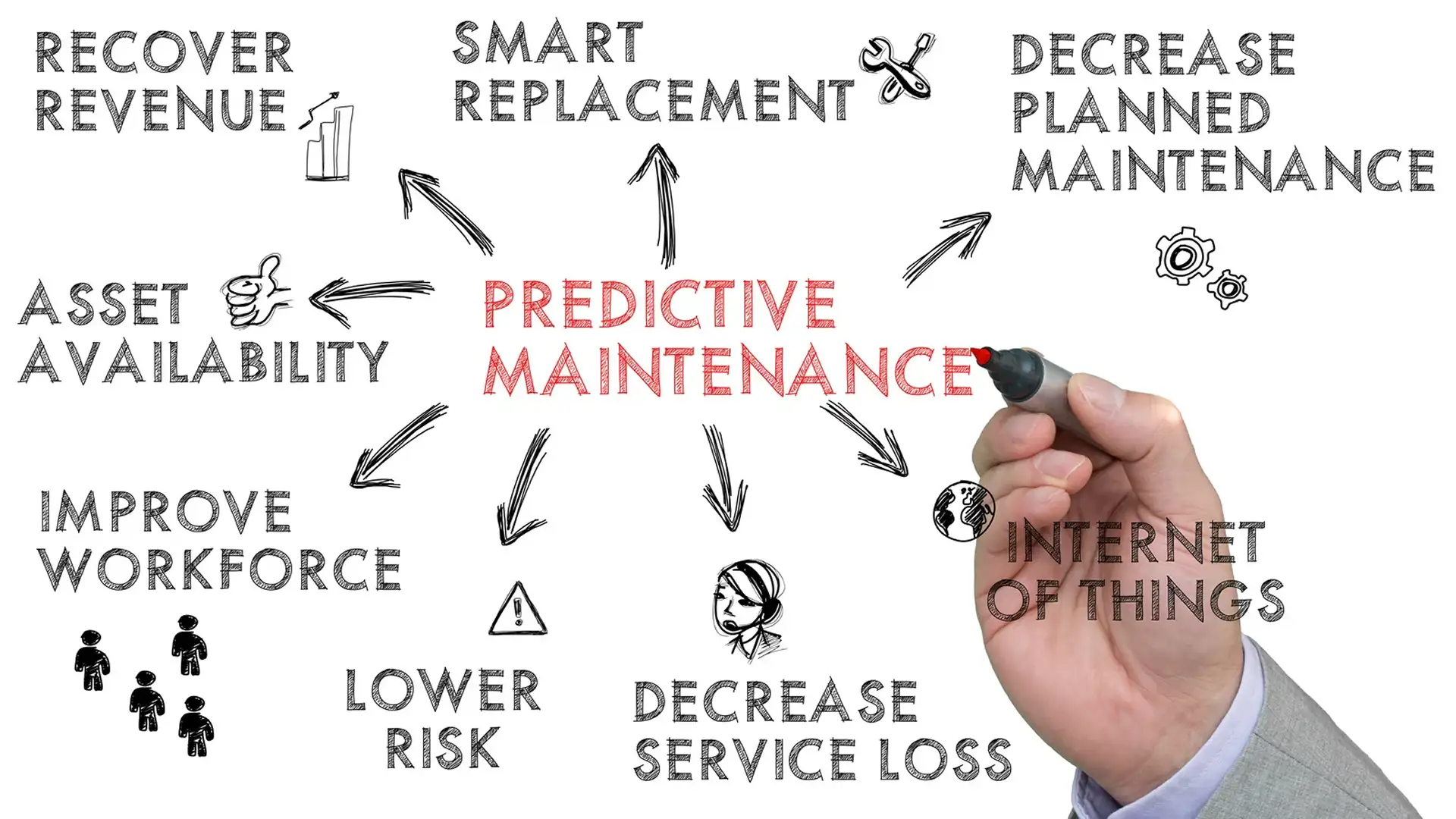
Leveraging Generative AI for Predictive Maintenance in Manufacturing Equipment

Key Takeaways

  • Generative AI transforms predictive maintenance by analyzing real-time machine data, spotting early failure signs, and helping teams act before breakdowns occur—saving time, money, and effort.
  • It creates synthetic failure scenarios when real-world breakdown data is limited, improving model training and ensuring accurate predictions for new and old equipment.
  • Simulating “what-if” scenarios with generative AI helps teams plan, understand machine behavior, and avoid critical failures before they happen.
  • Automated recommendations and root cause analysis from generative AI enable faster, more targeted maintenance decisions, significantly reducing downtime and repair costs.
  • Getting started with generative AI is easier today, thanks to IoT sensors, cloud platforms, and pre-built AI tools—no deep tech expertise is needed.

Many manufacturing firms rely on machines to ensure continuous production and minimal interruptions. However, thinking about what will happen when equipment breaks down can be stressful. As a result, there are various production delays, and manufacturers tend to spend more money. This is why they need to utilize predictive maintenance to check the health of machines and fix them as a priority.

Read More

Synthetic Data Generation for Healthcare AI Training: Techniques and Privacy Considerations

Key Takeaways

  • Synthetic data enables safe AI training in healthcare by mimicking real datasets without compromising patient privacy, ensuring compliance with regulations like HIPAA and GDPR.
  • Synthetic data solves critical data access issues by simulating diverse clinical scenarios, rare diseases, and patient groups, supporting the development of robust and unbiased AI models.
  • Techniques like GANs, VAEs, and diffusion models are essential tools for generating realistic synthetic data in various formats—EHRs, medical images, clinical notes, and genomics.
  • Synthetic data supports ethical AI validation by allowing safe testing in simulated environments, eliminating risks associated with using sensitive real-world patient information.
  • Widespread adoption requires responsible implementation, including careful technique selection, ethical oversight, and adherence to legal frameworks for trustworthy healthcare AI innovation.

Since artificial intelligence has been utilized, the healthcare industry has experienced a significant digital revolution. AI is increasingly introducing remarkable innovations in the industry. From improving diagnostics to ensuring patients get timely treatment, AI has made it easier for healthcare professionals to prioritize patient care. In addition, patients no longer have to wait in long queues for an appointment. Nevertheless, the effectiveness of AI is dependent on one central element: access to vast volumes of data.

Read More

RAG Architecture for Domain-Specific Knowledge Retrieval in Financial Compliance

Key Takeaways

  • RAG ensures financial institutions access the latest regulatory documents, helping them respond accurately to evolving compliance standards like AML, KYC, and GDPR.
  • By grounding responses in real documents, RAG significantly minimizes the risk of hallucinations, making AI-generated compliance answers more trustworthy and factual.
  • Using domain-specific embeddings and metadata tagging enhances the system’s ability to retrieve the most relevant, context-aware sections from complex financial texts.
  • RAG provides clear traceability by citing document sources, enabling compliance teams to justify decisions during audits and maintain regulatory confidence.
  • RAG seamlessly integrates search and generation, offering a scalable approach to automating and supporting financial compliance workflows with high reliability.

Regardless of the industry, it is mandatory always to follow the set guidelines. This also has implications for the financial sector. However, they struggle a lot while doing so. Now and then, new rules are invented. Additionally, existing rules change in the blink of an eye. If financial settings fail to stay up to date, they either face significant fines or damage their reputation. Hence, compliance is of utmost importance. With the rise of artificial intelligence, financial institutions can now utilize tools to help them keep up conveniently. 

Read More

 Multimodal Generative AI for Quality Control in Production Lines

Key Takeaways

  • Computer vision enables automated, real-time tracking of warehouse inventory, reducing dependency on manual processes and minimizing errors caused by human intervention.
  • The architecture relies on cameras, sensors, and AI to capture, process, and analyze visual data, improving the efficiency of inventory control.
  • Preprocessing steps like image enhancement and noise reduction ensure the AI system works with high-quality, relevant visual data.
  • AI models such as CNNs, YOLO, and OCR accurately recognize, classify, and extract information about warehouse items and product movement.
  • Integration with WMS/ERP systems and a user-friendly UI ensures real-time synchronization, actionable alerts, and clear visibility for warehouse staff.

Fulfilling customer needs is an essential factor for manufacturing enterprises to grow. Additionally, they should offer top-notch products at reasonable prices. A minor defect or low-quality products can damage your company’s reputation. Customers tend to leave testimonials and reviews, which impact a company’s success. Henceforth, every manufacturer should prioritize quality control and ensure customer satisfaction.
Traditional QC systems utilize basic machines and human inspectors with proper guidelines. For example, an employee may identify every product to check for defects and determine whether it is the right size. Rule-based machines may not be able to detect all the problems, especially if they are hidden. This is where multimodal generative AI can work. It is an innovative and modern way to improve the manufacturing industry’s prioritization of quality.

Read More

MLOps for Agentic AI: Continuous Learning and Model Drift Detection

Key Takeaways

  • Agentic AI systems must adapt to changing data and environments, ensuring they remain accurate and effective through automated learning processes enabled by MLOps.
  • MLOps provides an integrated framework for building, deploying, and maintaining Agentic AI models, automating processes like retraining, validation, and monitoring for optimal performance.
  • Without regular monitoring, models can suffer from concept, data, or label drift, leading to inaccurate predictions and poor decisions. This highlights the need for constant vigilance.
  • MLOps tools like AI, Alibi Detect, and Azure Monitor help proactively identify and address model drift, minimizing disruptions and ensuring real-time updates to the AI system.
  • Automated retraining, triggered by performance thresholds or data shifts, allows Agentic AI to stay aligned with evolving patterns and behaviors, reducing manual intervention and optimizing outcomes.

Artificial intelligence has come a long way, from allowing customers to avoid long waiting lines to enabling them to place an order online. It has worked like magic for companies of all types. AI has allowed these industries to grow, from helping customers find suitable items to allowing manufacturers to avoid stockouts. 

Read More