
Artificial intelligence isn’t just transforming how we build and operate—it’s also redefining how we store, manage, and move data.
As enterprises increasingly adopt AI-driven analytics, the demand for efficient data access continues to rise. Oracle Autonomous Data Warehouse (ADW) is a powerful platform for analytical workloads, but AI-enhanced processes—such as Agentic AI, Retrieval-Augmented Generation (RAG), and predictive modelling—place new strains on data management strategies.
A key issue in supporting these AI workloads is the need for multiple data copies, which drive up storage costs and operational complexity. Traditional approaches to data replication no longer align with the scale and agility required for modern AI applications, forcing organizations to rethink how they manage, store, and access critical business data.
This blog builds upon my previous post on AI Agents in the Oracle Analytics Ecosystem, further exploring how AI-driven workloads impact traditional data strategies and how organizations can modernize their approach.
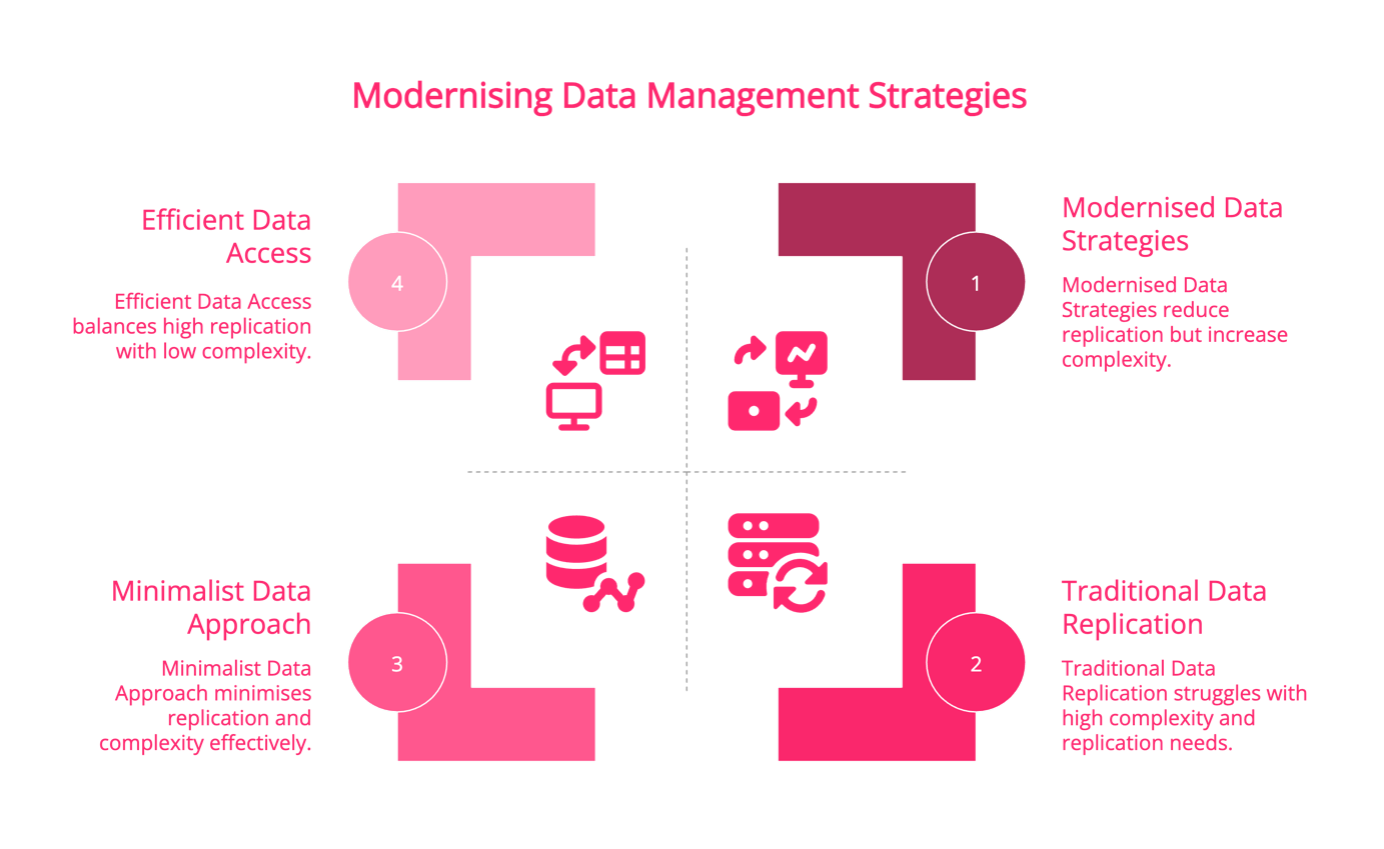
AI models, particularly those leveraging RAG, generative AI, and deep learning, require constant access to vast amounts of data. In Oracle ADW environments, these workloads often involve:
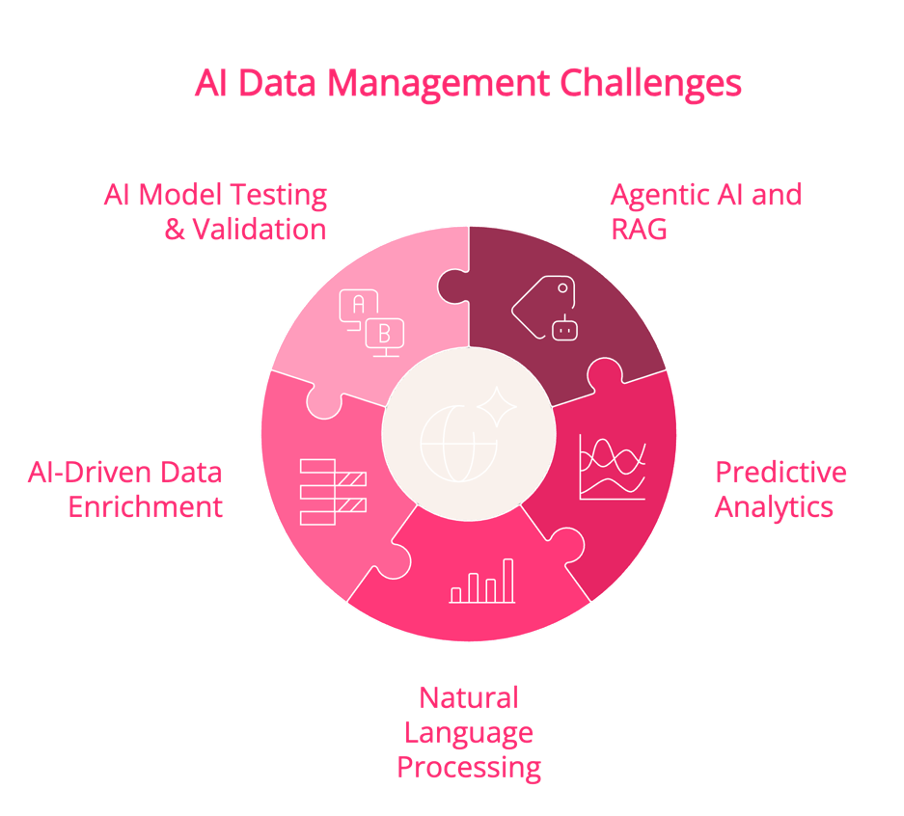
IDC has extensively documented the exponential growth of data and AI investments. Recent industry reports indicate that data storage requirements for AI workloads are expanding at an unprecedented rate.
IDC’s broader research reveals several critical insights about AI’s accelerating impact on data ecosystems:
The data explosion is being fuelled by AI use cases like augmented customer service (+30% CAGR), fraud detection systems (+35.8% CAGR), and IoT analytics. IDC emphasizes that 90% of new enterprise apps will embed AI by 2026, ensuring continued exponential data growth at the intersection of AI adoption and digital transformation.

Historically, organizations have relied on full database cloning to create isolated environments for AI training, model validation, and analytics. While this approach ensures data consistency, it comes with significant drawbacks:
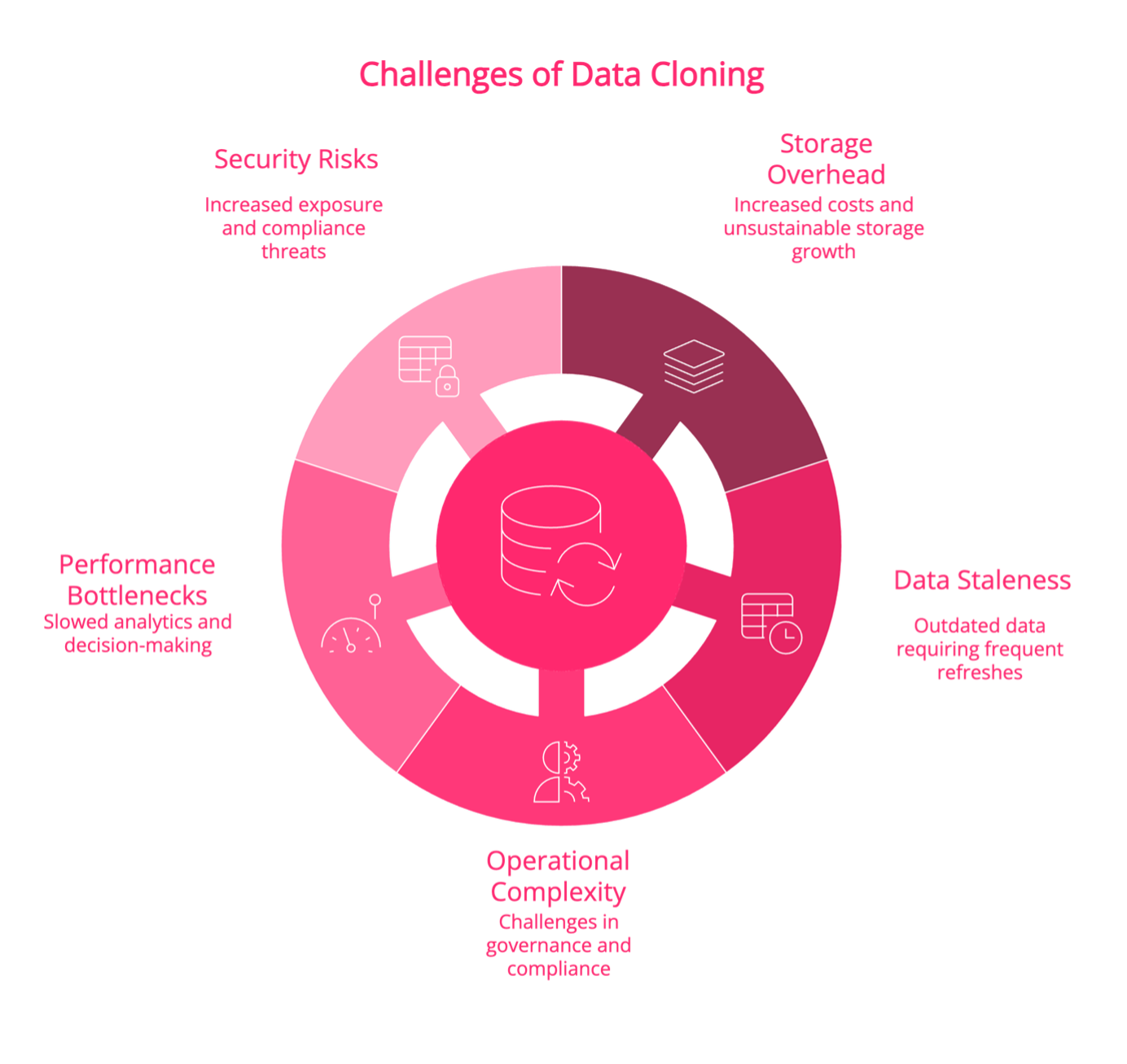
To put this into perspective, consider a mid-sized enterprise running an Oracle ADW instance with 50TB of data. If multiple teams require their own clones for model training and testing, the storage footprint could easily reach 250TB or more. With cloud storage costs averaging $0.02 per GB per month, this could result in annual expenses exceeding $80,000—just for storage alone. Factor in compute, additional database costs and administrative overhead, and the financial impact becomes even more pronounced.
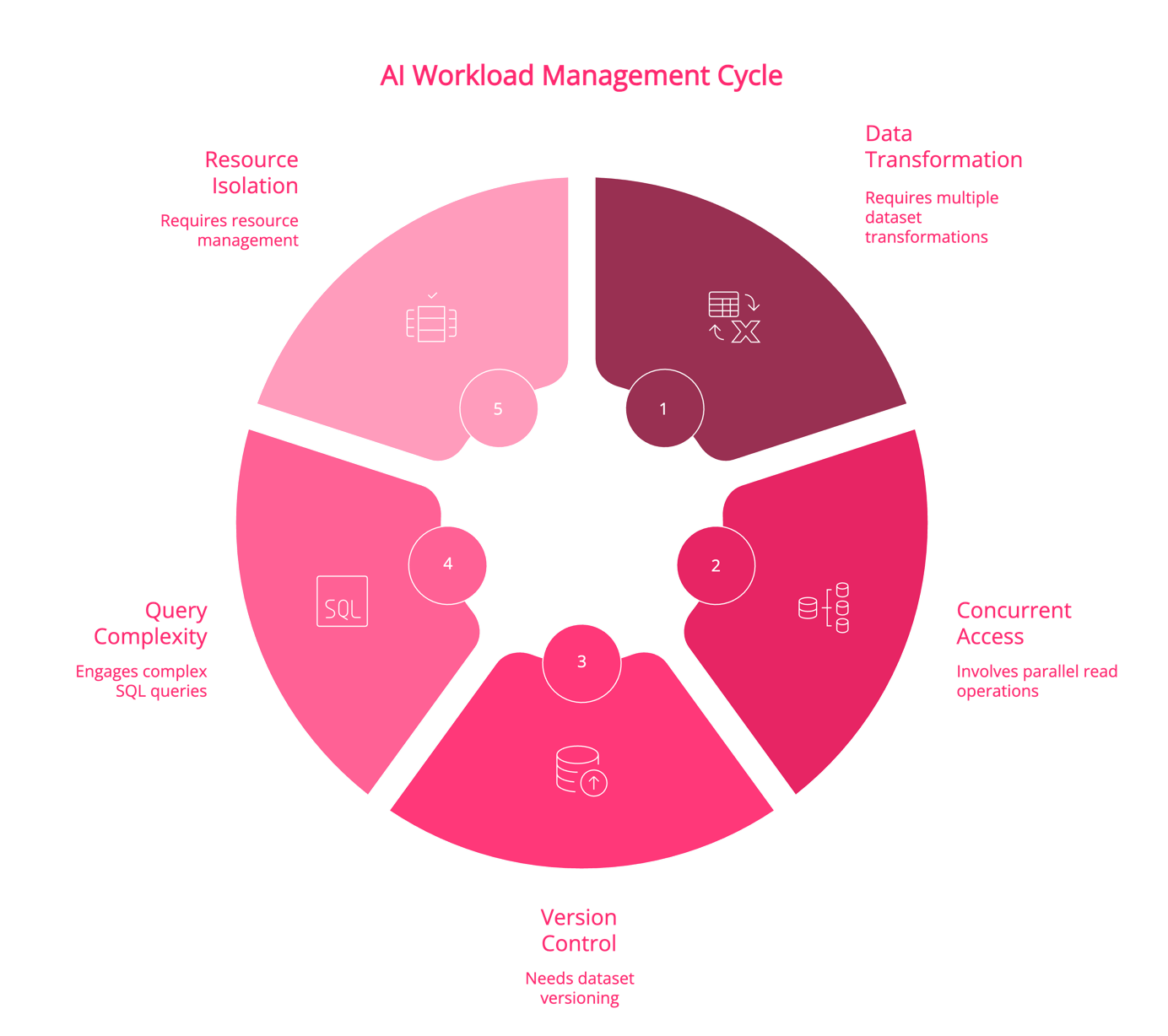
The challenge becomes particularly acute when considering the unique characteristics of AI workloads. Traditional RDBMS architectures were designed for transactional processing and structured analytical queries, but AI workflows introduce several distinct pressures:
Data Transformation Requirements: Machine learning models often require multiple transformations of the same dataset for feature engineering, resulting in numerous intermediate tables and views. These transformations must be stored and versioned, further multiplying storage requirements.
Concurrent Access Patterns: AI training workflows typically involve intensive parallel read operations across large datasets, which can overwhelm traditional buffer pools and I/O subsystems designed for mixed read/write workloads. This often leads to performance degradation for other database users.
Version Control and Reproducibility: ML teams need to maintain multiple versions of datasets for experiment tracking and model reproducibility. Traditional RDBMS systems lack native support for dataset versioning, forcing teams to create full copies or implement complex versioning schemes at the application level.
Query Complexity: AI feature engineering often involves complex transformations that push the boundaries of SQL optimization. Operations like window functions, recursive CTEs, and large-scale joins can strain query optimizers designed for traditional business intelligence workloads.
Resource Isolation: When multiple data science teams share the same RDBMS instance, their resource-intensive operations can interfere with each other and with production workloads. Traditional resource governors and workload management tools may not effectively handle the bursty nature of AI workloads.
Additionally, the need for data freshness adds another layer of complexity. Teams often require recent production data for model training, leading to regular refresh cycles of these large datasets. This creates significant network traffic and puts additional strain on production systems during clone or backup operations.
To address these challenges, organizations are increasingly exploring alternatives such as:
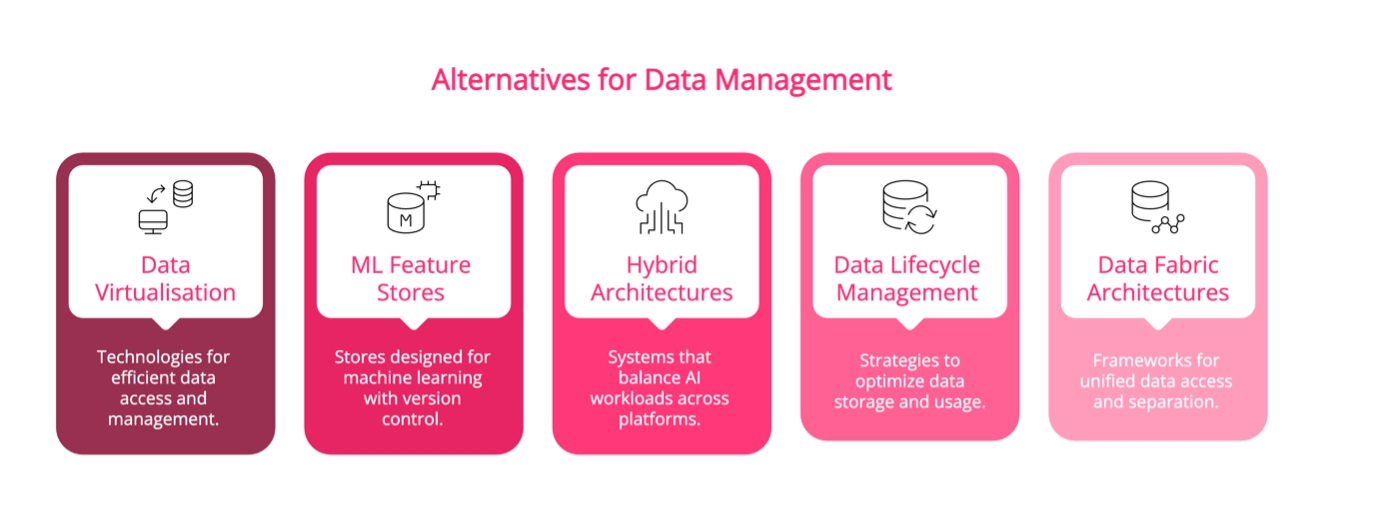
The financial implications extend beyond direct storage costs. Organizations must consider:
As AI workloads continue to grow, organizations need to carefully evaluate their data architecture strategy to ensure it can scale sustainably whilst maintaining performance and cost efficiency.
To overcome these challenges, organizations need to explore advanced solutions that optimize data management while maintaining performance, scalability, and compliance.
Silk is an AI cloud storage platform that enables organizations to modernize their data strategies by tailoring to the demands of AI and analytics. Silk’s innovative technology optimizes data replication and access in cloud environments, eliminating unnecessary duplication and ensuring seamless scalability.
Virtualized Data Access – Silk empowers AI workloads to access data stored in Oracle ADW and other environments without requiring full duplication. This approach reduces storage costs while maintaining high-speed access.
High-Performance Caching – Frequently accessed data is cached efficiently to ensure rapid query performance, even for the most demanding AI workloads.
Seamless Integration – Silk integrates with Oracle ADW, vector databases, and AI model pipelines, reducing the need for repeated ETL processes and simplifying data workflows.
Cost Optimization– By eliminating redundant data copies, organizations can significantly cut down on storage costs while maintaining AI performance.
The rapid evolution of AI and analytics demands that organizations build future-proof architectures that can scale with new workloads. Silk Echo plays a crucial role in this by:
Silk’s high-performance cloud platform ensures organizations are prepared to meet the evolving demands of AI-driven analytics. By integrating seamlessly with Oracle ADW, Silk supports innovative use cases while maintaining cost efficiency, scalability, and compliance.
As AI adoption grows, organizations leveraging Silk’s capabilities can:
By adopting next-generation storage solutions like Silk’s next-generation storage solution, organizations can unlock the full potential of AI while keeping costs under control. Investing in efficient data management strategies today will ensure businesses remain competitive in the AI-driven future.
Discover how leading organizations like PTC, Sentara Health, and Franciscan Healthcare are using Silk and Microsoft to forward their AI business goals.
Let's See What They're Doing!
Artificial intelligence isn’t just transforming how we build and operate—it’s also redefining how we store, manage, and move data.

As organizations generate and store more data than ever before, choosing the right storage solution has become critical. Two common options are traditional storage and...