
The big takeaways:
Many firms experience margin pressure even when demand remains steady. Attorneys stay busy. New matters open regularly. Revenue appears healthy on paper. Yet cash flow tightens and profitability stalls.
In most cases, the problem is operational leakage.
Uncaptured billable time, routine write-offs, aging receivables, duplicated administrative work, and unmanaged expenses quietly reduce law firm profitability. These issues often develop gradually, making them difficult to detect without structured financial oversight.
Improving performance requires disciplined legal expense management and measurable legal operations efficiency. Firms that rely on disconnected systems or manual reporting rarely have the visibility needed to correct inefficiencies before they compound.
Several recurring operational gaps tend to undermine margins in small to mid-sized firms.
Time is the primary revenue asset in most practices. When time is not captured accurately and promptly, the loss is permanent.
Revenue leakage frequently results from:
Even minor daily gaps accumulate quickly. If five attorneys fail to record 20 minutes per day at an average rate of $300 per hour, the annual impact exceeds six figures. Time capture lag also affects realization, as entries reconstructed at the end of the week are more likely to be discounted during billing review. Strengthening time discipline improves law firm profitability without increasing client volume.
Write-offs are often treated as unavoidable concessions. In reality, they frequently reflect workflow weaknesses.
Common contributors include:
Tracking realization rate by matter type and practice area reveals patterns that may otherwise remain hidden. If certain case categories consistently generate higher write-downs, pricing structures or process controls likely require refinement. Standardized billing workflows can significantly reduce routine revenue reductions.
Revenue billed is not revenue available. Delayed collections restrict liquidity and increase administrative follow-up.
Operational factors that contribute to slow payment include:
Monitoring collection performance requires objective measurement.
| Metric | Why It Matters |
| Average billing cycle time | Shorter cycles improve cash flow |
| Days sales outstanding | Measures collection efficiency |
| AR aging distribution | Identifies liquidity risk |
| Collection rate by client type | Reveals payment patterns |
Strong legal expense management depends on predictable cash flow. Aging receivables reduces flexibility even when overall billings appear strong.
Fragmented technology environments increase overhead and reduce legal operations efficiency. When firms run separate systems for timekeeping, billing, and accounting, staff end up re-entering client and matter data across multiple platforms, reconciling trust accounts manually, and building financial reports outside core systems. Every redundant process consumes staff time and introduces potential error, raising indirect costs while reducing operational clarity.
Expenses often expand gradually without structured oversight. Overlapping software subscriptions, vendor contracts renewing without periodic review, and reimbursable costs not allocated to specific matters can quietly erode margins. Without visibility into matter-level profitability, leadership decisions regarding pricing, staffing, and resource allocation rely on assumptions rather than data. Effective legal expense management requires understanding profitability at a granular level.
Correcting inefficiencies requires recurring analysis. Firms that conduct structured monthly reviews detect systemic weaknesses earlier than those relying on annual assessments.
These metrics expose patterns not visible through total revenue alone. Flat revenue combined with declining utilization, for example, may signal that attorneys are spending more time on administrative tasks.
Billing performance reflects the firm’s operational consistency. Delays and routine adjustments weaken both cash flow and perceived value. Firms should assess the time between work completion and invoice issuance, the frequency of billing cycle delays, the percentage of invoices adjusted during pre-bill review, and the average write-off percentage. When these indicators trend upward, law firm profitability is often affected before leadership recognizes the impact.
Leadership should be able to determine the true margin by matter, profitability by practice area, direct expenses relative to collected revenue, and trends in subscription and vendor costs. Without this visibility, pricing decisions and staffing allocations rely on assumptions rather than data.
Profit drains persist when financial and operational information is fragmented. Manual reporting delays insight and limits accuracy. Spreadsheets may supplement workflows, but they rarely provide real-time clarity.
Visibility also supports ethical responsibility. Trust accounting compliance depends on accurate reconciliation and clear audit trails. Errors in financial management expose firms to regulatory and reputational risk.
Unified systems improve legal operations efficiency by connecting billing, accounting, trust management, and matter workflows within a single platform. When leadership can evaluate productivity, revenue, expenses, and receivables together, corrective action becomes more precise and timely. Specifically, visibility allows firms to:
Modern legal practice management software provides the infrastructure required to eliminate recurring inefficiencies. Consolidating timekeeping, billing, accounting, and matter management into one system reduces duplication and strengthens oversight.
Real-time time entry tools allow attorneys to document work as it occurs, and productivity dashboards provide clear visibility into utilization rates and time capture lag. Centralized tracking offers:
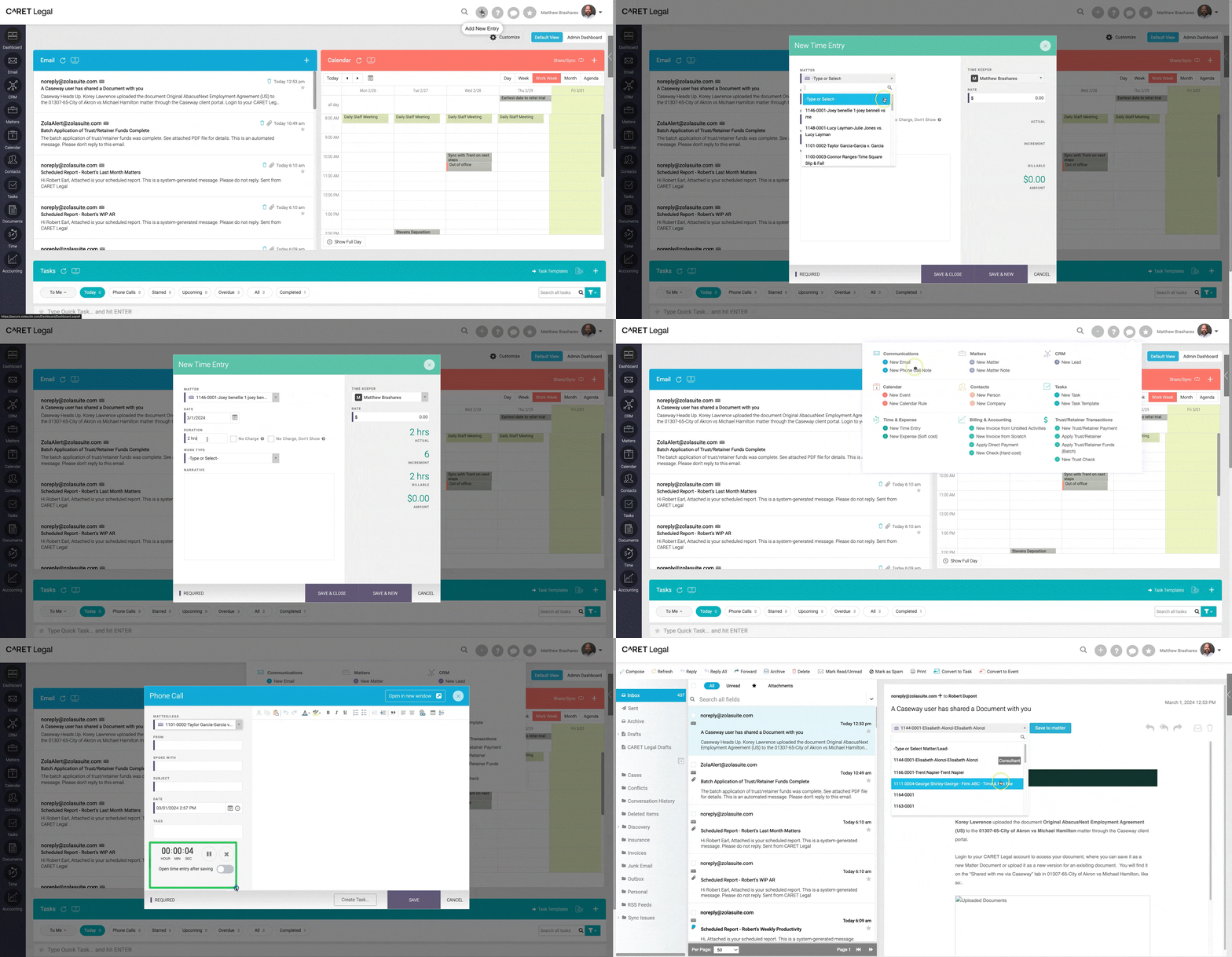
Standardized billing processes introduce consistency and control. Defined pre-bill review paths reduce excessive adjustments, automated invoice generation supports timely distribution, and integrated electronic payment options streamline collections. Operational improvements include:
When accounting operates within the same platform as billing and matter management, financial oversight improves significantly. Integrated systems allow firms to:
This unified approach strengthens legal expense management by connecting revenue and cost data within one reporting environment.
Automated task tracking, synchronized matter data, and integrated reporting reduce manual coordination. Workflow automation supports:
Improved legal operations efficiency allows attorneys and staff to focus on substantive client work rather than system management.

Sustainable law firm profitability is built on disciplined systems rather than increased workload alone. Firms that monitor performance metrics consistently, enforce structured billing practices, and implement rigorous legal expense management create stronger financial stability and operational clarity.
CARET Legal delivers unified legal practice management software that connects billing, accounting, trust management, and matter workflows within one platform. With comprehensive visibility and integrated controls, firms can uncover hidden profit drains, improve legal operations efficiency, and make informed financial decisions with confidence.
Schedule a demo to see how CARET Legal can help your firm identify inefficiencies and strengthen profitability.
The big takeaways:
