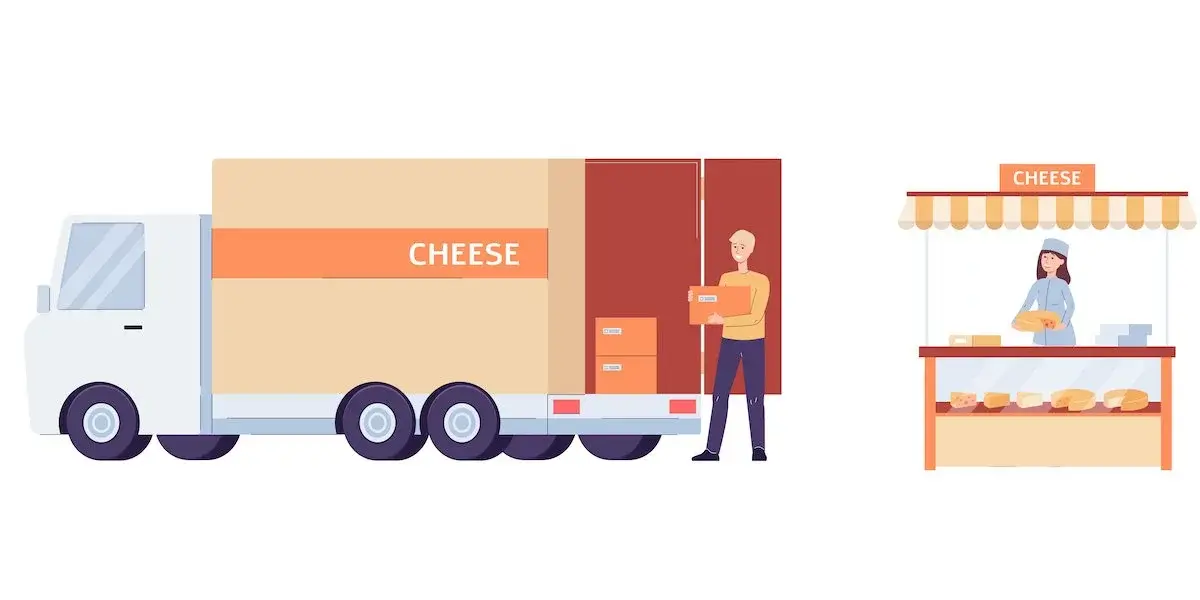
Technology plays a crucial role in food distribution logistics. Let us remember that food products, unlike many other goods, require special handling. The food and...
Learn how the right wholesale food distribution software leverages hybrid routing and improved visibility to reduce distribution costs and improve customer service levels. Updated 12/04/2025.
The competitive landscape for food and beverage companies is changing fast. Wholesalers need to ensure product safety and compliance down to the minute, all while delivering a consistent level of service to customers who expect their weekly order to arrive like clockwork. Market conditions aren’t making that easier, but a changing technology landscape is giving logistics and operations leaders new tools for saving costs and delighting customers.

For wholesale food distribution outfits who are adaptive in their use of technology, technologies like AI and automation have the power to drive efficiency. For those who lag behind, the cost of manual operations is only getting higher—not just in dollars but in the form of spoiled goods, compliance issues, and poor customer service.
That’s precisely why the right wholesale food distribution software is the necessary tool for survival and growth. This article will break down the critical challenges faced by modern distributors and walk through some of the ways that technology can help. We’ll also talk in depth about DispatchTrack’s solution, which is specifically engineered for the complexity of modern food distribution—including our proprietary hybrid routing model that handles recurring routes and day-of changes significantly more easily than the competition.
Effective food distribution logistics is a balancing act between safety, efficiency, and customer satisfaction. This put enormous pressure on your operations to face a few crucial challenges:
The last mile is a costly challenge for everyone, but for wholesale food and beverage distributors, it’s exponentially more complex. Why? Because of the inherent difficulty of balancing recurring customers and orders with daily and weekly variations.
Standard logistics software often relies on pure dynamic routing—creating the most efficient route from scratch every day. But most food businesses rely on static, recurring routes: the case of wine that arrives at a specific restaurant at 9:30 AM every Tuesday, or the bulk produce delivery that must hit the supermarket dock between 6:00 AM and 7:00 AM daily.
Your strategic route plans based on these recurring deliveries might be efficient in and of themselves, but they can start to unravel quickly when relatively common occurrences crop up:
Generic logistics systems fail because they treat every day as a blank slate, destroying the predictability and consistent service that commercial customers demand. This complexity demands a specialized, expert solution.
The right wholesale food distribution software—one built with the challenges above in mind—transforms these pain points into competitive advantages. Here is how DispatchTrack empowers distributors:
For wholesale food distribution, route optimization must be more sophisticated than simply finding the fastest way. DispatchTrack’s core differentiator is its hybrid routing model, which is essential for balancing fixed stops with the dynamic weekly changes that your business thrives on..
This model allows you to:
This capability is the key to maintaining high service levels while ensuring you are always operating at the lowest possible cost per delivery.
DispatchTrack provides real-time tracking that goes far beyond simply knowing “Where’s my truck?” It connects visibility directly to compliance and proactive exception management.
Manual processes turn last-minute order or drop-off changes into logistical nightmares. Wholesale food distribution software provides you with the agility to accommodate these changes without destroying the efficiency of your route.
By empowering increased flexibility, you can dynamically accommodate changing customer needs without breaking a sweat. When a customer needs an emergency restock or a slightly later delivery time, you can adjust the route efficiently, enhancing customer experience and ensuring reliable service.
You can also take a step back and look at these kinds of changes from a strategic perspective? If a customer is frequently requesting off-day orders, it might be more profitable to see if they’ll change from Tuesday-Thursday delivery schedule to Monday-Wednesday-Friday.
In the B2B world, accurate communication is critical. Unlike with a home delivery, groceries stores, convenience stores, and restaurants need to prepare staff and receiving docks for your arrival to avoid delays.
Here’s how DispatchTrack helps:
Our wholesale food distribution software captures vital operational data that transcends simple delivery logs. DispatchTrack lets you track key performance indicators (KPIs) like cost per case, cost per route, planned versus actual, and total cost to serve.
These insights are positioned not just as metrics, but as powerful tools for continuous improvement. You can use data to identify bottlenecks, spot trends in driver performance, and use data-driven decisions to continuously refine your static route templates and dynamic scheduling.
The complexities of wholesale food distribution logistics—the pressure of FSMA compliance combined with the demands of the recurring last mile—are here to stay. Legacy routing and logistics solutions simply were not built for this unique environment.
That’s why you need a wholesale food distribution software that’s specifically engineered for your business model. DispatchTrack is the only solution built on a hybrid routing model that can help you balance static customer routes with the need for day-of agility.
Ready to achieve compliance, reduce food spoilage, and master your complex last mile? Learn more about how DispatchTrack is engineered for the complex, regulated world of wholesale food distribution.
Technology plays a crucial role in food distribution logistics. Let us remember that food products, unlike many other goods, require special handling. The food and...

Updated 12/05/2025
3PLs are under more pressure than ever. Fuel costs are volatile, driver shortages are chronic, and shippers expect faster, more reliable delivery at...