Homeowners Associations (HOAs) play a crucial role in maintaining the integrity and value of residential communities across the United States. However, managing an HOA involves navigating a complex web of state and federal regulations, as well as adhering to community bylaws and governing documents.
This article provides an overview of the key state and federal regulations impacting HOAs, along with best practices for effectively managing and administering HOA communities, including covenant, conditions, and restrictions (CCRs), collections, and more.
Recent State and Federal Regulations impacting HOAs:
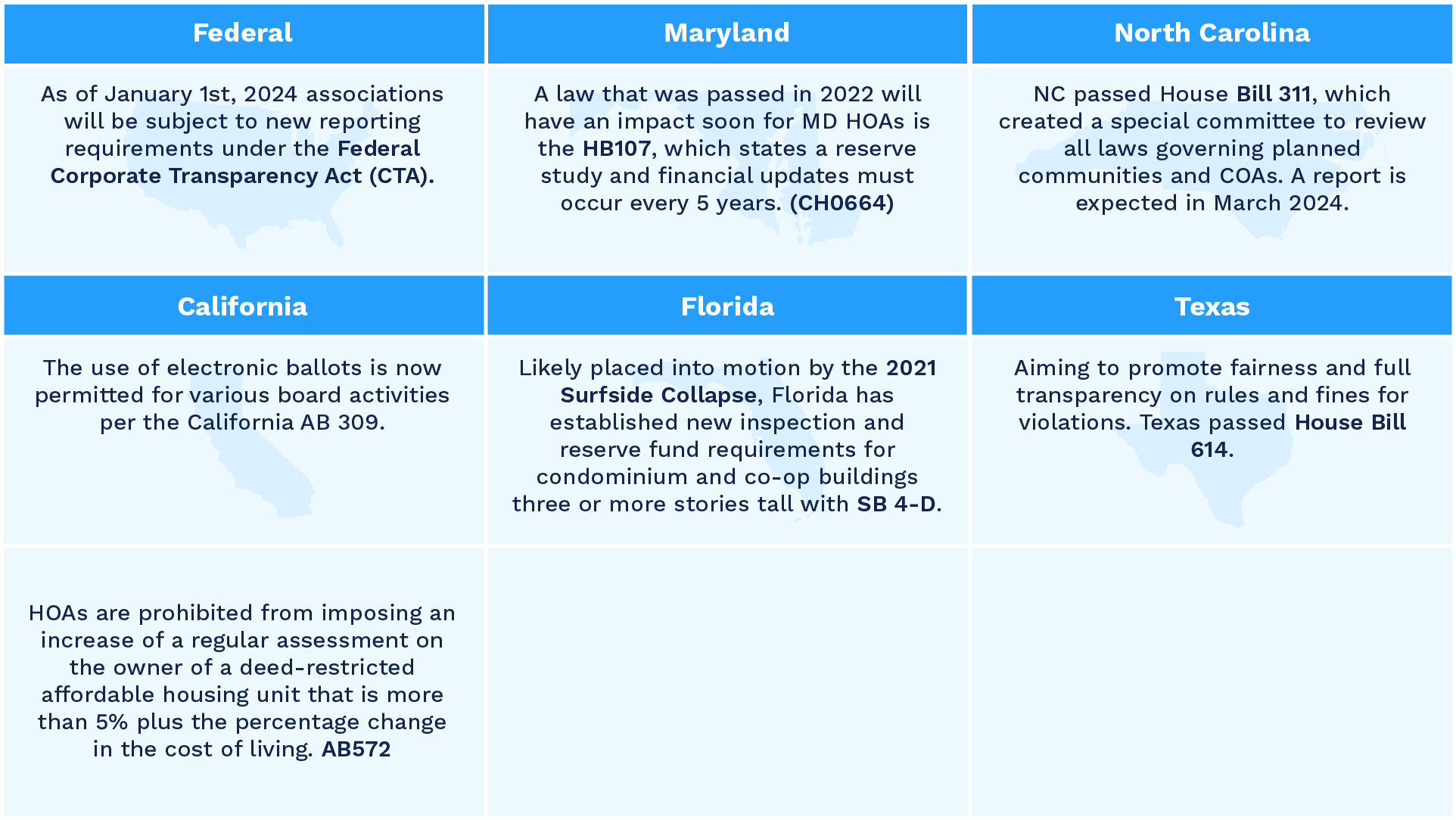
Bill 311
House Bill 614
HOAs are responsible for managing common areas, enforcing community rules, collecting dues, and maintaining property values within a residential development. To fulfill these responsibilities effectively, HOAs must comply with a variety of laws and regulations at both the state and federal levels. Additionally, HOAs must establish and enforce community-specific bylaws and governing documents, such as CCRs.
A common mistaken assumption for homeowners entering an HOA is the expectation that the bylaws and regulations provided at the time of purchase will remain unchanged during their tenure in the community. Yet, HOA regulations are subject to regular updates and vary from state to state. It’s essential for residents to stay updated on these changes and any new rules.
State Regulations
State laws govern many aspects of HOA operations, including formation, governance, and dispute resolution. Some common areas of state regulation include:
Formation and Governance: State laws typically outline the requirements for forming an HOA, including the process for creating governing documents and establishing a board of directors. These laws also specify the powers and responsibilities of the HOA board, such as conducting meetings, collecting dues, and enforcing rules.
An example of this would be the recent bill passed in Florida, the Florida Homeowners Association Act. Often referred to as the “Homeowners Association Bill of Rights,” the statute improves transparency between board members and residents while raising the standard for operation.
CCRs and Bylaws: State laws may dictate the process for creating, amending, and enforcing CCRs and bylaws. It’s essential for HOAs to ensure that their governing documents comply with state law and provide clear guidelines for residents.
Collections: State laws govern the process for collecting delinquent assessments and enforcing liens against homeowners who fail to pay their dues. HOAs must follow legal procedures when pursuing collections to avoid potential lawsuits or regulatory penalties.
Federal Regulation
While most HOA regulations are established at the state level, several federal laws also impact HOA operations, particularly in areas such as fair housing and taxation. Key federal regulations include:
An example of a recent Federal regulation update is the Coporate Transparency Act (CTA). Beginning January 1, 2024, the CTA requires reporting companies to report information about their organizations. This includes information on its beneficial owners. If a company was formed after January 1, 2024, the report must also include its company applicants. The Act applies to corporations, which most HOAs are filed as under their secretary of state. As such, HOAs are considered reporting companies.
Fair Housing Act (FHA): The FHA prohibits discrimination in housing based on race, color, religion, sex, national origin, familial status, or disability. HOAs must ensure that their rules and practices comply with the FHA’s requirements to avoid allegations of discrimination.
Americans with Disabilities Act (ADA): The ADA imposes accessibility requirements for common areas in housing developments, such as parking lots, sidewalks, and recreational facilities. HOAs must make reasonable accommodations to ensure that their facilities are accessible to individuals with disabilities.
Best Practices for Managing HOA Communities:
In addition to complying with state and federal regulations, HOAs should implement best practices for effectively managing and administering community affairs.
Some key best practices include:
Transparent Communication: Maintain open and transparent communication channels with residents through newsletters, community meetings, and digital platforms like Enumerate Engage. Clear communication helps build trust and foster a sense of community among residents.
“This trend is indisputably positive. Boards, owners and staff are all craving more frequent, more efficient communication. Associations are moving away from paper letters and forms since they are slow, easily misplaced, and difficult to update. Instead, communities are switching to digital communication systems, including email, text messages, websites, and resident portals. The best results are achieved when associations make use of multiple communication channels.”
– 6 HOA Trends For 2023 | HOA Management.com
Proactive Maintenance: Implement a proactive maintenance plan to preserve property values and prevent costly repairs. Regular inspections, timely repairs, and preventative maintenance measures can help minimize expenses and maintain community aesthetics. Your community management software may offer a mobile inspection application, enabling you to efficiently conduct CCR inspections in the field and auto-sync eliminating the need to return to the office.
Fair Enforcement: Enforce community rules and regulations consistently and fairly to avoid claims of discrimination or favoritism. Numerous community software platforms can tailor CCR treatments and subsequent actions to align with the specific by-laws of the community. This is a great way to ensure consistent and fair treatment for all members of the community. Establish clear enforcement procedures and provide opportunities for homeowners to appeal decisions. Ensure community by-laws and governance are always accessible to your residents for full transparency. A good place to store these would be on the community’s website or digital platform.

Financial Responsibility: Maintain sound financial practices, including budgeting, reserve planning, and financial reporting. HOAs should strive for transparency and accountability in financial management to instill confidence among residents.
Professional Management: Consider hiring a professional HOA management company to assist with administrative tasks, financial management, and compliance with regulations. Professional management can alleviate the burden on volunteer board members and ensure efficient operation of the HOA.
Community Management Software: Empower your community with efficiency and enhanced resident satisfaction. Community management software should streamline administrative tasks, simplify communications, enable financial success, and foster stronger community engagement all in one solution. Your chosen software should help you achieve seamless community operations, improved transparency, and include the flexibility to adapt to evolving needs and regulations.

If you would like to learn how Enumerate Central can help you achieve these goals and much more contact us for a free demo.